World Sickle Cell Day (International)
Next Date
June 19th, 2026
World Sickle Cell Day (International)
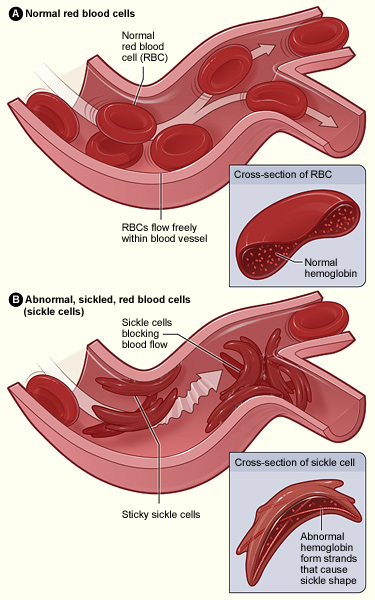
Sickle cell disease (SCD), also simply called sickle cell, is a group of hemoglobin-related blood disorders that are typically inherited. The most common type is known as sickle cell anemia. Sickle cell anemia results in an abnormality in the oxygen-carrying protein haemoglobin found in red blood cells. This leads to the red blood cells adopting an abnormal sickle-like shape under certain circumstances; with this shape, they are unable to deform as they pass through capillaries, causing blockages. Problems in sickle cell disease typically begin around 5 to 6 months of age. A number of health problems may develop, such as attacks of pain in joints, anemia, swelling in the hands and feet, bacterial infections, dizziness and stroke. The probability of severe symptoms, including long-term pain, increases with age. Without treatment, people with SCD rarely reach adulthood but with good healthcare, median life expectancy is between 58 and 66 years. All of the major organs are affected by sickle cell disease. The liver, heart, kidneys, gallbladder, eyes, bones, and joints can be damaged from the abnormal functions of the sickle cells and their inability to effectively flow through the small blood vessels.
Source: Wikipedia Sickle_cell_disease