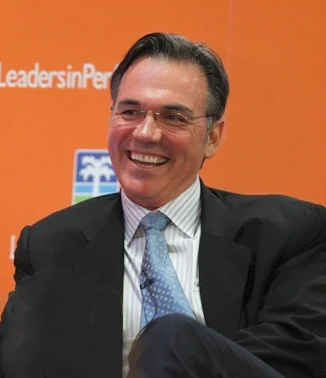
Billy Beane
March 29, 1962 · Orlando, Florida
Billy Beane is an American baseball executive and former player best known for transforming the Oakland Athletics into one of baseball's most analytically sophisticated franchises. As general manager, he pioneered the use of sabermetrics — statistical analysis — to build competitive teams on a fraction of the budgets available to richer clubs, an approach made famous globally by Michael Lewis's 2003 book Moneyball and the 2011 film based on it.
The Phenom Who Never Was
Born on March 29, 1962 in Orlando, Florida, Beane was one of the most hyped baseball prospects of his generation. Stanford offered him an athletic scholarship, but the New York Mets selected him with the 23rd pick of the 1980 draft and offered him money he couldn't refuse. The scouts loved his tools: size, speed, arm, and raw power. He had everything — except the ability to hit major league pitching consistently.
Beane bounced between the majors and minors for years, struggling with the mental side of hitting. He played parts of six seasons for the Mets, Minnesota Twins, Detroit Tigers, and Oakland A's, compiling a career batting average of .219 with just three home runs. In Moneyball, Beane himself candidly describes the gap between his physical tools and his performance, and how his failure shaped his later thinking about how talent is evaluated.
The Moneyball Revolution
Beane retired as a player in 1990, joined the Oakland A's front office as an advance scout, and became general manager in 1997. Oakland's ownership consistently ranked among the lowest payrolls in the league, forcing Beane to find undervalued players that richer teams overlooked. Working with assistant GM Paul DePodesta and statistician Eric Walker, Beane embraced on-base percentage as a dramatically more accurate predictor of runs scored than the traditional metrics scouts and managers had always used.
The results were striking. The 2002 Oakland A's, with a payroll roughly one-third of the New York Yankees', won 103 games and set an American League record with 20 consecutive wins. They were eliminated in the first round of the playoffs in heartbreaking fashion, but the season had proved the concept. Michael Lewis followed the team that year and published Moneyball: The Art of Winning an Unfair Game in 2003, turning Beane into one of the most recognizable names in sports management worldwide. The book spent months on bestseller lists and influenced front offices across professional sports.
Did You Know?
Billy Beane has a well-known superstition: he refuses to watch A's games in person once they start, fearing his presence jinxes the team. He watches the first few innings and then leaves, monitoring the rest of the game from his office or elsewhere in the stadium.
Legacy Beyond Baseball
Brad Pitt played Beane in Bennett Miller's 2011 film adaptation of Moneyball, earning the film an Academy Award nomination for Best Picture. Beane continued with the A's for decades, serving as Executive Vice President of Baseball Operations. His influence extended well beyond Oakland — teams across baseball eventually adopted sabermetric principles, and analytics departments became standard in every front office. As the franchise relocated to Sacramento and eventually Las Vegas, Beane's legacy remains the ideas he introduced: that data, applied rigorously, can level almost any playing field.