Krzysztof Penderecki
November 23, 1933 — March 29, 2020 · Dębica, Poland
Krzysztof Penderecki was a Polish composer and conductor widely regarded as one of the most important and influential composers of the 20th century. His radical early works — particularly Threnody for the Victims of Hiroshima — shattered conventional ideas about what orchestral music could sound like, while his later neo-romantic turn produced large-scale symphonies and requiems that found broad audiences. Much of the world encountered his music through horror film soundtracks, even without knowing his name.
Early Life in Wartime Poland
Born on November 23, 1933 in Dębica in southeastern Poland, Penderecki grew up during the German occupation. His father, a lawyer of mixed Armenian and German ancestry, maintained a household in which music was central — Krzysztof began violin and piano lessons early and showed exceptional gifts. He enrolled in the Kraków Academy of Music after the war, studying composition under Artur Malawski, and graduated in 1958.
In 1959, he submitted three works anonymously to a competition organized by the Polish Composers' Union and won all three prizes. The judges were astonished to learn they had all come from the same 25-year-old composer. The incident announced to Polish musical life that someone genuinely new had arrived.
Threnody and the Avant-Garde Peak
Penderecki's Threnody for the Victims of Hiroshima (1960), written for 52 string instruments, became his most famous and controversial work. It uses extended techniques — col legno (bowing with the wood of the bow), sul ponticello (bowing near the bridge for a glassy tone), and densely clustered tones — to create a wall of anguish unlike anything in the standard repertoire. Though initially untitled, Penderecki dedicated it to the victims of the atomic bombing and the name became permanent. The work is still performed regularly worldwide as both a musical masterpiece and an act of moral witness.
Equally shocking was his St. Luke Passion (1966), which juxtaposed medieval plainchant with clusters and dissonance in a setting that restored grand choral music to the concert hall while refusing to romanticize it. It premiered in Münster, Germany, and was received with profound emotion by audiences still living in the long shadow of the war.
Did You Know?
Penderecki's music appears in three of the most celebrated horror films ever made — The Shining, The Exorcist, and The Shining sequel Doctor Sleep — without his direct involvement in the scoring. Stanley Kubrick licensed his existing works for The Shining, and Penderecki reportedly had mixed feelings about his concert music being used to accompany supernatural terror.
Neo-Romanticism and Late Career
In the 1970s and 1980s, Penderecki dramatically shifted his style toward a lush, post-Romantic idiom — a move that alienated some avant-garde peers but opened his music to the widest possible audiences. His Symphony No. 2 "Christmas Symphony" (1980), his Polish Requiem (1980–84, dedicated to the victims of the Katyn massacre and Solidarity martyrs), and his Violin Concerto No. 2 demonstrated his ability to write in a grand emotional tradition without nostalgia or pastiche. He conducted major orchestras around the world and remained active as both composer and conductor until shortly before his death. Penderecki died on March 29, 2020 at his home in Kraków at age 86, in the earliest weeks of the COVID-19 pandemic — the same day as fellow musician Joe Diffie.
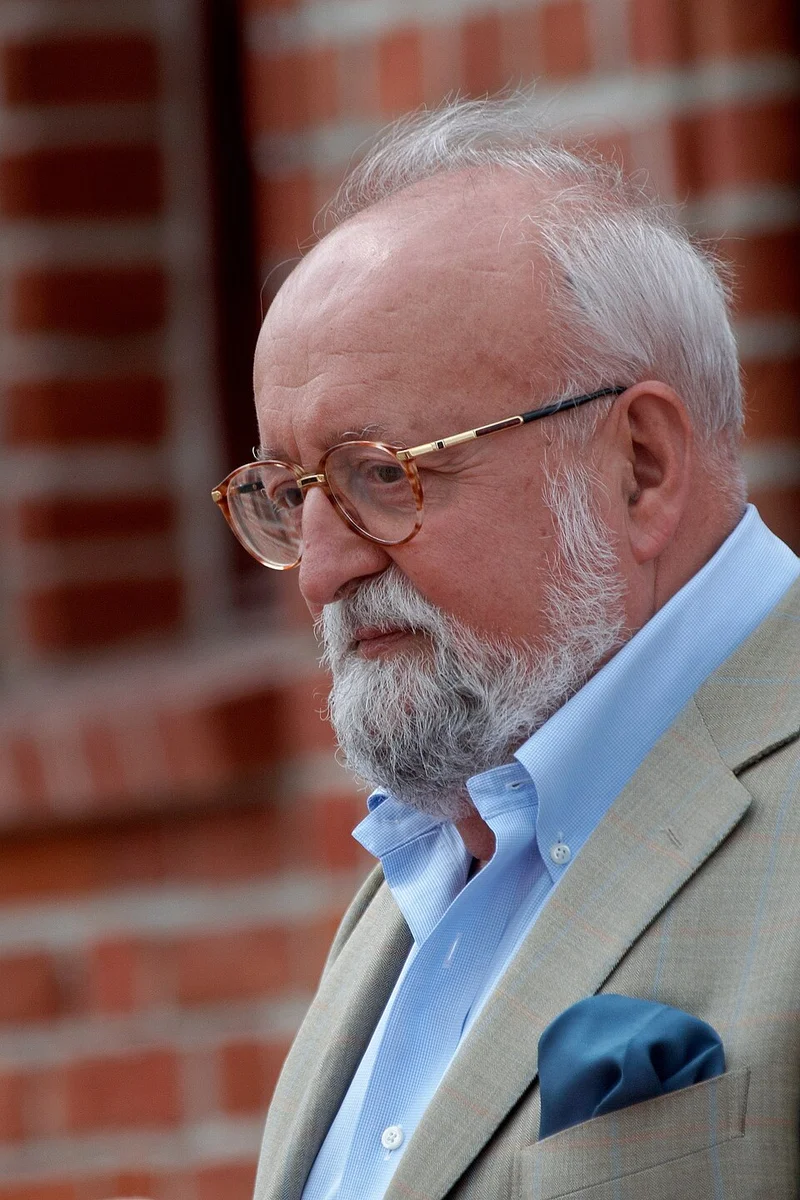
Credit: Adam Kumiszcza / CC BY 3.0