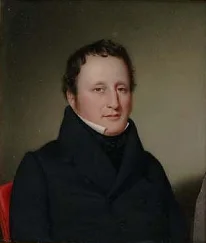
Dick Irvin
July 19, 1892 — Hamilton, Ontario, Canada
Dick Irvin was a Canadian ice hockey player and head coach who, across a coaching career spanning 26 seasons with three NHL clubs, won four Stanley Cups and transformed the Montreal Canadiens into one of the dominant teams in hockey, making him one of the most significant figures in the early history of the professional game.
A Player's Career Cut Short
Born on July 19, 1892 in Hamilton, Ontario, Irvin was an accomplished centre ice player who played in the Pacific Coast Hockey Association before joining the Chicago Black Hawks when the NHL expanded in 1926. He was named the NHL's most sportsmanlike player in the first official season. A severe skull fracture suffered in a 1927 game effectively ended his playing career, and he transitioned to coaching. He took over as Chicago's head coach in 1929–30, leading the Black Hawks to their first Stanley Cup Final appearance. When Chicago dismissed him after the 1930–31 season, he was immediately hired by the Toronto Maple Leafs.
Building the Leafs and the Canadiens
With Toronto, Irvin led the Maple Leafs to the Stanley Cup championship in 1932 and to the Cup Final in seven of his nine seasons. In 1940, despite his success, he was dismissed and hired by the Montreal Canadiens. His twenty-year reign in Montreal was the making of the Canadiens dynasty. He won the Stanley Cup with Montreal in 1944, 1946, and 1953, and brought the team to four additional Cup Finals. He developed or maximised the careers of some of the greatest Canadiens of the era, including Maurice "Rocket" Richard, Elmer Lach, and Toe Blake. His insistence on fast, skilled, two-way hockey and his willingness to deploy young players built the culture and system that would continue producing championships for decades after his departure.
Did You Know?
Dick Irvin was one of the most significant coaches in the history of women's hockey as well as men's. During World War II, when many NHL players enlisted, Irvin helped promote and organise women's hockey in Montreal to maintain interest in the sport. His commitment to developing hockey at multiple levels, combined with his eye for talent, made him a central figure in the sport's growth well beyond his coaching duties with the Canadiens.
Hall of Fame Recognition
After a brief return to Chicago as head coach in 1955–56 — his final season behind the bench — Irvin retired. He died on May 16, 1957, in Montreal, aged 64, having been diagnosed with bone cancer shortly after leaving coaching. He was inducted into the Hockey Hall of Fame in 1958. His son Dick Irvin Jr. became one of the most respected hockey broadcasters in Canadian history, spending decades as the voice of Hockey Night in Canada in Montreal. The elder Irvin's record of 259 playoff games coached and 100 playoff wins stood as benchmarks of coaching longevity and success for generations.