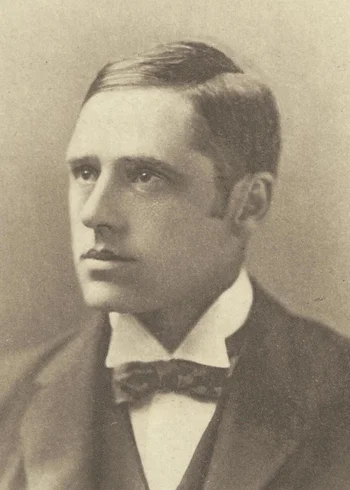
Hans Morgenthau
February 17, 1904 — July 19, 1980
Hans Morgenthau was a German-American political scientist who became the founder of political realism in the study of international relations, arguing in his landmark 1948 work Politics Among Nations that the behaviour of states is driven by the pursuit of power and national interest rather than by morality or ideology — a framework that dominated the discipline for decades and continues to shape how governments and scholars think about world affairs.
From Coburg to Chicago
Born on February 17, 1904 in Coburg, Germany, Morgenthau studied law and political science at Frankfurt, Munich, and Berlin, and briefly practised law in Frankfurt before shifting to an academic career. He wrote his doctoral dissertation on international law and began developing the theoretical framework — influenced by Thucydides, Machiavelli, and Max Weber — that would become political realism. His Jewish identity and left-liberal politics made his position in Germany untenable after the Nazi rise to power in 1933. He emigrated, spending periods in Geneva and Madrid before reaching the United States in 1937. He joined the University of Chicago in 1943 and spent the core of his career there, becoming one of the university's most celebrated faculty members and one of the most famous academics in the United States.
Politics Among Nations
Published in 1948, Politics Among Nations: The Struggle for Power and Peace is among the most widely read and assigned works in the history of political science. Its argument is stark: states act in international affairs not primarily on the basis of morality, law, or ideology, but in pursuit of national interest defined as power. Morgenthau laid out six fundamental principles of political realism, arguing that diplomacy must begin with a clear-eyed assessment of the power realities of a situation rather than with idealistic aspirations. The book was adopted across virtually every major American university as a core text in international relations, and it defined the intellectual framework within which American foreign policy was debated during the Cold War. Morgenthau himself was not a simple hawk: he was a vocal critic of the Vietnam War from the early 1960s onward, arguing that American involvement violated the realist principle of matching commitments to interests.
Did You Know?
Morgenthau was one of the earliest and most prominent academic critics of American policy in Vietnam. From 1961 onward, he argued publicly and in print that the United States had no vital national interest in Vietnam and that intervention would end in disaster — positions that put him at odds with both the Kennedy and Johnson administrations. His views were vindicated by subsequent events, but at the time they cost him significant access to policy circles. He later described the experience as illustrating a central lesson of realism: that ideological commitment frequently causes states to act against their own interests.
Legacy in Political Thought
Morgenthau moved to the City University of New York in 1968 and remained active as a writer and speaker until near the end of his life. He died on July 19, 1980 in New York City. His influence on the field of international relations is pervasive: the debates between realists, liberal internationalists, and constructivists that structure contemporary international relations theory are all, in significant part, reactions to the framework he established. Politics Among Nations has been continuously in print since 1948 and remains one of the foundational texts of political science education worldwide. He is considered, alongside E.H. Carr, the founder of the realist tradition in international relations theory.