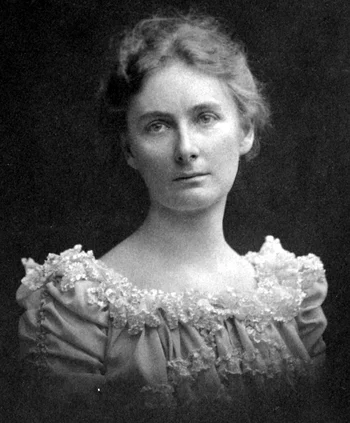
Gertrude Bell
July 14, 1868 — Washington New Hall, County Durham, England
Gertrude Margaret Lowthian Bell was an English writer, explorer, archaeologist, and political officer whose intimate knowledge of the Arab world made her one of the most influential figures in the creation of modern Iraq.
From Oxford to the Desert
Born on July 14, 1868 into a wealthy industrial family in County Durham, Bell excelled early. She entered Lady Margaret Hall, Oxford and became the first woman to earn a first-class honours degree in Modern History — achieving it in just two years. After a London social season that failed to interest her, she followed an uncle to Tehran in 1892 and fell instantly in love with Persia, describing it as "paradise." That journey launched a lifelong passion for the Middle East, and she spent the following decades criss-crossing the region, learning Arabic and Persian, documenting archaeological sites, and forging deep relationships with local tribal leaders and rulers.
Mountaineer and Scholar
Between 1899 and 1904, Bell added serious mountaineering to her résumé, tackling peaks in the Swiss Alps and recording ten new routes or first ascents in the Bernese Oberland. One peak was named Gertrudspitze in her honour after she and her guides first traversed it in 1901. Her expeditions to Syria, Mesopotamia, and Arabia produced acclaimed books including Syria: The Desert and the Sown (1907) and Amurath to Amurath (1911), alongside meticulous photographs and maps of sites later damaged or destroyed. In 1913 she was elected a Fellow of the Royal Geographical Society, which awarded her medals in both 1914 and 1918.
Did You Know?
Bell met T. E. Lawrence at the Carchemish dig site in 1909 — years before he became "Lawrence of Arabia." Both had Oxford firsts in Modern History, both spoke Arabic fluently, and both would play pivotal roles shaping the post-war Middle East. Lawrence later sought her editorial advice on Seven Pillars of Wisdom.
Shaping Iraq
When World War I broke out, Bell volunteered for the Red Cross before being recruited to the Arab Bureau in Cairo, where she worked alongside Lawrence. By 1917 she had joined the British administration in Baghdad as the only female political officer in the British forces — serving as Oriental Secretary to three successive High Commissioners. Her unrivalled knowledge of Iraqi tribes, geography, and politics made her indispensable. She attended the 1921 Cairo Conference where, alongside Winston Churchill, she helped select Faisal I as king of Iraq and drew the lines that would define the country. King Faisal called her al-Khatun — Lady of the Court — and relied on her as a confidante and mediator between his government, British officials, and local notables.
Founder of the Iraq Museum
In her final years, Bell channelled her energy into preserving Iraq's antiquities. Appointed Honorary Director of Antiquities in 1922, she oversaw major excavations including Leonard Woolley's landmark digs at the ancient city of Ur, and she crafted Iraq's first antiquities law, which required that a portion of every excavated artefact remain in the country. Most lastingly, she founded what became the Iraq Museum in Baghdad, personally cataloguing and displaying the country's treasures and bequeathing a substantial part of her estate to ensure it endured. She died in Baghdad on July 12, 1926 — two days before her fifty-eighth birthday — of a sleeping-pill overdose that may have been intentional. King Faisal dedicated a section of the museum in her memory.