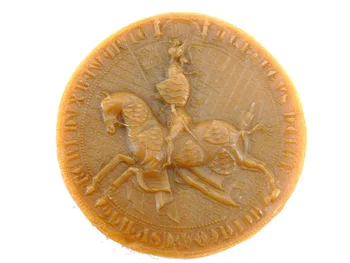
James I of Scotland
July 25, 1394 — Perth, Scotland
James I of Scotland was a king who spent nearly half his life as a prisoner of the English crown, emerging to rule Scotland with energy and reforming ambition, to write one of the earliest surviving poems in Middle Scots, and ultimately to be murdered by a group of his own nobles in the most brutal royal assassination in Scottish history.
Capture and Long Captivity
Born on July 25, 1394, the son of King Robert III of Scotland, James became heir to the throne after his older brother David died in suspicious circumstances in 1402. Concerned for his son's safety amid the power struggles of the Scottish nobility, Robert III sent the 11-year-old James by sea to France in 1406 for safekeeping. The ship was intercepted by English pirates, and James was captured and handed over to King Henry IV of England. He was held in England for 18 years — first at the Tower of London, later at Windsor and other royal residences — until a ransom was negotiated and he returned to Scotland in 1424 at the age of 29. During his captivity, he received the education of a prince; he learned French, Latin, and music, and it was during these years that he wrote the poem for which he is still remembered.
The Kingis Quair
The Kingis Quair ("The King's Book") is a long poem in Middle Scots, written in rhyme royal, that describes James's love for Lady Joan Beaumont (whom he would later marry) seen through the window of his captivity. It is written in the tradition of Chaucer and Lydgate, poets whose work James had access to during his English imprisonment, and it is a sophisticated, graceful work — part love poem, part philosophical meditation on fate, fortune, and freedom. It is one of the earliest known examples of literature in the Scots tongue, and its survival and continued study make James I a significant figure in the history of Scottish literature as well as Scottish history. He married Joan Beaumont in 1424, shortly before returning to Scotland, and she accompanied him north as his queen.
Did You Know?
The English charged Scotland 40,000 pounds (a vast sum) for James's 18 years of "board and lodging" during his captivity — framing the ransom not as payment for releasing a prisoner, but as the cost of housing and educating a prince. Scotland agreed to pay, though only a fraction was ever actually delivered. The precedent was cynical even by medieval standards: England had maintained the captivity long past any military or political justification, simply because James was useful as leverage over Scottish politics and because the "maintenance fee" was a convenient fiction for extracting money.
Reign and Murder
As king, James moved quickly to assert royal authority over the Scottish nobility, which had grown accustomed to operating without a resident monarch during his long absence. He executed several powerful nobles, imprisoned others, and pursued administrative and legal reforms with considerable energy. He is credited with important judicial reforms and the regularisation of Parliament. But his aggressive style created enemies among the great families, and in February 1437 a conspiracy of nobles led by Walter Stewart, Earl of Atholl, murdered him at the Dominican Friary of the Blackfriars in Perth. The assassins cornered him in a sewer into which he had escaped through a drain; he was stabbed repeatedly and killed. The conspirators were caught, tortured in elaborate public ceremonies, and executed. James left behind a Scotland more centralised than he had found it and a poem that has survived 600 years. He was 42 years old.