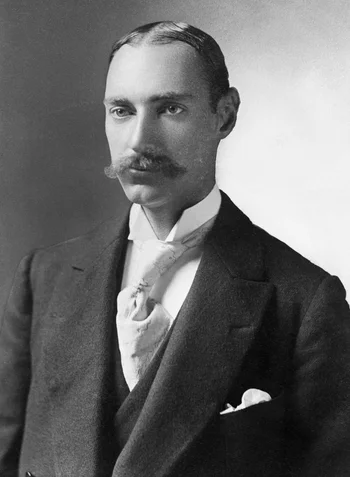
Otto Wagner
July 13, 1841 — Penzing, near Vienna, Austria
Otto Wagner was an Austrian architect and urban planner who transformed Vienna at the turn of the 20th century, designing its metropolitan railway system and a series of landmark buildings that rejected historical ornament in favour of functional, forward-looking design — making him one of the founding figures of modern architecture.
Early Career and the Imperial City
Born on July 13, 1841 in Penzing (now part of Vienna), Wagner studied architecture in Vienna, Berlin, and at the Vienna Academy of Fine Arts. His early career, spanning the 1860s through 1880s, was largely devoted to the ornate historicist style then fashionable in the Austro-Hungarian Empire — designing apartment buildings in Ringstraße Vienna with rich Renaissance and Baroque detailing. But Wagner was simultaneously developing a theory of architecture rooted in usefulness and contemporary life. In 1894, Emperor Franz Joseph appointed him professor at the Vienna Academy, giving him an unparalleled platform to teach a generation of Austrian architects his emerging doctrine: that all form must arise from practical necessity, and all ornament must serve the structure.
The Vienna Metro and Secession
Wagner's most visible civic legacy is the Stadtbahn — Vienna's metropolitan railway — for which he designed over thirty stations and numerous viaducts between 1894 and 1901. The stations, with their green metal canopies, white rendered walls, and flower-motif ornament in polychrome tile, remain among Vienna's most beloved landmarks. At the same time, he became associated with the Vienna Secession movement (1897), whose artists — including Gustav Klimt — sought to break Austrian art and design free from academic conventions. Wagner's Majolica House apartment block (1898) and Linke Wienzeile 38 (1898) exemplify this Jugendstil phase, their façades covered in floral ceramic tiles that show how ornament and structure can fuse without either dominating the other.
Did You Know?
Wagner's 1906 masterpiece, the Postal Savings Bank (Postsparkasse) in Vienna, is considered one of the earliest fully modern buildings in the world. Rather than hiding the bolts that attached its marble cladding to the façade, Wagner left them exposed and gave them decorative aluminum caps — an early instance of the "honesty of materials" principle that would define 20th-century architecture. The building's glass barrel-vaulted banking hall is still in use today.
Late Work and Lasting Influence
Wagner's two greatest late works — the Imperial and Royal Postal Savings Bank (1906, 1912) and the Church of St. Leopold at Steinhof psychiatric hospital (1907) — pushed architectural logic further toward pure function and elemental form. Despite their fame, neither his proposed redesign of Vienna's city museum nor the expansion of the Postal Savings Bank was realised; Wagner grew increasingly frustrated with institutional conservatism. He died on April 11, 1918 in Vienna, aged 76. His students included Josef Hoffmann, Joseph Maria Olbrich, and Adolf Loos, who between them shaped the entire subsequent arc of Central European modernism. The principle Wagner articulated — "Nothing that is not practical can be beautiful" — became a cornerstone of 20th-century design.