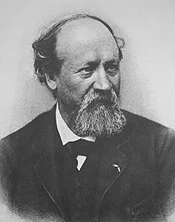
William Osler
July 12, 1849 — Bond Head, Ontario, Canada
Sir William Osler was a Canadian physician and humanist who is often called the "Father of Modern Medicine," the man who transformed medical education in North America by insisting that students learn at the bedside rather than only in lecture halls, and whose textbook The Principles and Practice of Medicine shaped the profession for a generation.
A Scientist Shaped by Curiosity
Born on July 12, 1849 in Bond Head, Ontario, the eighth child of an Anglican minister, Osler showed from boyhood an insatiable curiosity about natural history and anatomy. He trained at McGill University in Montreal, graduating in medicine in 1872, and spent two years in Europe studying under the leading physiologists and pathologists of the age. Returning to McGill as a lecturer and then professor, he built a reputation as a brilliant clinician and teacher. He performed over a thousand autopsies in his years at McGill — a gruelling empirical commitment that grounded his clinical intuitions in anatomical reality and distinguished him from the speculative medicine still common in that era.
Johns Hopkins and the Medical Revolution
In 1889, Osler was appointed physician-in-chief at the newly founded Johns Hopkins Hospital in Baltimore, where he joined a legendary quartet — with surgeon William Halsted, gynaecologist Howard Kelly, and pathologist William Welch — that would reshape American medicine. Osler introduced the bedside teaching model to the United States, insisting that medical students spend time on hospital wards observing and examining patients from their second year onward, not just studying from textbooks. He also created the medical residency system that remains the foundation of postgraduate medical training worldwide. His 1892 textbook, The Principles and Practice of Medicine, was so comprehensive and authoritative that it remained the standard reference in North America for decades.
Did You Know?
Osler's textbook had an unexpected consequence: the American philanthropist Frederick Gates read it on a train journey in 1897, was dismayed by how few of the diseases it described had effective treatments, and presented his findings to John D. Rockefeller. That conversation led to the creation of the Rockefeller Institute for Medical Research — now Rockefeller University — the first biomedical research institution in the United States. Without Osler's book, modern pharmaceutical research might have taken decades longer to begin.
Oxford and a Humane Legacy
In 1905, Osler was appointed Regius Professor of Medicine at Oxford — the most prestigious academic medical position in England — and was made a baronet. He poured himself into teaching, writing, and building Oxford's medical library, donating his own vast personal library to McGill upon his death. The loss of his only son Edward, killed in Belgium in 1917 during World War I, broke him; he died on December 29, 1919, aged 70. His aphorisms remain widely quoted in medical schools: "Listen to your patient, he is telling you the diagnosis" and "The good physician treats the disease; the great physician treats the patient who has the disease." He is commemorated by the Osler Health Science Library at McGill and by the Osler Society, active in medical schools worldwide.