On This Day — 1 August
2000s

2023
Former US President Donald Trump is indicted for his role in the January 6 United States Capitol attack, his third indictment in 2023.
Donald Trump

2017
A suicide attack on a mosque in Herat, Afghanistan kills 20 people.
Suicide attack

2008
The Beijing–Tianjin Intercity Railway begins operation as the fastest commuter rail system in the world.
Beijing–Tianjin intercity railway

2008
Eleven mountaineers from international expeditions died on K2, the second-highest mountain on Earth, in the worst single accident in the history of K2 mountaineering.
2008 K2 disaster

2007
The I-35W Mississippi River bridge spanning the Mississippi River in Minneapolis, Minnesota, collapses during the evening rush hour, killing 13 people and injuring 145.
I-35W Mississippi River bridge

2004
A supermarket fire kills 424 people and injures 360 others in Asunción, Paraguay.
Ycuá Bolaños supermarket fire
1900s

1998
Puntland, an autonomous state in northeastern Somalia, was officially established following a constitutional conference in Garowe, Issims and tribal chiefs agreed to create a self-declared government until Somalia recovered.
Puntland

1993
The Great Mississippi and Missouri Rivers Flood of 1993 comes to a peak.
Great Flood of 1993

1990
A plane crash in the Karabakh Range kills 46 people.
Aeroflot Flight E-35D
1988
A British soldier was killed in the Inglis Barracks bombing in London, England.
Chronology of Provisional Irish Republican Army actions (1980–1989)

1984
Commercial peat-cutters discover the preserved bog body of a man, called Lindow Man, at Lindow Moss, Cheshire, England.
Peat

1981
MTV begins broadcasting in the United States and airs its first video, "Video Killed the Radio Star" by The Buggles.
MTV

1980
Vigdís Finnbogadóttir is elected President of Iceland and becomes the world's first democratically elected female head of state.
Vigdís Finnbogadóttir
1980
A train crash kills 18 people and injures over 170 more in County Cork, Ireland.
Buttevant Rail Disaster

1976
Niki Lauda has a severe accident that almost claims his life at the German Grand Prix at Nürburgring.
Niki Lauda

1975
The final act of the CSCE meeting is signed in Helsinki, Finland.
Helsinki Accords

1974
Cyprus dispute: The United Nations Security Council authorizes the UNFICYP to create the "Green Line", dividing Cyprus into two zones.
Cyprus problem

1971
The Concert for Bangladesh, organized by former Beatle George Harrison, is held at Madison Square Garden in New York City.
The Concert for Bangladesh

1968
The coronation of Hassanal Bolkiah, the 29th Sultan of Brunei, is held.
Hassanal Bolkiah

1966
Charles Whitman kills 15 people at the University of Texas at Austin before being killed by the police.
Charles Whitman

1966
Purges of intellectuals and imperialists becomes official China policy at the beginning of the Cultural Revolution.
Cultural Revolution

1965
Frank Herbert's novel, Dune was published for the first time. It was named as the world's best-selling science fiction novel in 2003.
Frank Herbert

1964
The former Belgian Congo is renamed the Democratic Republic of the Congo.
Belgian Congo

1961
U.S. Defense Secretary Robert McNamara orders the creation of the Defense Intelligence Agency (DIA), the nation's first centralized military espionage organization.
Robert McNamara

1960
Dahomey (later renamed Benin) declares independence from France.
Dahomey

1960
Islamabad is declared the federal capital of the Government of Pakistan.
Islamabad

1957
The United States and Canada form the North American Aerospace Defense Command (NORAD).
NORAD

1950
Guam is organized as an unincorporated territory of the United States as the President Harry S. Truman signs the Guam Organic Act.
Guam

1946
Leaders of the Russian Liberation Army, a force of Russian prisoners of war that collaborated with Nazi Germany, are executed in Moscow, Soviet Union for treason.
Russian Liberation Army

1944
World War II: The Warsaw Uprising against the Nazi German occupation breaks out in Warsaw, Poland.
Warsaw Uprising

1943
World War II: Operation Tidal Wave, also known as "Black Sunday", was a failed American attempt to destroy Romanian oil fields.
World War II

1937
Josip Broz Tito reads the resolution "Manifesto of constitutional congress of KPH" to the constitutive congress of KPH (Croatian Communist Party) in woods near Samobor.
Josip Broz Tito

1936
The Olympics opened in Berlin with a ceremony presided over by Adolf Hitler.
1936 Summer Olympics

1933
Anti-Fascist activists Bruno Tesch, Walter Möller, Karl Wolff and August Lütgens are executed by the Nazi regime in Altona.
Bruno Tesch (antifascist)

1927
The Nanchang Uprising marks the first significant battle in the Chinese Civil War between the Kuomintang and Chinese Communist Party. This day is commemorated as the anniversary of the founding of the People's Liberation Army.
Nanchang Uprising

1915
Patrick Pearse gives his famous speech "Ireland unfree shall never be at peace" at O'Donovan Rossa's funeral in Dublin.
Patrick Pearse

1914
World War I: The German Empire declares war on the Russian Empire.
World War I
1914
World War I: The Swiss Army mobilizes because of World War I.
Swiss Armed Forces
1911
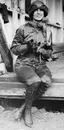
Harriet Quimby takes her pilot's test and becomes the first U.S. woman to earn an Aero Club of America aviator's certificate.
Harriet Quimby

1907
The start of the first Scout camp on Brownsea Island, the origin of the worldwide Scouting movement.
Brownsea Island Scout camp
1800s

1894
The Empire of Japan and Qing China declare war on each other after a week of fighting over Korea, formally inaugurating the First Sino-Japanese War.
Empire of Japan

1893
Henry Perky patents shredded wheat.
Henry Perky

1876
Colorado is admitted as the 38th U.S. state.
Colorado

1863
At the suggestion of Senator J. V. Snellman and the order of Emperor Alexander II, full rights are promised to the Finnish language by a language regulation in the Grand Duchy of Finland.
Johan Vilhelm Snellman

1855
The first ascent of Monte Rosa, the second highest summit in the Alps.
Monte Rosa
1849
Joven Daniel wrecks at the coast of Araucanía, Chile, leading to allegations that local Mapuche tribes murdered survivors and kidnapped Elisa Bravo.
Joven Daniel

1842
The Lombard Street riot erupts in Philadelphia, Pennsylvania, United States.
Lombard Street riot

1834
Slavery is abolished in the British Empire as the Slavery Abolition Act 1833 comes into force, although it remains legal in the possessions of the East India Company until the passage of the Indian Slavery Act, 1843.
Abolitionism in the United Kingdom

1834
Construction begins on the Wilberforce Monument in Kingston Upon Hull.
Wilberforce Monument

1801
First Barbary War: The American schooner USS Enterprise captures the Tripolitan polacca Tripoli in a single-ship action off the coast of modern-day Libya.
First Barbary War

1800
The Acts of Union 1800 are passed which merge the Kingdom of Great Britain and the Kingdom of Ireland into the United Kingdom of Great Britain and Ireland.
Acts of Union 1800
Before 1800

1798
French Revolutionary Wars: Battle of the Nile (Battle of Aboukir Bay): Battle begins when a British fleet engages the French Revolutionary Navy fleet in an unusual night action.
French Revolutionary Wars

1774
British scientist Joseph Priestley discovers oxygen gas, corroborating the prior discovery of this element by German-Swedish chemist Carl Wilhelm Scheele.
Joseph Priestley

1759
Seven Years' War: The Battle of Minden, an allied Anglo-German army victory over the French. In Britain this was one of a number of events that constituted the Annus Mirabilis of 1759 and is celebrated as Minden Day by certain British Army regiments.
Seven Years' War

1714
George, Elector of Hanover, becomes King George I of Great Britain, marking the beginning of the Georgian era of British history.
Hanover

1664
Ottoman forces are defeated in the battle of Saint Gotthard by an Austrian army led by Raimondo Montecuccoli, resulting in the Peace of Vasvár.
Ottoman Empire

1620
Speedwell leaves Delfshaven to bring pilgrims to America by way of England.
Speedwell (1577 ship)

1571
The Ottoman conquest of Cyprus is concluded, by the surrender of Famagusta.
Ottoman–Venetian War (1570–1573)

1498
Christopher Columbus becomes the first European to visit what is now Venezuela.
Christopher Columbus
1469
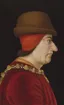
Louis XI of France founds the chivalric order called the Order of Saint Michael in Amboise.
Louis XI

1291
The Old Swiss Confederacy is formed with the signature of the Federal Charter.
Old Swiss Confederacy

1203
Isaac II Angelos, restored Byzantine Emperor, declares his son Alexios IV Angelos co-emperor after pressure from the forces of the Fourth Crusade.
Isaac II Angelos

902
Taormina, the last Byzantine stronghold in Sicily, is captured by the Aghlabid army, concluding the Muslim conquest of Sicily.
Taormina

607
Ono no Imoko is dispatched as envoy to the Sui court in China (Traditional Japanese date: July 3, 607).
Ono no Imoko

527
Justinian I becomes the sole ruler of the Byzantine Empire.
Justinian I

69
Batavian rebellion: The Batavians in Germania Inferior (Netherlands) revolt under the leadership of Gaius Julius Civilis.
AD 69

-30
Octavian (later known as Augustus) enters Alexandria, Egypt, executes Marcus Antonius Antyllus, and brings the city under the control of the Roman Republic. (date is O.S.)
Augustus