On This Day — 24 August
2000s

2023
Japan officially begins discharging treated radioactive water from the Fukushima Daiichi Nuclear Power Plant into the Pacific Ocean, sparking international concerns and condemnation.
Discharge of radioactive water of the Fukushima Daiichi Nuclear Power Plant

2020
Erin O'Toole is elected leader of the Conservative Party of Canada.
Erin O'Toole

2017
The National Space Agency of Taiwan successfully launches the observation satellite Formosat-5 into space.
List of government space agencies

2016
An earthquake strikes Central Italy with a magnitude of 6.2, with aftershocks felt as far as Rome and Florence. Around 300 people are killed.
August 2016 Central Italy earthquake

2016
Proxima Centauri b, the closest exoplanet to Earth, is discovered by the European Southern Observatory.
Proxima Centauri b

2014
A magnitude 6.0 earthquake strikes the San Francisco Bay Area; it is the largest in that area since 1989.
2014 South Napa earthquake

2012
Anders Behring Breivik, perpetrator of the 2011 Norway attacks, is sentenced to 21 years of preventive detention.
Anders Behring Breivik

2010
In San Fernando, Tamaulipas, Mexico, 72 illegal immigrants are killed by Los Zetas and eventually found dead by Mexican authorities.
San Fernando, Tamaulipas

2010
Henan Airlines Flight 8387 crashes at Yichun Lindu Airport in Yichun, Heilongjiang, China, killing 44 out of the 96 people on board.
Henan Airlines Flight 8387

2010
Agni Air Flight 101 crashes near Shikharpur, Makwanpur, Nepal, killing all 14 people on board.
Agni Air Flight 101

2008
Sixty-five passengers are killed when Iran Aseman Airlines Flight 6895 crashes during an emergency landing at Manas International Airport in Bishkek, Kyrgyzstan.
Iran Aseman Airlines Flight 6895

2008
A Cessna 208 Caravan crashes in Cabañas, Zacapa, Guatemala, killing 11 people.
Cessna 208 Caravan

2006
The International Astronomical Union (IAU) redefines the term "planet" such that Pluto is now considered a dwarf planet.
International Astronomical Union

2004
Ninety passengers die after two airliners explode after flying out of Domodedovo International Airport, near Moscow. The explosions are caused by suicide bombers from Chechnya.
2004 Russian aircraft bombings

2001
Air Transat Flight 236 loses all engine power over the Atlantic Ocean, forcing the pilots to conduct an emergency landing in the Azores.
Air Transat Flight 236
1900s

1998
First radio-frequency identification (RFID) human implantation tested in the United Kingdom.
Radio-frequency identification

1995
Microsoft releases Windows 95 to the public in North America.
Microsoft

1992
Hurricane Andrew makes landfall in Homestead, Florida as a Category 5 hurricane, causing up to $25 billion (1992 USD) in damages.
Hurricane Andrew

1991
Mikhail Gorbachev resigns as head of the Communist Party of the Soviet Union.
Mikhail Gorbachev

1991
Ukraine declares itself independent from the Soviet Union.
Ukraine

1989
Colombian drug barons declare "total war" on the Colombian government.
Colombia

1989
Tadeusz Mazowiecki is chosen as the first non-communist prime minister in Central and Eastern Europe.
Tadeusz Mazowiecki

1981
Mark David Chapman is sentenced to 20 years to life in prison for murdering John Lennon.
Mark David Chapman

1970
Vietnam War protesters bomb Sterling Hall at the University of Wisconsin–Madison, leading to an international manhunt for the perpetrators.
Vietnam War

1967
Led by Abbie Hoffman, the Youth International Party temporarily disrupts trading at the New York Stock Exchange by throwing dollar bills from the viewing gallery, causing trading to cease as brokers scramble to grab them.
Abbie Hoffman

1963
Buddhist crisis: As a result of the Xá Lợi Pagoda raids, the US State Department cables the United States Embassy, Saigon to encourage Army of the Republic of Vietnam generals to launch a coup against President Ngô Đình Diệm if he did not remove his brother Ngô Đình Nhu.
Buddhist crisis

1954
The Communist Control Act goes into effect, outlawing the Communist Party in the United States.
Communist Control Act of 1954

1954
Vice president João Café Filho takes office as president of Brazil, following the suicide of Getúlio Vargas.
Café Filho

1951
United Air Lines Flight 615 crashes near Decoto, California, killing 50 people.
United Air Lines Flight 615

1950
Edith Sampson becomes the first black U.S. delegate to the United Nations.
Edith S. Sampson

1949
The treaty creating the North Atlantic Treaty Organization goes into effect.
NATO

1944
World War II: Allied troops begin the attack on Paris.
Liberation of Paris

1942
World War II: The Battle of the Eastern Solomons. Japanese aircraft carrier Ryūjō is sunk, with the loss of seven officers and 113 crewmen. The US carrier USS Enterprise is heavily damaged.
World War II

1941
The Holocaust: Adolf Hitler orders the cessation of Nazi Germany's systematic T4 euthanasia program of the mentally ill and the handicapped due to protests, although killings continue for the remainder of the war.
The Holocaust

1938
Kweilin incident: A Japanese warplane shoots down the Kweilin, a Chinese civilian airliner, killing 14. It is the first recorded instance of a civilian airliner being shot down.
Kweilin incident

1937
Spanish Civil War: the Basque Army surrenders to the Italian Corpo Truppe Volontarie following the Santoña Agreement.
Spanish Civil War

1937
Spanish Civil War: Sovereign Council of Asturias and León is proclaimed in Gijón.
Sovereign Council of Asturias and León

1936
The Australian Antarctic Territory is created.
Australian Antarctic Territory

1933
The Crescent Limited train derails in Washington, D.C., after the bridge it is crossing is washed out by the 1933 Chesapeake–Potomac hurricane.
Crescent (train)

1932
Amelia Earhart becomes the first woman to fly across the United States non-stop (from Los Angeles to Newark, New Jersey).
Amelia Earhart

1931
Resignation of the United Kingdom's Second Labour Government. Formation of the UK National Government.
Second MacDonald ministry

1929
Second day of two-day Hebron massacre during the 1929 Palestine riots: Arab attacks on the Jewish community in Hebron in the British Mandate of Palestine, result in the death of 65–68 Jews; the remaining Jews are forced to flee the city.
1929 Hebron massacre

1914
World War I: German troops capture Namur.
World War I

1914
World War I: The Battle of Cer ends as the first Allied victory in the war.
Battle of Cer

1911
Manuel de Arriaga is elected and sworn in as the first President of Portugal.
Manuel de Arriaga

1909
Workers start pouring concrete for the Panama Canal.
Panama Canal
1800s

1898
Count Muravyov, Foreign Minister of Russia presents a rescript that convoked the First Hague Peace Conference.
Mikhail Nikolayevich Muravyov

1870
The Wolseley expedition reaches Manitoba to end the Red River Rebellion.
Wolseley expedition

1857
The Panic of 1857 begins, setting off one of the most severe economic crises in United States history.
Panic of 1857

1821
The Treaty of Córdoba is signed in Córdoba, now in Veracruz, Mexico, concluding the Mexican War of Independence from Spain.
Treaty of Córdoba
1820
Constitutionalist insurrection at Oporto, Portugal.
Constitutionalism
1816
The Treaty of St. Louis is signed in St. Louis, Missouri.
Treaty of St. Louis (1816)
1815
The modern Constitution of the Netherlands is signed.
Constitution of the Netherlands

1814
British troops capture Washington, D.C. and set the Presidential Mansion, Capitol, Navy Yard and many other public buildings ablaze.
Burning of Washington

1812
Peninsular War: A coalition of Spanish, British, and Portuguese forces succeed in lifting the two-and-a-half-year-long Siege of Cádiz.
Peninsular War
Before 1800

1789
The first naval battle of the Svensksund began in the Gulf of Finland.
Battle of Svensksund (1789)

1781
American Revolutionary War: A small force of Pennsylvania militia is ambushed and overwhelmed by an American Indian group, which forces George Rogers Clark to abandon his attempt to attack Detroit.
American Revolutionary War

1743
The War of the Hats: The Swedish army surrenders to the Russians in Helsinki, ending the war and starting Lesser Wrath.
Russo-Swedish War (1741–1743)

1690
Job Charnock of the East India Company establishes a factory in Calcutta, an event formerly considered the founding of the city (in 2003 the Calcutta High Court ruled that the city's foundation date is unknown).
Job Charnock

1682
William Penn receives the area that is now the state of Delaware, and adds it to his colony of Pennsylvania.
William Penn
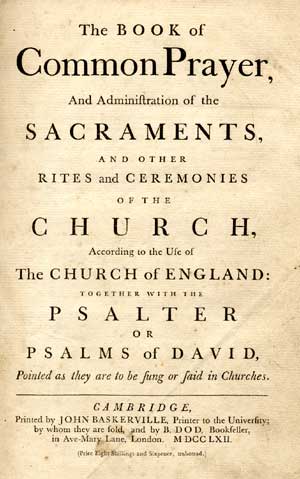
1662
The 1662 Book of Common Prayer is legally enforced as the liturgy of the Church of England, precipitating the Great Ejection of Dissenter ministers from their benefices.
Book of Common Prayer (1662)

1643
A Dutch fleet establishes a new colony in the ruins of Valdivia in southern Chile.
Dutch expedition to Valdivia

1608
The first official English representative to India lands in Surat.
Surat

1561
Willem of Orange marries duchess Anna of Saxony.
William the Silent

1516
The Ottoman Empire under Selim I defeats the Mamluk Sultanate and captures present-day Syria at the Battle of Marj Dabiq.
Ottoman Empire
1482
The town and castle of Berwick-upon-Tweed is captured from Scotland by an English army.
English invasion of Scotland (1482)

1349
Six thousand Jews are killed in Mainz after being blamed for the bubonic plague.
Mainz

1215
Pope Innocent III issues a bull declaring Magna Carta invalid.
Pope Innocent III
1200
King John of England, signer of the first Magna Carta, marries Isabella of Angoulême in Angoulême Cathedral.
John, King of England
1185
Sack of Thessalonica by the Normans.
Sack of Thessalonica (1185)

410
The Visigoths under King Alaric I begin to pillage Rome.
Visigoths

394
The Graffito of Esmet-Akhom, the latest known inscription in Egyptian hieroglyphs, is written.
Graffito of Esmet-Akhom

367
Gratian, son of Roman Emperor Valentinian I, is named co-Augustus at the age of eight by his father.
Gratian