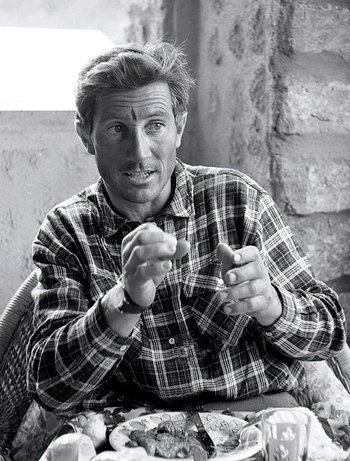
Abbas Kiarostami
June 22, 1940 — July 4, 2016
Abbas Kiarostami was an Iranian filmmaker, screenwriter, photographer, and poet whose minimalist, philosophically probing films made him one of the most celebrated directors in cinema history, recognized with the Palme d'Or at the Cannes Film Festival and the admiration of peers across the world.
Early Career and the Kanoon
Born on June 22, 1940 in Tehran, Kiarostami studied fine arts at the University of Tehran and began his career designing book covers and making commercials. In 1970 he joined the Institute for the Intellectual Development of Children and Young Adults — known as Kanoon — where he would work for more than a decade and develop the foundational aesthetic of his career. His short films and features for Kanoon explored the lives of children in rural Iran with a documentary-like intimacy and a gentle ethical intelligence that set them apart from anything else in Iranian cinema. His 1974 short Two Solutions for One Problem and his 1977 feature The Report established him as a major talent, but it was his Koker trilogy — Where Is the Friend's Home? (1987), And Life Goes On (1992), and Through the Olive Trees (1994) — that brought him to international attention.
Taste of Cherry and World Recognition
Kiarostami's most famous film, Taste of Cherry (1997), follows a middle-aged man who drives through the hills outside Tehran looking for someone to bury him after his planned suicide. The film's spare dialogue, its long driving sequences shot through a car windshield, and its deeply ambiguous ending divided critics but won the Palme d'Or at Cannes, instantly establishing Kiarostami as a filmmaker of the first rank. His follow-up, The Wind Will Carry Us (1999), won the Grand Jury Prize at Venice. Susan Sontag called him "the most important filmmaker alive." Martin Scorsese has repeatedly cited him as one of the great artists of cinema. Jean-Luc Godard famously declared: "Film begins with D.W. Griffith and ends with Kiarostami." His later films, including Ten (2002) and the Italian-set Certified Copy (2010) and Like Someone in Love (2012), showed him continually experimenting with form and meaning.
Did You Know?
Kiarostami was also a distinguished photographer and poet, publishing several collections of haiku-influenced verse and photographic work that are considered significant contributions to Iranian art in their own right. His creative identity was never limited to cinema: he saw filmmaking, photography, poetry, and visual art as different expressions of the same sustained inquiry into the nature of experience and observation.
Legacy
Kiarostami died in Paris on July 4, 2016, following complications from gastrointestinal cancer. He was 76. His death prompted tributes from filmmakers and critics worldwide. His influence on Iranian cinema and on world cinema broadly is immeasurable: the spare, searching style he developed — featuring non-professional actors, natural settings, and narratives that blur the line between fiction and reality — has been adopted and adapted by filmmakers from Tehran to Taiwan. His complete works have been collected and retrospectives staged at major film institutions around the world, and critical opinion now ranks him consistently among the dozen or so greatest filmmakers who ever lived.