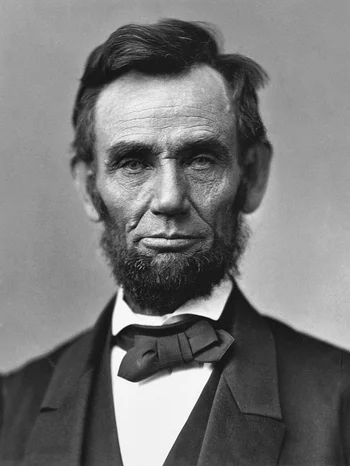
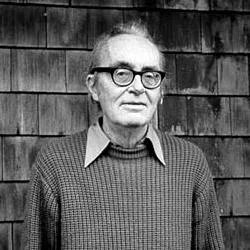
George Meredith
February 12, 1828 — May 18, 1909
George Meredith was an English novelist and poet of the Victorian era who was considered among the preeminent literary figures of his age, best remembered today for the psychologically incisive comic novel The Egoist and the sonnets of Modern Love.
Early Life and First Marriage
Born on February 12, 1828 in Portsmouth, England, the son of a tailor, Meredith studied in Germany and returned to England to train as a solicitor before abandoning the law for literature. His first marriage, to Mary Ellen Peacock — the daughter of the novelist Thomas Love Peacock — was unhappy and ended when she left him for the Pre-Raphaelite painter Henry Wallis in 1858. This wounding personal experience left a direct mark on his work: his 1862 sonnet sequence Modern Love, fifty sixteen-line "sonnets" charting the disintegration of a marriage, is now recognized as one of the great poems of the Victorian era and a startlingly frank examination of sexual unhappiness and marital failure that would have seemed almost scandalous at the time of its publication.
The Egoist and Literary Achievement
Meredith's fiction is noted for its highly wrought prose style — dense, epigrammatic, allusive — that either enthralls or frustrates readers depending on their tolerance for difficulty. His best-loved novel, The Egoist (1879), offers a sustained satirical portrait of Willoughby Patterne, a self-absorbed aristocrat whose suffocating need to possess and control the women around him is dissected with anatomical precision. Henry James admired it; Oscar Wilde wrote about it. His earlier novels, The Ordeal of Richard Feverel (1859) and Diana of the Crossways (1885), similarly investigated the psychological lives of characters at odds with social convention. George Eliot, Thomas Hardy, and Robert Louis Stevenson all expressed admiration for his work, and for several decades he was ranked alongside them as one of the defining novelists of the Victorian age.
Did You Know?
For more than thirty years, Meredith worked as a literary adviser for the publisher Chapman and Hall. In this capacity he rejected Thomas Hardy's first novel, The Poor Man and the Lady, advising Hardy to try something more conventionally plotted. Hardy took the advice. Their correspondence over several decades reveals the complicated relationship between a great writer's public advocacy for difficult fiction and the commercial pressures of the publishing world.
Later Life and Reception
By the 1880s and 1890s, Meredith was one of the most venerated literary figures in Britain, receiving the Order of Merit in 1905 and succeeding Lord Tennyson as president of the Society of Authors. He died on May 18, 1909 at Box Hill in Surrey, where he had lived for thirty years. His reputation declined sharply after his death, largely because his demanding prose style fell out of fashion with readers seeking the plainer naturalism of the Edwardian and then modernist periods. The work of scholars in the latter 20th century, particularly feminist critics who found his portrait of intelligent women under social pressure powerfully anticipatory, has partially restored his reputation, and Modern Love especially is now recognized as a masterpiece.