On This Day — 10 December
2000s

2021
A widespread, deadly, and violent tornado outbreak slams the Central, Midwestern, and Southern regions of the United States. Eighty-nine people are killed by the tornadoes, with most of the fatalities occurring in Kentucky, where a single tornado kills 57 people, and injures hundreds of others. Another tornado in Edwardsville, Illinois strikes an Amazon warehouse, killing six workers.
Tornado outbreak of December 10–11, 2021

2019
The Ostrava hospital attack in the Czech Republic results in eight deaths, including the perpetrator.
Ostrava hospital shooting

2017
ISIL is defeated in Iraq.
Islamic State

2016
Two explosions outside a football stadium in Istanbul, Turkey, kill 38 people and injure 166 others.
December 2016 Istanbul bombings

2015
Rojava conflict: The Syrian Democratic Council is established in Dêrik, forming the political wing of the Syrian Democratic Forces in northeast Syria.
Rojava Revolution

2014
Palestinian minister Ziad Abu Ein is killed after the suppression of a demonstration by Israeli forces in the village (Turmus'ayya) in Ramallah.
Ziad Abu Ein

2005
Sosoliso Airlines Flight 1145 crashes at Port Harcourt International Airport in Nigeria, killing 108 people.
Sosoliso Airlines Flight 1145
1900s

1999
Helen Clark is sworn in as Prime Minister of New Zealand, the second woman to hold the post and the first following an election.
Helen Clark

1996
The new Constitution of South Africa is promulgated by Nelson Mandela.
Constitution of South Africa

1995
The Israeli army withdraws from Nablus pursuant to the terms of Oslo Accord.
Israeli Ground Forces

1994
Rwandan genocide: Maurice Baril, military advisor to the U.N. Secretary-General and head of the Military Division of the Department of Peacekeeping Operations, recommends that UNAMIR stand down.
Rwandan genocide

1993
The last shift leaves Wearmouth Colliery in Sunderland. The closure of the 156-year-old pit marks the end of the old County Durham coalfield, which had been in operation since the Middle Ages.
Monkwearmouth Colliery

1992
Sheikh Zayed bin Sultan Al Nahyan establishes the Marriage Fund in the United Arab Emirates in response to rising wedding prices.
Zayed bin Sultan Al Nahyan

1991
The Nagorno-Karabakh independence referendum is held, with 99.98% voting in favor of independence.
1991 Nagorno-Karabakh independence referendum

1991
Nursultan Nazarbayev is sworn in as the 1st President of Kazakhstan.
Nursultan Nazarbayev

1991
The Kazakh Soviet Socialist Republic is renamed into the Republic of Kazakhstan.
Kazakh Soviet Socialist Republic

1989
Mongolian Revolution: At the country's first open pro-democracy public demonstration, Tsakhiagiin Elbegdorj announces the establishment of the Mongolian Democratic Union.
Mongolian Revolution of 1990
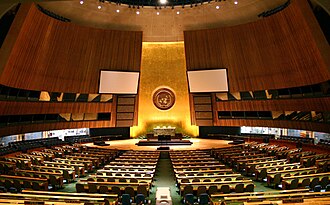
1984
United Nations General Assembly recognizes the Convention against Torture.
United Nations General Assembly

1983
Democracy is restored in Argentina with the inauguration of President Raúl Alfonsín.
Democracy

1979
Kaohsiung Incident: Taiwanese pro-democracy demonstrations are suppressed by the KMT dictatorship, and organizers are arrested.
Kaohsiung Incident

1978
Arab–Israeli conflict: Prime Minister of Israel Menachem Begin and President of Egypt Anwar Sadat are jointly awarded the Nobel Peace Prize.
Arab–Israeli conflict
1968
Japan's biggest heist, the still-unsolved "300 million yen robbery", is carried out in Tokyo.
300 million yen robbery

1963
Zanzibar gains independence from the United Kingdom as a constitutional monarchy, under Sultan Jamshid bin Abdullah.
Zanzibar
1963
An assassination attempt on the British High Commissioner in Aden kills two people and wounds dozens more.
1963 Aden airport attack

1953
British Prime Minister Winston Churchill receives the Nobel Prize in Literature.
United Kingdom

1949
Chinese Civil War: The People's Liberation Army begins its siege of Chengdu, the last Kuomintang-held city in mainland China, forcing President of the Republic of China Chiang Kai-shek and his government to retreat to Taiwan.
Chinese Civil War
1948
The Human Rights Convention is signed by the United Nations.
United Nations Commission on Human Rights

1942
World War II: Government of Poland in exile send Raczyński's Note (the first official report on the Holocaust) to 26 governments who signed the Declaration by United Nations.
Polish government-in-exile

1941
World War II: The Royal Navy capital ships HMS Prince of Wales and HMS Repulse are sunk by Imperial Japanese Navy torpedo bombers near British Malaya.
World War II

1941
World War II: Battle of the Philippines: Imperial Japanese forces under the command of General Masaharu Homma land on Luzon.
Philippines campaign (1941–1942)
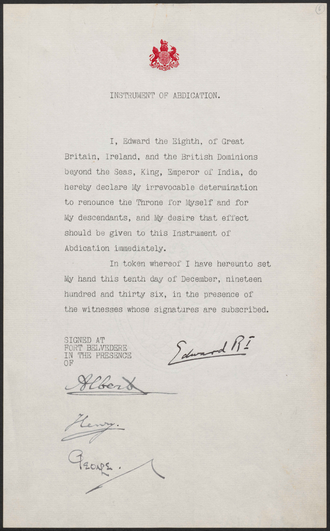
1936
Abdication Crisis: Edward VIII signs the Instrument of Abdication.
Abdication of Edward VIII

1932
Thailand becomes a constitutional monarchy.
Thailand

1909
Selma Lagerlöf becomes the first female writer to receive the Nobel Prize in Literature.
Selma Lagerlöf

1907
The worst night of the Brown Dog riots in London, when 1,000 medical students, protesting against the existence of a memorial for animals that have been vivisected, clash with 400 police officers.
Brown Dog affair

1906
U.S. President Theodore Roosevelt is awarded the Nobel Peace Prize for his role in the mediation of the Russo-Japanese War, becoming the first American to win a Nobel Prize in any field.
Theodore Roosevelt

1902
The opening of the reservoir of the Aswan Dam in Egypt.
Aswan Low Dam

1901
The first Nobel Prize ceremony is held in Stockholm on the fifth anniversary of Alfred Nobel's death.
Nobel Prize
1800s

1898
Spanish–American War: The Treaty of Paris is signed, officially ending the conflict. Spain cedes administration of Cuba to the United States, and the United States agrees to pay Spain $20 million for the Philippines.
Spanish–American War

1896
Alfred Jarry's Ubu Roi premieres in Paris. A riot breaks out at the end of the performance.
Alfred Jarry

1877
Russo-Turkish War: The Russian Army captures Plevna after a 5-month siege. The garrison of 25,000 surviving Turks surrenders. The Russian victory is decisive for the outcome of the war and the Liberation of Bulgaria.
Russo-Turkish War (1877–1878)

1864
American Civil War: Sherman's March to the Sea: Major General William Tecumseh Sherman's Union Army troops reach the outer Confederate defenses of Savannah, Georgia.
Sherman's March to the Sea

1861
American Civil War: The Confederate States of America accept a rival state government's pronouncement that declares Kentucky to be the 12th state of the Confederacy.
American Civil War

1861
Forces led by Nguyễn Trung Trực, an anti-colonial guerrilla leader in southern Vietnam, sink the French lorcha L'Esperance.
Nguyễn Trung Trực

1817
Mississippi becomes the 20th U.S. state.
Mississippi
Before 1800

1799
France adopts the metre as its official unit of length.
Unit of length
1768
The first edition of the Encyclopædia Britannica is published.
Encyclopædia Britannica

1684
Isaac Newton's derivation of Kepler's laws from his theory of gravity, contained in the paper De motu corporum in gyrum, is read to the Royal Society by Edmond Halley.
Isaac Newton

1665
The Royal Netherlands Marine Corps is founded by Michiel de Ruyter.
Netherlands Marine Corps

1652
Defeat at the Battle of Dungeness causes the Commonwealth of England to reform its navy.
Battle of Dungeness
1541
Thomas Culpeper and Francis Dereham are executed for having affairs with Catherine Howard, Queen of England and wife of Henry VIII.
Thomas Culpeper
1520
Martin Luther burns his copy of the papal bull Exsurge Domine outside Wittenberg's Elster Gate.
Martin Luther

1508
The League of Cambrai is formed by Pope Julius II, Louis XII of France, Maximilian I, Holy Roman Emperor and Ferdinand II of Aragon as an alliance against Venice.
War of the League of Cambrai

1317
The Nyköping Banquet: Birger, King of Sweden treacherously seizes his two brothers, dukes Valdemar and Erik, who are subsequently starved to death in the dungeon of Nyköping Castle.
Nyköping Banquet