On This Day — 2 December
2000s

2020
Cannabis is removed from the list of most dangerous drugs of the international drug control treaty by the UN Commission on Narcotic Drugs.
Cannabis (drug)

2016
Thirty-six people die in a fire at a converted Oakland, California, warehouse serving as an artist collective.
Ghost Ship warehouse fire
2015
San Bernardino attack: Syed Rizwan Farook and Tashfeen Malik kill 14 people and wound 22 at the Inland Regional Center in San Bernardino, California.
2015 San Bernardino attack

2001
Enron files for Chapter 11 bankruptcy.
Enron
1900s

1999
The United Kingdom devolves political power in Northern Ireland to the Northern Ireland Executive following the Good Friday Agreement.
Northern Ireland

1993
Colombian drug lord Pablo Escobar is shot and killed by police in Medellín.
Colombia

1993
Space Shuttle program: STS-61: NASA launches the Space Shuttle Endeavour on a mission to repair the Hubble Space Telescope.
Space Shuttle program

1992
Space Shuttle Discovery is launched on STS-53 for the United States Department of Defense.
Space Shuttle Discovery

1991
Canada and Poland become the first nations to recognize the independence of Ukraine from the Soviet Union.
Ukraine

1990
Space Shuttle Columbia is launched on STS-35, carrying the ASTRO-1 spacelab observatory.
Space Shuttle Columbia

1989
The Peace Agreement of Hat Yai is signed and ratified by the Malayan Communist Party (MCP) and the governments of Malaysia and Thailand, ending the over two-decade-long communist insurgency in Malaysia.
Hat Yai Peace Agreement

1988
Benazir Bhutto is sworn in as Prime Minister of Pakistan, becoming the first woman to head the government of a Muslim-majority state.
Benazir Bhutto

1988
Space Shuttle Atlantis is launched on STS-27, a classified mission for the United States Department of Defense.
Space Shuttle Atlantis

1982
At the University of Utah, Barney Clark becomes the first person to receive a permanent artificial heart.
University of Utah

1980
Salvadoran Civil War: Four American missionaries are raped and murdered by a death squad.
Salvadoran Civil War

1977
A Tupolev Tu-154 crashes near Benghazi, Libya, killing 59.
Tupolev Tu-154

1976
Fidel Castro becomes President of Cuba, replacing Osvaldo Dorticós Torrado.
Fidel Castro

1975
Laotian Civil War: The Pathet Lao seizes the Laotian capital of Vientiane, forces the abdication of King Sisavang Vatthana, and proclaims the Lao People's Democratic Republic.
Laotian Civil War

1972
Gough Whitlam is elected the 21st Prime Minister of Australia in the 1972 Australian federal election, defeating William McMahon and leading the Australian Labor Party back into office after 23 years in Opposition.
Gough Whitlam

1971
Abu Dhabi, Ajman, Fujairah, Sharjah, Dubai, and Umm al-Quwain form the United Arab Emirates.
Emirate of Abu Dhabi

1970
The United States Environmental Protection Agency begins operations.
United States Environmental Protection Agency

1968
Wien Consolidated Airlines Flight 55 crashes into Pedro Bay, Alaska, killing all 39 people on board.
Wien Consolidated Airlines Flight 55

1962
Vietnam War: After a trip to Vietnam at the request of U.S. President John F. Kennedy, U.S. Senate Majority Leader Mike Mansfield becomes the first American official to comment adversely on the war's progress.
Vietnam War

1961
In a nationally broadcast speech, Cuban leader Fidel Castro declares that he is a Marxist–Leninist and that Cuba will adopt Communism.
Cuba

1957
United Nations Security Council Resolution 126 relating to the Kashmir conflict is adopted.
United Nations Security Council Resolution 126

1956
The Granma reaches the shores of Cuba's Oriente Province. Fidel Castro, Che Guevara and 80 other members of the 26th of July Movement disembark to initiate the Cuban Revolution.
Landing of the Granma

1954
Cold War: The United States Senate votes 65 to 22 to censure Joseph McCarthy for "conduct that tends to bring the Senate into dishonor and disrepute".
McCarthyism

1954
The Sino-American Mutual Defense Treaty, between the United States and Taiwan, is signed in Washington, D.C.
Mutual Defense Treaty between the United States and the Republic of China

1950
Korean War: The Battle of the Ch'ongch'on River ends with a decisive Chinese victory and UN forces are completely expelled from North Korea.
Korean War

1949
Convention for the Suppression of the Traffic in Persons and of the Exploitation of the Prostitution of Others is adopted.
Convention for the Suppression of the Traffic in Persons and of the Exploitation of the Prostitution of Others

1947
Jerusalem Riots of 1947: Arabs riot in Jerusalem in response to the United Nations Partition Plan for Palestine.
1947 Jerusalem riots

1943
World War II: A Luftwaffe bombing raid on the harbour of Bari, Italy, sinks numerous cargo and transport ships, including the American SS John Harvey, which is carrying a stockpile of mustard gas.
Air raid on Bari

1942
World War II: During the Manhattan Project, a team led by Enrico Fermi initiates the first artificial self-sustaining nuclear chain reaction.
World War II

1939
New York City's LaGuardia Airport opens.
LaGuardia Airport

1930
Great Depression: In a State of the Union message, U.S. President Herbert Hoover proposes a $150 million public works program to help generate jobs and stimulate the economy.
Great Depression

1927
Following 19 years of Ford Model T production, the Ford Motor Company unveils the Ford Model A as its new automobile.
Ford Model T

1917
World War I: Russia and the Central Powers sign an armistice at Brest-Litovsk, and peace talks leading to the Treaty of Brest-Litovsk begin.
World War I

1908
Puyi becomes Emperor of China at the age of two.
Puyi
1800s

1899
Philippine–American War: The Battle of Tirad Pass, known as the "Filipino Thermopylae", is fought.
Philippine–American War

1867
At Tremont Temple in Boston, British author Charles Dickens gives his first public reading in the United States.
Tremont Temple

1865
Alabama ratifies the 13th Amendment to the U.S. Constitution, followed by North Carolina, then Georgia; U.S. slaves were legally free within two weeks.
Alabama

1859
Origins of the American Civil War: Militant abolitionist leader John Brown is hanged for his October raid on Harpers Ferry, Virginia (now West Virginia).
Origins of the American Civil War

1852
Louis-Napoléon Bonaparte becomes Emperor of the French as Napoleon III.
Napoleon III
1851
French President Louis-Napoléon Bonaparte overthrows the Second Republic.
Napoleon III

1848
Franz Joseph I becomes Emperor of Austria.
Franz Joseph I

1845
Manifest Destiny: In a State of the Union message, U.S. President James K. Polk proposes that the United States should aggressively expand into the West.
Manifest destiny

1823
Monroe Doctrine: In a State of the Union message, U.S. President James Monroe proclaims American neutrality in future European conflicts, and warns European powers not to interfere in the Americas.
Monroe Doctrine

1805
War of the Third Coalition: Battle of Austerlitz: French troops under Napoleon decisively defeat a joint Russo-Austrian force.
War of the Third Coalition

1804
At Notre Dame Cathedral in Paris, Napoleon Bonaparte crowns himself Emperor of the French.
Notre-Dame de Paris
Before 1800

1766
Swedish parliament approves the Swedish Freedom of the Press Act and implements it as a ground law, thus being first in the world with freedom of speech.
Swedish Freedom of the Press Act

1763
Dedication of the Touro Synagogue, in Newport, Rhode Island, the first synagogue in what will become the United States.
Touro Synagogue

1697
St Paul's Cathedral, rebuilt to the design of Sir Christopher Wren following the Great Fire of London, is consecrated.
St Paul's Cathedral

1409
The University of Leipzig opens.
Leipzig University
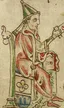
1244
Pope Innocent IV arrives at Lyon for the First Council of Lyon.
Pope Innocent IV