On This Day — 9 July
2000s

2025
Earth completes its shortest recorded day due to a slight acceleration in rotation, with July 9 lasting approximately 1.3 to 1.6 milliseconds less than 24 hours.
Earth's rotation

2011
South Sudan gains independence and secedes from Sudan.
South Sudan

2011
A rally takes place in Kuala Lumpur, Malaysia to call for fairer elections in the country.
Bersih 2.0 rally

2006
One hundred and twenty-five people are killed when S7 Airlines Flight 778, an Airbus A310 passenger jet, veers off the runway while landing in wet conditions at Irkutsk Airport in Siberia.
S7 Airlines Flight 778

2006
Italy win their fourth World Cup title, defeating France 5–3 on penalties following a 1–1 draw after extra time.
Italy national football team

2004
The Senate Report on Iraqi WMD Intelligence is released by the United States Senate Select Committee on Intelligence, casting doubt on the rationale for the Iraq War.
Senate Report on Iraqi WMD Intelligence

2002
The African Union is established in Addis Ababa, Ethiopia, replacing the Organisation of African Unity (OAU). The organization's first chairman is Thabo Mbeki, President of South Africa.
African Union
1900s
1999
Days of student protests begin after Iranian police and hardliners attack a student dormitory at the University of Tehran.
1999 Iranian student protests

1997
An explosion aboard a Brazilian airline TAM Fokker 100 launches engineer Fernando Caldeira de Moura Campos into a 2,400 meters free fall.
LATAM Airlines Brasil
1995
The Navaly church bombing is carried out by the Sri Lanka Air Force killing 125 Tamil civilian refugees.
Navaly church bombing

1993
The Parliament of Canada passes the Nunavut Act leading to the 1999 creation of Nunavut, dividing the Northwest Territories into arctic (Inuit) and sub-arctic (Dene) lands based on a plebiscite.
Parliament of Canada

1986
The New Zealand Parliament passes the Homosexual Law Reform Act legalising homosexuality in New Zealand.
New Zealand Parliament

1982
Pan Am Flight 759 crashes in Kenner, Louisiana, killing all 145 people on board and eight others on the ground.
Pan Am Flight 759

1979
A car bomb destroys a Renault motor car owned by "Nazi hunters" Serge and Beate Klarsfeld outside their home in France in an unsuccessful assassination attempt.
Renault

1977
The Pinochet dictatorship in Chile organises the youth event of Acto de Chacarillas, a ritualised act reminiscent of Francoist Spain.
Military dictatorship of Chile

1962
Starfish Prime tests the effects of a nuclear explosion at orbital altitudes.
Starfish Prime

1961
Greece becomes the first member state to join the European Economic Community by signing the Athens Agreement, which is later suspended in 1967 during the Greek junta.
Greece

1958
A 7.8 Mw strike-slip earthquake in Alaska causes a landslide that produces a megatsunami. The runup from the waves reached 525 m (1,722 ft) on the rim of Lituya Bay; five people were killed.
1958 Lituya Bay earthquake and megatsunami
1956
The 7.7 Mw Amorgos earthquake shakes the Cyclades island group in the Aegean Sea with a maximum Mercalli intensity of IX (Violent). The shaking and the destructive tsunami that followed left fifty-three people dead. A damaging M7.2 aftershock occurred minutes after the mainshock.
1956 Amorgos earthquake

1955
The Russell–Einstein Manifesto calls for a reduction of the risk of nuclear warfare.
Russell–Einstein Manifesto

1944
World War II: American forces take Saipan, bringing the Japanese archipelago within range of B-29 raids, and causing the downfall of the Tojo government.
Battle of Saipan

1944
World War II: Continuation War: Finland wins the Battle of Tali–Ihantala, the largest battle ever fought in northern Europe. The Red Army withdraws its troops from Ihantala and digs into a defensive position, thus ending the Vyborg–Petrozavodsk Offensive.
Continuation War

1943
World War II: The Allied invasion of Sicily begins, leading to the downfall of Mussolini and forcing Hitler to break off the Battle of Kursk.
World War II
1937
The silent film archives of Fox Film Corporation are destroyed by the 1937 Fox vault fire.
Fox Film

1932
The state of São Paulo revolts against the Brazilian Federal Government, starting the Constitutionalist Revolution.
São Paulo (state)

1926
Chiang Kai-shek accepts the post of commander-in-chief of the National Revolutionary Army, marking the beginning of the Northern Expedition to unite China under the rule of the Nationalist government.
Chiang Kai-shek

1922
Johnny Weissmuller swims the 100 meters freestyle in 58.6 seconds, breaking the world swimming record and the 'minute barrier'.
Johnny Weissmuller

1918
In Nashville, Tennessee, an inbound local train collides with an outbound express, killing 101 and injuring 171 people, making it the deadliest rail accident in United States history.
Nashville, Tennessee

1900
The Federation of Australia is given royal assent.
Federation of Australia

1900
The Governor of Shanxi province in North China orders the execution of 45 foreign Christian missionaries and local church members, including children.
Shanxi
1800s

1896
William Jennings Bryan delivers his Cross of Gold speech advocating bimetallism at the 1896 Democratic National Convention in Chicago.
William Jennings Bryan

1893
Daniel Hale Williams, American heart surgeon, performs the first successful open-heart surgery in United States without anesthesia.
Daniel Hale Williams

1877
The inaugural Wimbledon Championships begins.
1877 Wimbledon Championship

1875
The Herzegovina Uprising against Ottoman rule begins, which would last until 1878 and have far-reaching implications throughout the Balkans.
Herzegovina uprising (1875–1877)

1868
The 14th Amendment to the United States Constitution is ratified, guaranteeing African Americans full citizenship and all persons in the United States due process of law.
Fourteenth Amendment to the United States Constitution

1863
American Civil War: The Siege of Port Hudson ends in a Union victory and, along with the fall of Vicksburg five days earlier, gives the Union complete control of the Mississippi River.
American Civil War

1850
U.S. President Zachary Taylor dies after eating raw fruit and iced milk; he is succeeded in office by Vice President Millard Fillmore.
Zachary Taylor

1850
Persian prophet Báb is executed in Tabriz, Persia.
Báb

1821
Four hundred and seventy prominent Cypriots including Archbishop Kyprianos are executed in response to Cypriot aid to the Greek War of Independence.
Cyprus
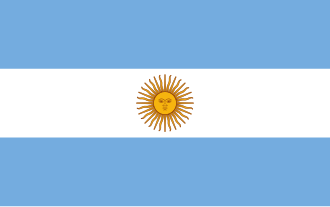
1816
Argentina declares independence from Spain.
Argentina

1815
Charles Maurice de Talleyrand-Périgord becomes the first Prime Minister of France.
Charles Maurice de Talleyrand-Périgord

1811
Explorer David Thompson posts a sign near what is now Sacajawea State Park in Washington state, claiming the Columbia District for the United Kingdom.
David Thompson (explorer)
1810
Napoleon annexes the Kingdom of Holland as part of the First French Empire.
Napoleon

1807
The second Treaty of Tilsit is signed between France and Prussia, ending the War of the Fourth Coalition.
Treaties of Tilsit
Before 1800

1795
Financier James Swan pays off the $2,024,899 US national debt that had been accrued during the American Revolution.
James Swan (financier)

1793
The Act Against Slavery in Upper Canada bans the importation of slaves and will free those who are born into slavery after the passage of the Act at 25 years of age.
Act Against Slavery

1790
The Swedish Navy captures one third of the Russian Baltic fleet.
Swedish Navy

1789
In Versailles, the National Assembly reconstitutes itself as the National Constituent Assembly and begins preparations for a French constitution.
Versailles, Yvelines

1776
George Washington orders the Declaration of Independence to be read out to members of the Continental Army in Manhattan, while thousands of British troops on Staten Island prepare for the Battle of Long Island.
George Washington

1763
The Mozart family grand tour of Europe begins, lifting the profile of son Wolfgang Amadeus.
Mozart family grand tour

1762
Catherine the Great becomes Empress of Russia following the coup against her husband, Peter III.
Catherine the Great

1755
The Braddock Expedition is soundly defeated by a smaller French and Native American force in its attempt to capture Fort Duquesne in what is now downtown Pittsburgh.
Braddock Expedition

1745
French victory in the Battle of Melle allows them to capture Ghent in the days after.
Battle of Melle

1701
A Bourbon force under Nicolas Catinat withdraws from a smaller Habsburg force under Prince Eugene of Savoy in the Battle of Carpi.
House of Bourbon

1609
Bohemia is granted freedom of religion through the Letter of Majesty by the Holy Roman Emperor, Rudolf II.
Bohemia

1572
Nineteen Catholics suffer martyrdom for their beliefs, in the Dutch town of Gorkum.
Martyrs of Gorkum
1540
King Henry VIII of England annuls his marriage to his fourth wife, Anne of Cleves.
Henry VIII
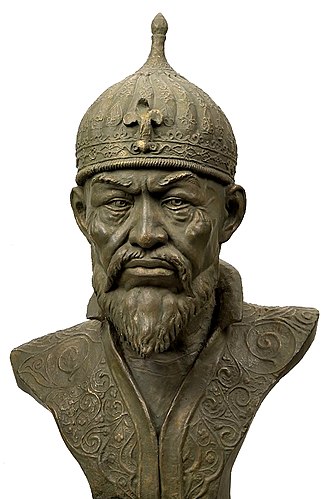
1401
Timur attacks the Jalairid Sultanate and destroys Baghdad.
Timur

1386
The Old Swiss Confederacy makes great strides in establishing control over its territory by soundly defeating the Duchy of Austria in the Battle of Sempach.
Old Swiss Confederacy

1357
Emperor Charles IV assists in laying the foundation stone of Charles Bridge in Prague.
Charles IV, Holy Roman Emperor

969
The Fatimid general Jawhar leads the Friday prayer in Fustat in the name of Caliph al-Mu'izz li-Din Allah, thereby symbolically completing the Fatimid conquest of Egypt.
Fatimid Caliphate
869
The 8.4–9.0 Mw Sanriku earthquake strikes the area around Sendai in northern Honshu, Japan. Inundation from the tsunami extended several kilometers inland.
869 Jōgan earthquake

660
Korean forces under general Kim Yu-sin of Silla defeat the army of Baekje in the Battle of Hwangsanbeol.
Kim Yu-sin

551
A major earthquake strikes Beirut, triggering a devastating tsunami that affects the coastal towns of Byzantine Phoenicia, causing thousands of deaths.
551 Beirut earthquake

491
Odoacer makes a night assault with his Heruli guardsmen, engaging Theoderic the Great in Ad Pinetam. Both sides suffer heavy losses, but in the end Theodoric forces Odoacer back into Ravenna.
Odoacer

381
The end of the First Council of Christian bishops convened in Constantinople by the Roman emperor Theodosius I.
First Council of Constantinople
118
Hadrian, who became emperor a year previously on Trajan's death, makes his entry into Rome.
AD 118