On This Day — 11 June
2000s

2013
Greece's public broadcaster ERT is shut down by then-prime minister Antonis Samaras. It would be opened exactly two years later by then-prime minister Alexis Tsipras.
Hellenic Broadcasting Corporation

2012
75 people die in a landslide triggered by two earthquakes in Afghanistan; an entire village is buried.
2012 Afghanistan earthquakes

2010
The first African FIFA World Cup kicks off in South Africa.
FIFA World Cup

2008
Canadian Prime Minister Stephen Harper makes a historic official apology to Canada's First Nations in regard to abuses at a Canadian Indian residential school.
Prime Minister of Canada

2008
The Fermi Gamma-ray Space Telescope is launched into orbit.
Fermi Gamma-ray Space Telescope
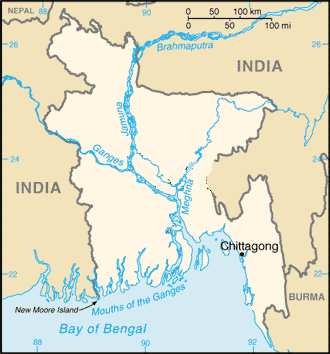
2007
Mudslides in Chittagong, Bangladesh, kill 130 people.
2007 Chittagong mudslides
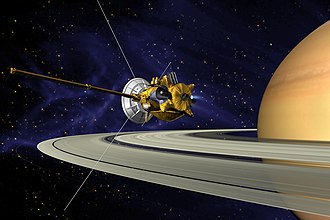
2004
Cassini–Huygens makes its closest flyby of the Saturn moon Phoebe.
Cassini–Huygens

2002
Antonio Meucci is acknowledged as the first inventor of the telephone by the United States Congress.
Antonio Meucci

2001
Timothy McVeigh is executed for his role in the Oklahoma City bombing.
Timothy McVeigh
1900s

1998
Compaq Computer pays US$9 billion for Digital Equipment Corporation in the largest high-tech acquisition.
Compaq

1987
Diane Abbott, Paul Boateng and Bernie Grant are elected as the first black MPs in Great Britain.
Diane Abbott
1981
A magnitude 6.9 earthquake at Golbaf, Iran, kills at least 2,000.
Golbaf

1978
Altaf Hussain founds the student political movement All Pakistan Muhajir Students Organisation (APMSO) in Karachi University.
Altaf Hussain (Pakistani politician)

1971
The U.S. Government forcibly removes the last holdouts to the Native American Occupation of Alcatraz, ending 19 months of control.
Indigenous peoples of the Americas
1970
After being appointed on May 15, Anna Mae Hays and Elizabeth P. Hoisington officially receive their ranks as U.S. Army general officers, becoming the first women to do so.
May 15

1968
Lloyd J. Old identified the first cell surface antigens that could differentiate among different cell types.
Lloyd J. Old

1964
World War II veteran Walter Seifert attacks an elementary school in Cologne, Germany, killing at least eight children and two teachers and seriously injuring several more with a home-made flamethrower and a lance.
Cologne school massacre

1963
American Civil Rights Movement: Governor of Alabama George Wallace defiantly stands at the door of Foster Auditorium at the University of Alabama in an attempt to block two black students, Vivian Malone and James Hood, from attending that school. Later in the day, accompanied by federalized National Guard troops, they are able to register.
Civil rights movement

1963
Buddhist monk Thích Quảng Đức burns himself with gasoline in a busy Saigon intersection to protest the lack of religious freedom in South Vietnam.
Thích Quảng Đức

1963
John F. Kennedy addresses Americans from the Oval Office proposing the Civil Rights Act of 1964, which would revolutionize American society by guaranteeing equal access to public facilities, ending segregation in education, and guaranteeing federal protection for voting rights.
John F. Kennedy

1962
Frank Morris, John Anglin and Clarence Anglin allegedly become the only prisoners to escape from the prison on Alcatraz Island.
June 1962 Alcatraz escape
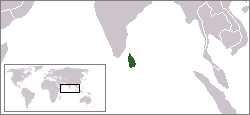
1956
Start of Gal Oya riots, the first reported ethnic riots that target minority Sri Lankan Tamils in the Eastern Province. The total number of deaths is reportedly 150.
1956 anti-Tamil pogrom
1955
Eighty-three spectators are killed and at least one hundred are injured after an Austin-Healey and a Mercedes-Benz collide at the 24 Hours of Le Mans, the deadliest ever accident in motorsports.
Austin-Healey

1944
USS Missouri, the last battleship built by the United States Navy and future site of the signing of the Japanese Instrument of Surrender, is commissioned.
USS Missouri (BB-63)

1942
World War II: The United States agrees to send Lend-Lease aid to the Soviet Union.
Lend-Lease

1942
Free French Forces retreat from Bir Hakeim after having successfully delayed the Axis advance.
Free France

1940
World War II: The Siege of Malta begins with a series of Italian air raids.
World War II

1938
Second Sino-Japanese War: The Battle of Wuhan starts.
Second Sino-Japanese War

1937
Great Purge: The Soviet Union under Joseph Stalin executes eight army leaders.
Great Purge

1936
Inventor Edwin Armstrong demonstrates FM broadcasting to an audience of engineers at the FCC in Washington, DC.
Edwin Howard Armstrong
1936
The London International Surrealist Exhibition opens.
London International Surrealist Exhibition

1920
During the U.S. Republican National Convention in Chicago, U.S. Republican Party leaders gathered in a room at the Blackstone Hotel to come to a consensus on their candidate for the U.S. presidential election, leading the Associated Press to coin the political phrase "smoke-filled room".
1920 Republican National Convention

1919
Sir Barton wins the Belmont Stakes, becoming the first horse to win the U.S. Triple Crown.
Sir Barton

1917
King Alexander assumes the throne of Greece after his father, Constantine I, is deemed to have abdicated under pressure from allied armies occupying Athens.
Alexander of Greece

1903
A group of Serbian officers storms the royal palace and assassinates King Alexander I of Serbia and his wife, Queen Draga.
May Coup (Serbia)

1901
The boundaries of the Colony of New Zealand are extended by the UK to include the Cook Islands.
Colony of New Zealand
1800s

1898
The Hundred Days' Reform, a planned movement to reform social, political, and educational institutions in China, is started by the Guangxu Emperor, but is suspended by Empress Dowager Cixi after 104 days. (The failed reform led to the abolition of the Imperial examination in 1905.)
Hundred Days' Reform

1895
Paris–Bordeaux–Paris, sometimes called the first automobile race in history or the "first motor race", takes place.
Paris–Bordeaux–Paris
1892
The Limelight Department, one of the world's first film studios, is officially established in Melbourne, Australia.
Limelight Department

1865
The Naval Battle of the Riachuelo is fought on the rivulet Riachuelo (Argentina), between the Paraguayan Navy on one side and the Brazilian Navy on the other. The Brazilian victory was crucial for the later success of the Triple Alliance (Brazil, Uruguay, and Argentina) in the Paraguayan War.
Battle of Riachuelo
1837
The Broad Street Riot occurs in Boston, fueled by ethnic tensions between Yankees and Irish.
Broad Street Riot

1825
The first cornerstone is laid for Fort Hamilton in New York City.
Cornerstone

1805
A fire consumes large portions of Detroit in the Michigan Territory.
Great Fire of 1805
Before 1800
1788
Russian explorer Gerasim Izmailov reaches Alaska.
Gerasim Izmailov

1776
The Continental Congress appoints Thomas Jefferson, John Adams, Benjamin Franklin, Roger Sherman, and Robert R. Livingston to the Committee of Five to draft a declaration of independence.
Continental Congress

1775
The Coronation of Louis XVI in Reims, the last coronation before the French Revolution.
Coronation of Louis XVI

1775
The American Revolutionary War's first naval engagement, the Battle of Machias, results in the capture of a small British naval vessel.
American Revolutionary War

1770
British explorer Captain James Cook runs aground on the Great Barrier Reef.
James Cook

1748
Denmark adopts the characteristic Nordic Cross flag later taken up by all other Scandinavian countries.
Denmark

1724
Johann Sebastian Bach leads his cantata O Ewigkeit, du Donnerwort (O eternity, you word of thunder), BWV 20, on the first Sunday after Trinity, beginning his second cycle, the chorale cantata cycle.
Johann Sebastian Bach

1702
Anglo-Dutch forces skirmish with French forces before the walls of Nijmegen and prevent its fall.
Assault on Nijmegen (1702)

1594
Philip II recognizes the rights and privileges of the local nobles and chieftains in the Philippines, which paved way to the stabilization of the rule of the Principalía (an elite ruling class of native nobility in Spanish Philippines).
Philip II of Spain
1559
Don Tristan de Luna y Arellano sails for Florida with party of 1,500, intending to settle on gulf coast (Vera Cruz, Mexico).
Tristán de Luna y Arellano
1509
Henry VIII of England marries Catherine of Aragon.
Henry VIII
1488
The Battle of Sauchieburn is fought between rebel Lords and James III of Scotland, resulting in the death of the king.
Battle of Sauchieburn

1429
Hundred Years' War: Start of the Battle of Jargeau.
Hundred Years' War

1345
The megas doux Alexios Apokaukos, chief minister of the Byzantine Empire, is lynched by political prisoners.
Megas doux

1157
Albert I of Brandenburg, also called The Bear (Ger: Albrecht der Bär), becomes the founder of the Margraviate of Brandenburg, Germany and the first margrave.
Albert the Bear

1118
Roger of Salerno, Prince of Antioch, captures Azaz from the Seljuk Turks.
Roger of Salerno
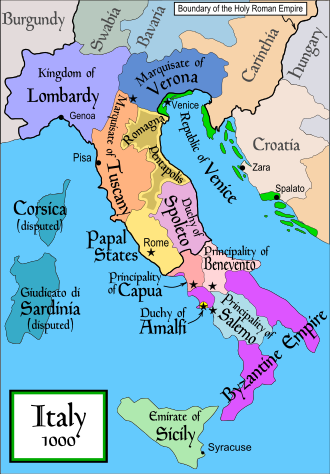
1011
Lombard Revolt: Greek citizens of Bari rise up against the Lombard rebels led by Melus and deliver the city to Basil Mesardonites, Byzantine governor (catepan) of the Catepanate of Italy.
Norman conquest of southern Italy

980
Vladimir the Great consolidates the Kievan realm from Ukraine to the Baltic Sea. He is proclaimed ruler (knyaz) of all Kievan Rus'.
Vladimir the Great

786
A Hasanid Alid uprising in Mecca is crushed by the Abbasids at the Battle of Fakhkh.
Hasanids
631
Emperor Taizong of Tang sends envoys to the Xueyantuo bearing gold and silk in order to seek the release of Chinese prisoners captured during the transition from Sui to Tang.
Emperor Taizong of Tang

173
Marcomannic Wars: The Roman army in Moravia is encircled by the Quadi, who have broken the peace treaty (171). In a violent thunderstorm emperor Marcus Aurelius defeats and subdues them in the so-called "miracle of the rain".
Marcomannic Wars