On This Day — 1 March
2000s

2014
Thirty-five people are killed and 143 injured in a mass stabbing at Kunming Railway Station in China.
2014 Kunming attack

2008
The Armenian police clash with peaceful opposition rally protesting against allegedly fraudulent presidential elections; as a result ten people are killed.
Police of Armenia

2007
Tornadoes break out across the southern United States, killing at least 20 people, including eight at Enterprise High School.
Tornado

2006
English-language Wikipedia reaches its one millionth article, Jordanhill railway station.
English Wikipedia
2005
In Roper v. Simmons, the U.S. Supreme Court rules that the execution of juveniles found guilty of any crime is unconstitutional.
Roper v. Simmons

2003
Management of the United States Customs Service and the United States Secret Service moves to the United States Department of Homeland Security.
United States Customs Service

2002
U.S. invasion of Afghanistan: Operation Anaconda begins in eastern Afghanistan.
War in Afghanistan (2001–2021)

2002
The Envisat environmental satellite successfully launches aboard an Ariane 5 rocket to reach an orbit of 800 km (500 mi) above the Earth, which was the then-largest payload at 10.5 m long and with a diameter of 4.57 m.
Envisat

2002
Space Shuttle Columbia is launched on STS-109 to service the Hubble Space Telescope.
Space Shuttle Columbia
1900s
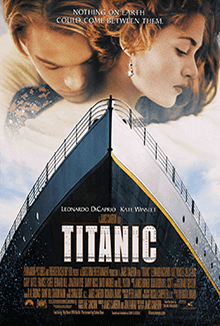
1998
Titanic becomes the first film to gross over $1 billion worldwide.
Titanic (1997 film)

1992
Bosnia and Herzegovina declares its independence from Socialist Federal Republic of Yugoslavia.
Bosnia and Herzegovina

1991
Uprisings against Saddam Hussein begin in Iraq, leading to the deaths of more than 25,000 people, mostly civilians.
1991 Iraqi uprisings

1990
Steve Jackson Games is raided by the United States Secret Service, prompting the later formation of the Electronic Frontier Foundation.
Steve Jackson Games

1981
Provisional Irish Republican Army member Bobby Sands begins his hunger strike in HM Prison Maze.
Provisional Irish Republican Army

1974
Watergate scandal: Seven are indicted for their role in the Watergate break-in and charged with conspiracy to obstruct justice.
Watergate scandal
1973
Black September storms the Saudi embassy in Khartoum, Sudan, resulting in the assassination of three Western hostages.
Black September Organization

1971
President of Pakistan Yahya Khan indefinitely postpones the pending national assembly session, precipitating massive civil disobedience in East Pakistan.
President of Pakistan

1966
Venera 3 Soviet space probe crashes on Venus becoming the first spacecraft to land on another planet's surface.
Venera 3

1966
The Ba'ath Party takes power in Syria.
Ba'ath Party

1964
Villarrica Volcano begins a strombolian eruption causing lahars that destroy half of the town of Coñaripe.
Villarrica (volcano)

1964
Paradise Airlines Flight 901A crashes near Lake Tahoe, Nevada, killing 85.
Paradise Airlines Flight 901A

1962
American Airlines Flight 1 crashes into Jamaica Bay in New York, killing 95.
American Airlines Flight 1 (1962)

1961
Uganda becomes self-governing and holds its first elections.
Uganda

1958
Samuel Alphonsus Stritch is appointed Pro-Prefect of the Propagation of Faith and thus becomes the first U.S. member of the Roman Curia.
Samuel Stritch

1956
The International Air Transport Association finalizes a draft of the Radiotelephony spelling alphabet for the International Civil Aviation Organization.
International Air Transport Association

1956
Formation of the East German Nationale Volksarmee.
East Germany

1954
Nuclear weapons testing: The Castle Bravo, a 15-megaton hydrogen bomb, is detonated on Bikini Atoll in the Pacific Ocean, resulting in the worst radioactive contamination ever caused by the United States.
Nuclear weapons testing

1954
Armed Puerto Rican nationalists attack the United States Capitol building, injuring five Representatives.
Independence movement in Puerto Rico

1953
Soviet Premier Joseph Stalin suffers a stroke and collapses; he dies four days later.
Joseph Stalin

1950
Cold War: Klaus Fuchs is convicted of spying for the Soviet Union by disclosing top secret atomic bomb data.
Cold War

1947
The International Monetary Fund begins financial operations.
International Monetary Fund

1946
The Bank of England is nationalised.
Bank of England

1942
World War II: Japanese forces land on Java, the main island of the Dutch East Indies, at Merak and Banten Bay (Banten), Eretan Wetan (Indramayu) and Kragan (Rembang).
Empire of Japan

1941
World War II: Bulgaria signs the Tripartite Pact, allying itself with the Axis powers.
World War II

1939
An Imperial Japanese Army ammunition dump explodes at Hirakata, Osaka, Japan, killing 94.
Imperial Japanese Army

1932
Aviator Charles Lindbergh's 20-month-old son Charles Jr is kidnapped from his home in East Amwell, New Jersey. His body would not be found until May 12.
Charles Lindbergh

1921
The Australian cricket team captained by Warwick Armstrong becomes the first team to complete a whitewash of The Ashes, something that would not be repeated for 86 years.
Australia national cricket team

1921
Following mass protests in Petrograd demanding greater freedom in the RSFSR, the Kronstadt rebellion begins, with sailors and citizens taking up arms against the Bolsheviks.
Saint Petersburg

1919
March 1st Movement begins in Korea under Japanese rule.
March First Movement

1917
The Zimmermann Telegram is reprinted in newspapers across the United States after the U.S. government releases its unencrypted text.
Zimmermann telegram

1914
China joins the Universal Postal Union.
Republic of China (1912–1949)

1910
The deadliest avalanche in United States history buries a Great Northern Railway train in northeastern King County, Washington, killing 96 people.
Wellington, Washington

1901
The Australian Army is formed.
Australian Army
1800s

1896
Battle of Adwa: An Ethiopian army defeats an outnumbered Italian force, ending the First Italo-Ethiopian War.
Battle of Adwa

1896
Henri Becquerel discovers radioactive decay.
Henri Becquerel

1893
Electrical engineer Nikola Tesla gives the first public demonstration of radio in St. Louis, Missouri.
Nikola Tesla

1872
Yellowstone National Park is established as the world's first national park.
Yellowstone National Park

1871
The victorious Prussian Army parades through Paris, France, after the end of the Siege of Paris during the Franco-Prussian War.
Prussian Army

1870
Marshal F. S. López dies during the Battle of Cerro Corá thus marking the end of the Paraguayan War.
Francisco Solano López

1867
Nebraska is admitted as the 37th U.S. state.
Nebraska

1845
United States President John Tyler signs a bill authorizing the United States to annex the Republic of Texas.
John Tyler
1836
A convention of delegates from 57 Texas communities convenes in Washington-on-the-Brazos, Texas, to deliberate independence from Mexico.
Convention of 1836
1815
Napoleon returns to France from his banishment on Elba.
Napoleon

1811
Leaders of the Mamluk dynasty are killed by Egyptian ruler Muhammad Ali.
Mamluk

1805
Justice Samuel Chase is acquitted at the end of his impeachment trial before the U.S. Senate.
Samuel Chase
Before 1800

1796
The Dutch East India Company is nationalized by the Batavian Republic.
Dutch East India Company

1781
The Articles of Confederation goes into effect in the United States.
Articles of Confederation

1692
Sarah Good, Sarah Osborne, and Tituba are brought before local magistrates in Salem Village, Massachusetts, beginning what would become known as the Salem witch trials.
Sarah Good

1633
Samuel de Champlain reclaims his role as commander of New France on behalf of Cardinal Richelieu.
Samuel de Champlain
1628
Writs issued in February by Charles I of England mandate that every county in England (not just seaport towns) pay ship tax by this date.
Charles I of England

1562
Sixty-three Huguenots are massacred in Wassy, France, marking the start of the French Wars of Religion.
Huguenots

1476
Forces of the Catholic Monarchs engage the combined Portuguese-Castilian armies of Afonso V and Prince John at the Battle of Toro.
Catholic Monarchs of Spain

1290
University of Coimbra, in Portugal, is officially chartered by King Denis.
University of Coimbra

834
Emperor Louis the Pious is restored as sole ruler of the Frankish Empire.
Louis the Pious

350
Vetranio proclaims himself Caesar after being encouraged to do so by Constantina, sister of Constantius II.
Vetranio

293
Emperor Diocletian and Maximian appoint Constantius Chlorus and Galerius as Caesars. This is considered the beginning of the Tetrarchy, known as the Quattuor Principes Mundi ("Four Rulers of the World").
Diocletian

-509
Publius Valerius Publicola celebrates the first triumph of the Roman Republic after his victory over the deposed king Lucius Tarquinius Superbus at the Battle of Silva Arsia.
Publius Valerius Poplicola