On This Day — 4 March
2000s

2020
Nik Wallenda becomes the first person to walk over the Masaya Volcano in Nicaragua.
Nik Wallenda
2018
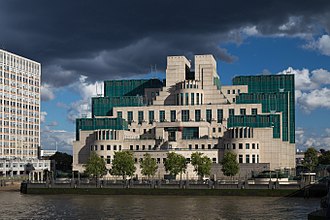
Former MI6 spy Sergei Skripal and his daughter are poisoned with a Novichok nerve agent in Salisbury, England, causing a diplomatic uproar that results in mass-expulsions of diplomats from all countries involved.
MI6

2015
At least 34 miners die in a suspected gas explosion at the Zasyadko coal mine in the rebel-held Donetsk region of Ukraine.
2015 Zasyadko mine disaster
2012
A series of explosions is reported at a munitions dump in Brazzaville, the capital of the Republic of the Congo, killing at least 250 people.
Brazzaville arms dump blasts

2009
The International Criminal Court (ICC) issues an arrest warrant for Sudanese President Omar Hassan al-Bashir for war crimes and crimes against humanity in Darfur. Al-Bashir is the first sitting head of state to be indicted by the ICC since its establishment in 2002.
International Criminal Court

2002
Afghanistan: Seven American Special Operations Forces soldiers and 200 Al-Qaeda Fighters are killed as American forces attempt to infiltrate the Shah-i-Kot Valley on a low-flying helicopter reconnaissance mission.
War in Afghanistan (2001–2021)

2001
BBC bombing: A massive car bomb explodes in front of the BBC Television Centre in London, seriously injuring one person; the attack was attributed to the Real IRA.
2001 BBC bombing
1900s

1998
Gay rights: Oncale v. Sundowner Offshore Services, Inc.: The Supreme Court of the United States rules that federal laws banning on-the-job sexual harassment also apply when both parties are the same sex.
LGBTQ rights in the United States

1996
A derailed train in Weyauwega, Wisconsin (USA) causes the emergency evacuation of 2,300 people for 16 days.
Weyauwega, Wisconsin, derailment

1994
Space Shuttle program: The Space Shuttle Columbia is launched on STS-62.
Space Shuttle program

1990
American basketball player Hank Gathers dies after collapsing during the semifinals of a West Coast Conference tournament game.
Basketball

1990
Lennox Sebe, President for life of the South African Bantustan of Ciskei, is ousted from power in a bloodless military coup led by Brigadier Oupa Gqozo.
Lennox Sebe

1986
The Soviet Vega 1 begins returning images of Halley's Comet and the first images of its nucleus.
Soviet Union

1985
The Food and Drug Administration approves a blood test for HIV infection, used since then for screening all blood donations in the United States.
Food and Drug Administration

1980
Nationalist leader Robert Mugabe wins a sweeping election victory to become Zimbabwe's first black prime minister.
Robert Mugabe

1977
The 1977 Vrancea earthquake in eastern and southern Europe kills more than 1,500, mostly in Bucharest, Romania.
1977 Vrancea earthquake

1976
The Northern Ireland Constitutional Convention is formally dissolved in Northern Ireland, resulting in direct rule of Northern Ireland from London by the British parliament.
Northern Ireland Constitutional Convention

1970
French submarine Eurydice explodes underwater, resulting in the loss of the entire 57-man crew.
French submarine Eurydice (S644)

1966
A Canadian Pacific Air Lines DC-8-43 explodes on landing at Tokyo International Airport, killing 64 people.
Canadian Pacific Air Lines

1966
In an interview in the London Evening Standard, The Beatles' John Lennon declares that the band is "more popular than Jesus now".
The Standard (London newspaper)

1962
A Caledonian Airways Douglas DC-7 crashes shortly after takeoff from Cameroon, killing 111 – the worst crash of a DC-7.
Caledonian Airways

1960
The French freighter La Coubre explodes in Havana, Cuba, killing 100.
La Coubre explosion

1957
The S&P 500 stock market index is introduced, replacing the S&P 90.
S&P 500

1955
An order to protect the endangered Saimaa ringed seal (Pusa hispida saimensis) is legalized.
Saimaa ringed seal

1946
The sixth President of Finland, Gustaf Mannerheim, submits his resignation for health reasons.
President of Finland
1944
World War II: After the success of Big Week, the USAAF begins a daylight bombing campaign of Berlin.
Big Week

1943
World War II: The Battle of the Bismarck Sea in the south-west Pacific comes to an end.
Battle of the Bismarck Sea
1943
World War II: The Battle of Fardykambos, one of the first major battles between the Greek Resistance and the occupying Royal Italian Army, begins. It ends on 6 March with the surrender of an entire Italian battalion and the liberation of the town of Grevena.
Battle of Fardykambos

1941
World War II: The United Kingdom launches Operation Claymore on the Lofoten Islands, the first large-scale British Commando raid.
World War II

1933
Franklin D. Roosevelt is inaugurated as the 32nd President of the United States.
Franklin D. Roosevelt

1933
The United States Senate confirms Frances Perkins as United States Secretary of Labor and she is sworn in the same day, making her the first female member of the United States Cabinet.
United States Senate

1933
The Parliament of Austria is suspended because of a quibble over procedure – Chancellor Engelbert Dollfuss initiates an authoritarian rule by decree.
Austrian Parliament

1918
A case of influenza is recorded at Camp Funston, Kansas, conventionally marking the beginning of the worldwide Spanish flu pandemic.
Camp Funston

1917
Jeannette Rankin of Montana becomes the first female member of the United States House of Representatives.
Jeannette Rankin

1913
First Balkan War: The Greek army engages the Turks at Bizani, resulting in victory two days later.
First Balkan War

1913
The United States Department of Labor is formed.
United States Department of Labor

1909
U.S. President William Howard Taft uses what became known as a Saxbe fix, a mechanism to avoid the restriction of the U.S. Constitution's Ineligibility Clause, to appoint Philander C. Knox as U.S. Secretary of State.
William Howard Taft

1908
The Collinwood school fire, Collinwood near Cleveland, Ohio, kills 174 people.
Collinwood school fire

1901
William McKinley is inaugurated President of the United States for the second time; Theodore Roosevelt is vice president.
William McKinley
1800s

1899
Cyclone Mahina sweeps in north of Cooktown, Queensland, with a 12 metres (39 ft) wave that reaches up to 5 kilometres (3.1 mi) inland, killing over 300.
Cyclone Mahina

1890
The longest bridge in Great Britain, the Forth Bridge in Scotland, measuring 8,094 feet (2,467 m) long, is opened by the Duke of Rothesay, later King Edward VII.
Forth Bridge
1882
Britain's first electric trams run in east London.
Trams in London

1878
Pope Leo XIII reestablishes the Catholic Church in Scotland, recreating sees and naming bishops for the first time since 1603.
Pope Leo XIII

1865
The third and final national flag of the Confederate States of America is adopted by the Confederate Congress.
Flags of the Confederate States of America

1865
U.S. politician Andrew Johnson makes his drunk vice-presidential inaugural address in Washington, D.C.
Andrew Johnson
1861
The first national flag of the Confederate States of America (the "Stars and Bars") is adopted.
Flags of the Confederate States of America

1849
Zachary Taylor, 12th President of the United States of America and Millard Fillmore, 12th Vice President, did not take their respective oaths of office (they did so the following day), leading to the erroneous theory that outgoing President pro tempore of the United States Senate David Rice Atchison had assumed the role of acting president for one day.
Zachary Taylor

1848
Carlo Alberto di Savoia signs the Statuto Albertino that will later represent the first constitution of the Regno d'Italia.
Charles Albert of Sardinia

1837
The city of Chicago is incorporated.
Chicago

1814
War of 1812: Americans defeat British forces at the Battle of Longwoods between London, Ontario and Thamesville, near present-day Wardsville, Ontario.
War of 1812

1813
Cyril VI of Constantinople is elected Ecumenical Patriarch of Constantinople.
Cyril VI of Constantinople
1804
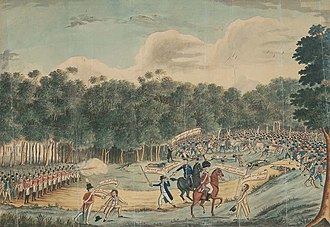
Castle Hill Rebellion: Irish convicts rebel against British colonial authority in the Colony of New South Wales.
Castle Hill convict rebellion
Before 1800

1797
John Adams is inaugurated as the 2nd President of the United States of America, becoming the first President to begin his presidency on March 4.
John Adams

1794
The 11th Amendment to the U.S. Constitution is passed by the U.S. Congress.
Eleventh Amendment to the United States Constitution

1791
Vermont is admitted to the United States as the fourteenth state.
Vermont

1790
France is divided into 83 départements, cutting across the former provinces in an attempt to dislodge regional loyalties based on ownership of land by the nobility.
Departments of France

1789
In New York City, the first Congress of the United States meets, putting the United States Constitution into effect.
1st United States Congress

1776
American Revolutionary War: The Continental Army fortifies Dorchester Heights with cannon, leading the British troops to abandon the Siege of Boston.
American Revolutionary War

1773
Wolfgang Amadeus Mozart departs Italy after the last of his three tours there.
Wolfgang Amadeus Mozart

1686
After being unofficially established as a settlement in 1678, the Dominican mission of Ilagan is founded in the Philippines.
Dominican Order

1681
Charles II grants a land charter to William Penn for the area that will later become Pennsylvania.
William Penn

1675
John Flamsteed is appointed the first Astronomer Royal of England.
John Flamsteed

1665
English King Charles II declares war on the Netherlands, marking the start of the Second Anglo-Dutch War.
Charles II of England

1628
The Massachusetts Bay Colony is granted a Royal charter.
Massachusetts Bay Colony

1519
Hernán Cortés arrives in Mexico in search of the Aztec civilization and its wealth.
Hernán Cortés

1493
Explorer Christopher Columbus arrives back in Lisbon, Portugal, aboard his ship Niña from his voyage to what are now The Bahamas and other islands in the Caribbean.
Christopher Columbus

1461
Wars of the Roses in England: Lancastrian King Henry VI is deposed by his House of York cousin, who then becomes King Edward IV.
Wars of the Roses

1386
Władysław II Jagiełło (Jogaila) is crowned King of Poland.
Władysław II Jagiełło

1351
Ramathibodi becomes King of Siam.
Uthong

1238
The Battle of the Sit River begins two centuries of Mongol horde domination of Rus.
Battle of the Sit River

1171
Alexios II Komnenos is crowned Byzantine co-emperor to his father Manuel I Komnenos.
Alexios II Komnenos
1152
Frederick I Barbarossa is elected King of Germany.
Frederick Barbarossa

938
Translation of the relics of martyr Wenceslaus I, Duke of Bohemia, Prince of the Czechs.
Relic

852
Croatian Knez Trpimir I issues a statute, a document with the first known written mention of the Croats name in Croatian sources.
Knyaz

581
Yang Jian declares himself Emperor Wen of Sui, ending the Northern Zhou and beginning the Sui dynasty.
Emperor Wen of Sui

306
Martyrdom of Saint Adrian of Nicomedia.
Martyr
51
Nero, later to become Roman emperor, is given the title princeps iuventutis (head of the youth).
AD 51