On This Day — 5 May
2000s

2023
The World Health Organization declares the end of the COVID-19 pandemic as a global health emergency.
World Health Organization

2010
Mass protests in Greece erupt in response to austerity measures imposed by the government as a result of the Greek government-debt crisis.
Anti-austerity movement in Greece

2007
Kenya Airways Flight 507 crashes after takeoff from Douala International Airport in Douala, Cameroon, killing all 114 aboard, making it the deadliest aircraft disaster in Cameroon.
Kenya Airways Flight 507

2006
The government of Sudan signs an accord with the Sudan Liberation Army.
Sudan
1900s
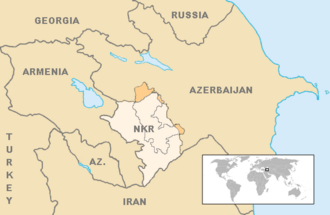
1994
The signing of the Bishkek Protocol between Armenia and Azerbaijan effectively freezes the Nagorno-Karabakh conflict.
Bishkek Protocol
1994
American teenager Michael P. Fay is caned in Singapore for theft and vandalism.
Caning of Michael Fay
1991
A riot breaks out in the Mt. Pleasant section of Washington, D.C. after police shoot a Salvadoran man.
1991 Washington, D.C., riot

1987
Iran–Contra affair: Start of Congressional televised hearings in the United States.
Iran–Contra affair

1985
Ronald Reagan visits the military cemetery at Bitburg and the site of the Bergen-Belsen concentration camp, where he makes a speech.
Ronald Reagan

1981
Bobby Sands dies in the Long Kesh prison hospital after 66 days of hunger-striking, aged 27.
Bobby Sands

1980
Operation Nimrod: The British Special Air Service storms the Iranian embassy in London after a six-day siege.
Iranian Embassy siege

1973
Secretariat wins the 1973 Kentucky Derby in 1:59.4, an as-yet-unbeaten record.
Secretariat (horse)
1972
Alitalia Flight 112 crashes into Mount Longa near Palermo, Sicily, killing all 115 aboard, making it the deadliest single-aircraft disaster in Italy.
Alitalia Flight 112

1964
The Council of Europe declares May 5 as Europe Day.
Council of Europe

1961
Project Mercury: Alan Shepard becomes the first American to travel into outer space, on a sub-orbital flight.
Project Mercury

1955
The General Treaty, by which France, Britain and the United States recognize the sovereignty of West Germany, comes into effect.
Bonn–Paris conventions

1946
The International Military Tribunal for the Far East begins in Tokyo with twenty-eight Japanese military and government officials accused of war crimes and crimes against humanity.
International Military Tribunal for the Far East

1945
World War II: The Prague uprising begins as an attempt by the Czech resistance to free the city from German occupation.
Prague uprising

1945
World War II: A Fu-Go balloon bomb launched by the Japanese Army kills six people near Bly, Oregon.
Fu-Go balloon bomb

1945
World War II: Battle of Castle Itter, one of only two battles in that war in which American and German troops fought cooperatively.
Battle of Castle Itter

1941
Emperor Haile Selassie returns to Addis Ababa; the country commemorates the date as Liberation Day or Patriots' Victory Day.
Haile Selassie

1940
World War II: Norwegian campaign: Norwegian squads in Hegra Fortress and Vinjesvingen capitulate to German forces after all other Norwegian forces in southern Norway had laid down their arms.
World War II

1936
Italian troops occupy Addis Ababa, Ethiopia.
March of the Iron Will
1930
The 1930 Bago earthquake, the first of two major earthquakes in southern Burma, kills as many as 7,000 in Yangon and Bago.
1930 Bago earthquake

1920
Authorities arrest Nicola Sacco and Bartolomeo Vanzetti for alleged robbery and murder.
Sacco and Vanzetti

1912
The first issue of the Bolshevik newspaper Pravda is published.
Bolsheviks
1905
The trial in the Stratton Brothers case begins in London, England; it marks the first time that fingerprint evidence is used to gain a conviction for murder.
Stratton Brothers case

1904
Pitching against the Philadelphia Athletics at the Huntington Avenue Grounds, Cy Young of the Boston Americans throws the first perfect game in the modern era of baseball.
Pitcher
1800s

1891
The Music Hall in New York City (later known as Carnegie Hall) has its grand opening and first public performance, with Tchaikovsky as the guest conductor.
Carnegie Hall

1887
The Peruvian Academy of Language is founded.
Peruvian Academy of Language
1886
Workers marching for the eight-hour day in Milwaukee, Wisconsin, are shot at by Wisconsin National Guardsmen in what became known as the Bay View Massacre.
Eight-hour day movement

1877
American Indian Wars: Sitting Bull leads his band of Lakota into Canada to avoid harassment by the United States Army under Colonel Nelson Miles.
American Indian Wars

1866
Memorial Day first celebrated in United States at Waterloo, New York.
Memorial Day

1865
American Civil War: The Confederate government is declared dissolved at Washington, Georgia.
Conclusion of the American Civil War

1864
American Civil War: The Battle of the Wilderness begins in Spotsylvania County.
American Civil War

1862
Cinco de Mayo: Troops led by Ignacio Zaragoza halt a French invasion in the Battle of Puebla in Mexico.
Cinco de Mayo
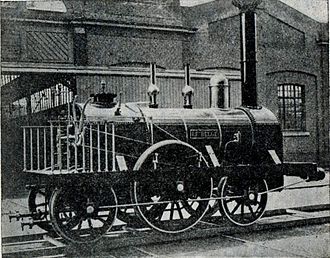
1835
The first railway in continental Europe opens between Brussels and Mechelen.
History of rail transport in Belgium
1821
Emperor Napoleon dies in exile on the island of Saint Helena in the South Atlantic Ocean.
Napoleon

1821
The first edition of The Manchester Guardian, now The Guardian, is published.
The Guardian
1809
Mary Kies becomes the first woman awarded a U.S. patent, for a technique of weaving straw with silk and thread.
Mary Dixon Kies
Before 1800

1789
In France, the Estates-General convenes for the first time since 1614.
France

1762
Russia and Prussia sign the Treaty of St. Petersburg.
Russia

1654
Cromwell's Act of Grace, aimed at reconciliation with the Scots, proclaimed in Edinburgh.
Cromwell's Act of Grace
1640
King Charles I of England dissolves the Short Parliament.
Charles I of England

1609
Daimyō (Lord) Shimazu Tadatsune of the Satsuma Domain in southern Kyūshū, Japan, completes his successful invasion of the Ryūkyū Kingdom in Okinawa.
Shimazu Tadatsune

1494
On his second voyage to the New World, Christopher Columbus sights Jamaica, landing at Discovery Bay and declares Jamaica the property of the Spanish crown.
Christopher Columbus

1292
Election of Count Adolf of Nassau as King of the Romans in the Dominican monastery of Frankfurt.
Adolf, King of the Romans

1260
Kublai Khan becomes ruler of the Mongol Empire.
Kublai Khan
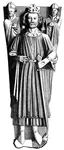
1215
Rebel barons renounce their allegiance to King John of England — part of a chain of events leading to the signing of the Magna Carta.
John, King of England

1192
Queen Isabella I of Jerusalem marries Henry II, Count of Champagne.
Isabella I of Jerusalem

553
The Second Council of Constantinople begins.
Second Council of Constantinople