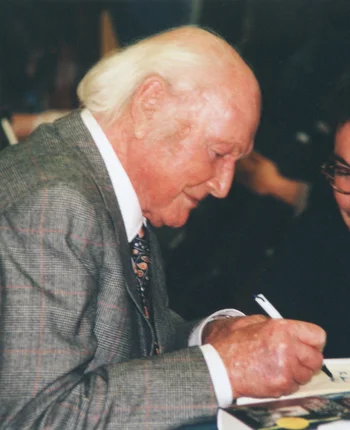
Arthur Lydiard
July 6, 1917 — December 11, 2004 — Auckland, New Zealand
Arthur Lydiard was a New Zealand runner and athletics coach widely regarded as one of the most influential figures in the history of the sport. His revolutionary training principles, built around a strong aerobic base and periodisation, reshaped how distance runners around the world prepared for competition. Beyond coaching elite athletes, Lydiard is credited with popularising jogging as a form of everyday exercise, forever changing the relationship between ordinary people and running.
Early Life and Introduction to Running
Arthur Leslie Lydiard was born on July 6, 1917, in Auckland, New Zealand. He grew up in a working-class family and, like many young New Zealanders of his era, was drawn to outdoor physical activity, including rugby, before turning his attention to running. As a young man, Lydiard began competing in marathons and long-distance races, but it was his obsessive curiosity about training methods—rather than his own modest success as a competitor—that set him apart. He spent years experimenting on himself, running enormous weekly mileages through the hills around Auckland to test theories about endurance, recovery, and the body's aerobic capacity. This hands-on, self-taught approach to physiology, developed largely outside formal institutions, would become the foundation of a coaching philosophy that prioritized building a deep aerobic base before layering on speed and race-specific work.
Coaching Breakthrough and Olympic Success
Lydiard's methods gained international attention in the late 1950s and early 1960s when the New Zealand runners he coached began dominating world middle- and long-distance running. His system emphasized periodisation: a structured progression from high-volume aerobic conditioning to hill training, then speed work, and finally race-specific sharpening. Peter Snell, one of his most celebrated pupils, won Olympic gold in the 800 metres at both the 1960 Rome and 1964 Tokyo Games, later adding the 1,500 metres title in Tokyo as well. Murray Halberg, another Lydiard athlete, won gold in the 5,000 metres at the 1960 Olympics. These successes, achieved by athletes from a small nation with limited resources, stunned the athletics world and drew coaches and journalists to New Zealand to study Lydiard's methods firsthand, cementing his reputation as a coaching innovator whose ideas could produce world-beating results.
Did You Know?
Arthur Lydiard died in Houston, Texas, in 2004 while on a speaking tour promoting his training methods—fittingly, he collapsed just after finishing a talk to a group of runners, doing what he loved until the very end.
Global Influence and Lasting Legacy
Beyond his elite athletes, Lydiard is widely credited with launching the global jogging movement, encouraging everyday people to run for health and fitness rather than competition alone. His advocacy helped popularise recreational running in the United States, particularly through his influence on American coaches and fitness advocates during the 1960s and 1970s, contributing to the running boom that swept the Western world. He continued coaching, lecturing, and writing into his later years, sharing his training philosophy with athletes and coaches across multiple continents, including Finland, Mexico, and Venezuela. Arthur Lydiard died on December 11, 2004, while on a speaking tour in the United States. His endurance-based, periodised training principles remain foundational to modern distance-running coaching, and he is often described as the father of modern running training. His legacy endures both in elite sport and in the millions of ordinary people who took up jogging as a lifelong pursuit.