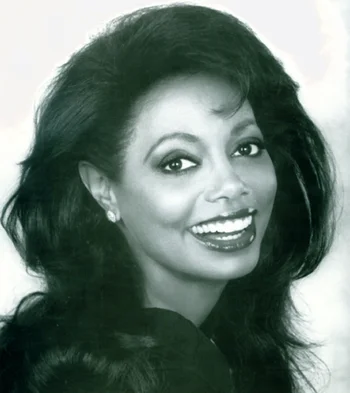
Betty Friedan
February 4, 1921 — February 4, 2006 — Peoria, Illinois, United States
Betty Friedan was an American writer and activist whose 1963 book The Feminine Mystique helped ignite the second wave of American feminism. A tireless organizer, she co-founded the National Organization for Women (NOW) in 1966 and served as its first president. Her work reshaped public conversation about women's roles in society, work, and family life.
Early Life and Education
Betty Friedan was born Bettye Naomi Goldstein on February 4, 1921, in Peoria, Illinois, the daughter of a jeweler and a homemaker who had given up a newspaper job upon marrying. Friedan later credited her mother's frustrated ambitions as an early influence on her thinking about women's limited opportunities. She excelled academically, attending Smith College, where she edited the campus newspaper and graduated summa cum laude in 1942 with a degree in psychology. She then pursued graduate study in psychology at the University of California, Berkeley, on a fellowship, but turned down a doctoral fellowship, a decision she later regretted and viewed as an early example of women being steered away from ambition. Afterward, she moved to New York City and worked as a journalist for labor union publications, gaining experience covering workplace issues and social movements. In 1947, she married Carl Friedan, and the couple eventually had three children. Her journalism career was interrupted when she was fired from a union newspaper job while pregnant, an experience that sharpened her awareness of the discrimination women faced in professional life and set the stage for her later activism and writing.
The Feminine Mystique and Rise to Prominence
In the late 1950s, Friedan surveyed her Smith College classmates for a magazine article and found widespread dissatisfaction among educated women confined to domestic roles. Publishers rejected her initial article, so she expanded the research into a book, The Feminine Mystique, published in 1963. The book challenged the postwar assumption that women found complete fulfillment through marriage and motherhood, naming what Friedan called 'the problem that has no name': the quiet despair many suburban housewives felt despite material comfort. The book became a bestseller, sold over a million copies, and is widely credited with sparking the second wave of American feminism. Building on this momentum, Friedan co-founded the National Organization for Women (NOW) in 1966 and was elected its first president, leading the group's push to bring women into 'fully equal partnership with men' in employment, education, and public life. Under her leadership, NOW campaigned for equal pay, reproductive rights, and an end to sex discrimination in hiring. Friedan also helped found the National Association for the Repeal of Abortion Laws (later NARAL) and, in 1971, the National Women's Political Caucus, broadening feminist activism into electoral politics.
Did You Know?
Betty Friedan died on February 4, 2006, exactly on her 85th birthday. She was also born Bettye Naomi Goldstein and only adopted the name 'Betty Friedan' after marrying Carl Friedan in 1947.
Later Years and Legacy
Friedan remained an active voice in feminism through the 1970s and beyond, organizing the Women's Strike for Equality in 1970, which drew tens of thousands of participants nationwide to mark the 50th anniversary of women's suffrage. She continued writing, publishing The Second Stage (1981), which addressed tensions within the feminist movement and family life, and The Fountain of Age (1993), which examined aging and challenged stereotypes about older adults. Her later work, Life So Far (2000), was a memoir reflecting on her personal journey and activism. Friedan taught and lectured at universities including Cornell and the University of Southern California, mentoring new generations of feminist scholars and organizers. She died on February 4, 2006, in Washington, D.C., on her 85th birthday. Friedan's legacy remains foundational to modern feminism; The Feminine Mystique is regarded as one of the most influential nonfiction books of the 20th century, and NOW continues to be one of the largest feminist organizations in the United States. Her insistence on women's equal participation in public and professional life reshaped laws, workplaces, and cultural attitudes for decades to come.