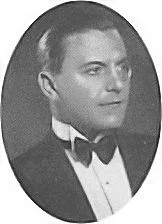
Bill Shankly
September 2, 1913 — September 29, 1981 — Glenbuck, Scotland
Bill Shankly was a Scottish footballer and manager whose fifteen-year tenure at Liverpool Football Club transformed the team from a middling Second Division side into one of England's most feared and respected clubs. Renowned for his fierce passion, sharp wit, and unshakable belief in the working-class ethos of football, Shankly built the foundations upon which Liverpool's greatest era of success was later constructed. His legacy endures not only in trophies won but in the culture, identity, and emotional bond he forged between the club and its supporters.
Early Life and Playing Career
William Shankly was born on September 2, 1913, in Glenbuck, a small mining village in East Ayrshire, Scotland. One of ten children, he grew up in a football-mad community that produced numerous professional players, and like many young men in the area, he initially worked in the local coal mines before pursuing a career in football. Shankly signed for Carlisle United in 1932, and his talent as a hard-working, combative right-half soon attracted the attention of larger clubs. In 1933, he moved to Preston North End, where he spent the bulk of his playing career, helping the club win the FA Cup in 1938 and earning five caps for the Scotland national team. His playing days were interrupted by the Second World War, during which competitive football was suspended, and he later transitioned into coaching and management, taking charge of several lower-league clubs including Carlisle United, Grimsby Town, Workington, and Huddersfield Town before the opportunity arose that would define his legacy.
Transforming Liverpool
Shankly took over as Liverpool manager in December 1959, inheriting a club languishing in the Second Division and lacking ambition. He quickly identified underperforming players, overhauled the training methods, and instilled a relentless work ethic alongside a philosophy built on simplicity, teamwork, and collective effort. Liverpool won promotion to the First Division in 1962, and success followed rapidly: league titles in 1964, 1966, and 1973, FA Cup victories in 1965 and 1974, and the club's first European trophy, the UEFA Cup, in 1973. Shankly's man-management skills and motivational speeches became legendary, and he cultivated a deep, almost spiritual connection with Liverpool's fans, whom he treated as central to the club's identity rather than mere spectators. He famously remarked that football was 'much more important' than a matter of life and death, capturing the intensity of his devotion to the sport. Under his leadership, Anfield became a fortress and Liverpool's global reputation began to take shape.
Did You Know?
Bill Shankly famously quipped, 'Some people believe football is a matter of life and death. I can assure you, it's much more serious than that.' Despite the humor behind the remark, it perfectly captured his all-consuming devotion to the sport and remains one of the most quoted lines in football history.
Legacy and Later Life
Shankly retired from management in 1974, shortly after leading Liverpool to FA Cup glory, a decision that shocked the football world and one he later admitted he regretted. His successors, Bob Paisley and Joe Fagan, built directly upon the structures, scouting networks, and winning culture he had established, guiding Liverpool to seven league titles and four European Cups over the following decade. Shankly remained a beloved figure in Liverpool until his death on September 29, 1981, in Liverpool, England, following a heart attack. His impact extended far beyond trophies; he redefined what a football club could mean to its community, blending socialist ideals with sporting ambition. Liverpool later honored him with the Shankly Gates at Anfield, inscribed with the club's anthem, 'You'll Never Walk Alone,' and a statue outside the stadium. Ronnie Moran's tribute that Shankly 'resurrected' the club reflects the enduring reverence in which he is held, and his name remains synonymous with the identity and spirit of Liverpool Football Club.