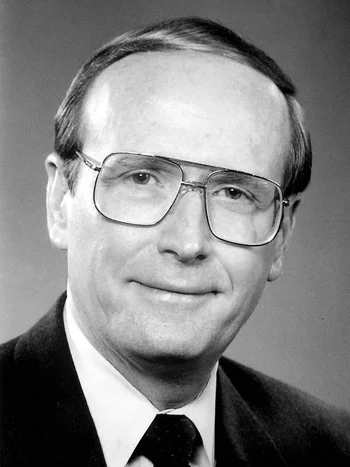
Chris Argyris
July 16, 1923 — November 16, 2013 — Newark, New Jersey, United States
Chris Argyris was an American business theorist who spent decades teaching at Yale School of Management and Harvard Business School, reshaping how scholars and executives understand organizational behavior. Alongside contemporaries like Richard Beckhard, Edgar Schein, and Warren Bennis, he is remembered as a founding figure of organization development. His research on how individuals and institutions learn—or fail to learn—from experience left a lasting imprint on management theory and practice.
Early Life and Education
Chris Argyris was born on July 16, 1923, in Newark, New Jersey, to Greek immigrant parents. He came of age during the Great Depression and World War II, experiences that shaped his lifelong interest in how people behave within large institutions under pressure. Argyris pursued higher education with a focus on psychology and organizational behavior, earning degrees that combined social science with practical concerns about work and leadership. His academic training bridged psychology, sociology, and economics, giving him an interdisciplinary foundation that would define his later scholarship. This unusual blend of disciplines allowed him to approach organizational problems not merely as technical or structural issues but as deeply human ones, rooted in individual psychology, defensive reasoning, and interpersonal dynamics. Even early in his academic career, Argyris showed a talent for translating abstract behavioral science into frameworks that practicing managers could actually use, a skill that would become the hallmark of his influential career in both academia and consulting.
Academic Career and Major Contributions
Argyris built his reputation first at Yale University, where he taught for many years and developed foundational ideas about organizational behavior, before later joining Harvard Business School as the James Bryant Conant Professor. He became one of the earliest and most influential voices in the field of organization development, a discipline concerned with improving organizational effectiveness through planned change and human insight. Argyris is best known for his pioneering work on learning organizations, a concept he helped popularize alongside collaborator Donald Schön. Together they introduced the influential distinction between "single-loop" and "double-loop" learning, describing how individuals and organizations often correct surface-level errors without questioning the underlying assumptions that caused them. He also developed the concepts of "Model I" and "Model II" theories of action, contrasting defensive, self-protective behavior with more open, learning-oriented approaches. His books, including Personality and Organization and Organizational Learning, became essential texts for scholars and practitioners seeking to understand why organizations resist change even when change is clearly needed.
Did You Know?
Chris Argyris's collaboration with philosopher Donald Schön produced the now-famous distinction between an organization's "espoused theory" (what people say they believe) and their "theory-in-use" (how they actually behave)—a gap he argued explains why so many corporate change efforts quietly fail.
Legacy and Lasting Influence
Chris Argyris's ideas transformed both academic management theory and real-world corporate practice, influencing generations of consultants, executives, and scholars in fields ranging from organizational psychology to strategic management. His concept of the learning organization anticipated later movements in corporate culture that emphasize adaptability, feedback, and continuous improvement. Concepts like double-loop learning remain staples of business school curricula and executive training programs worldwide, cited by thinkers such as Peter Senge, whose bestselling book The Fifth Discipline drew heavily on Argyris's foundational research. Argyris continued teaching, writing, and consulting well into his later years, mentoring numerous scholars who carried his ideas into new areas of organizational research. He died on November 16, 2013, leaving behind a body of work that fundamentally changed how institutions think about learning, communication, and human behavior. Today, his theories remain central to discussions of organizational change, leadership development, and the psychology of decision-making within complex institutions.