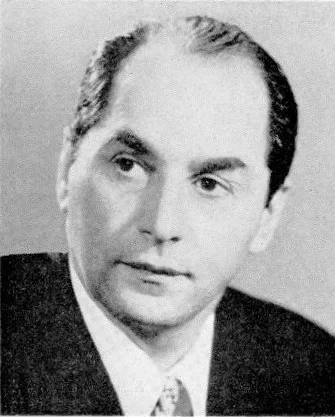
Clive Churchill
January 21, 1927 — August 9, 1985 — Newcastle, New South Wales, Australia
Clive Churchill was an Australian rugby league footballer and coach whose brilliance at fullback earned him the nickname "The Little Master" and redefined how the position was played. A five-time premiership winner with the South Sydney Rabbitohs as a player and three-time premiership-winning coach with the same club, he retired as Australia's most capped Kangaroos player. His legacy endures through the Clive Churchill Medal, awarded annually to the man of the match in the NRL Grand Final.
Early Life and Beginnings
Clive Bernard Churchill was born on January 21, 1927, in Newcastle, New South Wales, Australia. Growing up in a working-class environment during the Great Depression, he developed a love for rugby league early, showing exceptional speed, agility, and courage despite his relatively small stature. These attributes would later become hallmarks of his playing style, allowing him to outmanoeuvre bigger opponents through elusive running and sharp positional sense. Churchill's early promise on the field caught the attention of talent scouts, and he soon moved into representative junior football, laying the groundwork for a professional career. His rise through the ranks in New South Wales rugby league circles was rapid, and by his late teens he was already being talked about as a future star. The tough, physical culture of rugby league in postwar Australia shaped his resilience, and his humble beginnings in Newcastle instilled a determination that would define his approach to the sport throughout his career.
A Trailblazing Career
Churchill signed with the South Sydney Rabbitohs, where he would spend the majority of his playing career, becoming the club's iconic fullback. He won five premierships with South Sydney as a player, in 1950, 1951, 1953, 1954, and 1955, establishing the club as one of the era's dominant forces. Churchill represented both New South Wales and, remarkably, Queensland in interstate football, and he became a mainstay of the Australian Kangaroos, ultimately retiring as the most capped Australian international player of his time. What set Churchill apart was his revolutionary attacking approach to the fullback role, traditionally viewed as a purely defensive position. He counter-attacked with flair, joined the backline in attack, and used deceptive running to break defensive lines, fundamentally changing expectations of what a fullback could contribute. After retiring as a player, Churchill transitioned seamlessly into coaching, guiding South Sydney to three further premierships in 1967, 1968, and 1970, cementing his status as one of the most successful figures in the club's history both on and off the field.
Did You Know?
Clive Churchill is one of the few players in rugby league history to represent two different states—he played interstate football for both New South Wales and Queensland during his career. His impact was so significant that the NRL Grand Final's man-of-the-match award, the Clive Churchill Medal, was named in his honor after his death in 1985.
Legacy and Lasting Influence
Clive Churchill died in 1985, but his influence on rugby league remains profound and enduring. Widely regarded as one of the greatest players in the sport's history, he is enshrined as an "Immortal" of Australian rugby league, an honor reserved for the game's most transformative figures. In recognition of his contributions, the Australian Rugby League established the Clive Churchill Medal in 1986, awarded each year to the outstanding player in the NRL Grand Final, ensuring his name remains at the center of the sport's biggest annual moment. He was also honored as a Member of the Order of Australia (AM) for his services to rugby league. Churchill's legacy extends beyond his trophy haul; he is credited with pioneering a more dynamic, attacking style of fullback play that influenced generations of players who followed. His combination of skill, courage, and leadership—both as a player and coach—cemented South Sydney's golden era and left an indelible mark on the sport's history in Australia.