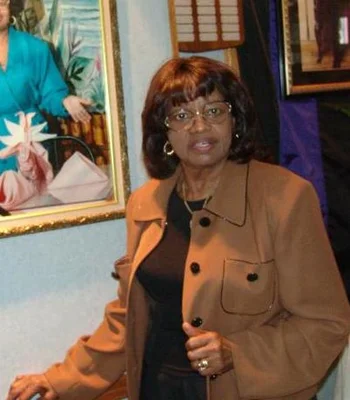
Doris Sams
February 2, 1927 — June 28, 2012 — Knoxville, Tennessee, United States
Doris Jane Sams, known to teammates as "Sammye," was one of the most versatile stars of the All-American Girls Professional Baseball League, excelling as both an outfielder and a pitcher between 1946 and 1953. Twice named the league's best player, she also became just the third pitcher in AAGPBL history to throw a perfect game. Her rare combination of power hitting and pitching dominance made her one of the era's most celebrated athletes.
Early Life
Doris Jane Sams was born on February 2, 1927, in Tennessee, where she grew up playing sandlot and amateur ball against boys, quickly developing a reputation for her strong arm and powerful swing. Standing 5 feet 9 inches and weighing 145 pounds, she was physically built for the demands of both pitching and everyday fielding, a rare dual skill set even among the athletic women recruited into the newly formed All-American Girls Professional Baseball League. Like many of her peers, Sams came of age during World War II, a period when women's opportunities in organized sports expanded as men left to serve overseas. Her natural talent and competitive drive caught the attention of AAGPBL scouts, who were searching the country for athletes capable of meeting the league's demanding standard of play. By her late teens, she had honed the right-handed batting and throwing skills that would soon make her one of the league's signature performers, setting the stage for a professional career that began in 1946.
Professional Career
Sams played in the AAGPBL from 1946 through 1953, most notably for the Muskegon Lassies and later the Kalamazoo Lassies, distinguishing herself as a rare two-way threat who could dominate from the pitcher's mound and produce as an everyday outfielder. Her pitching prowess reached its peak on July 28, 1947, when she threw a perfect game, becoming only the third pitcher in league history to accomplish the feat. Beyond that milestone, she consistently ranked among the league's top hitters, using her size and right-handed power to drive in runs and post strong batting averages season after season. Her all-around excellence earned her the league's Player of the Year award twice, a recognition of both her pitching dominance and her offensive production—an achievement matched by few others in AAGPBL history. Sams' ability to contribute in multiple roles made her invaluable to her teams and a fan favorite, as spectators appreciated watching a player who could change the outcome of a game with either her arm or her bat. Her career coincided with the league's most competitive years, and she remained one of its most consistently productive players until her final season in 1953.
Did You Know?
On July 28, 1947, Doris Sams pitched a perfect game, becoming just the third pitcher in AAGPBL history to achieve the feat. She was also one of the very few players to earn the league's Player of the Year award twice, doing so for both her pitching and hitting excellence.
Legacy
Doris Sams is remembered as one of the finest all-around players in the history of women's professional baseball, embodying the athletic excellence that defined the AAGPBL during its twelve-year run. Her perfect game and back-to-back Player of the Year honors placed her among an elite group of standout performers whose achievements helped legitimize women's baseball as a genuine athletic pursuit rather than a wartime novelty. In the decades following the league's dissolution in 1954, former players like Sams became central figures in preserving and sharing the AAGPBL's story, and their accomplishments gained renewed public attention after the National Baseball Hall of Fame opened its "Women in Baseball" exhibit in 1988. That recognition brought overdue acknowledgment to players who had competed at a high level long before modern women's sports received sustained mainstream support. Sams' career continues to be cited as a benchmark example of two-way excellence, comparisons that resonate even today when discussing rare multi-skilled players. Her contributions remain an important part of baseball history, illustrating both the caliber of competition in the AAGPBL and the enduring impact of the women who played it.