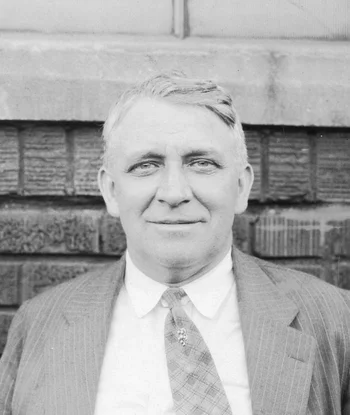
Henk van Woerden
December 6, 1947 — 2005 — Netherlands
Henk van Woerden was a Dutch painter and writer whose life and work were deeply intertwined with South Africa, where he spent part of his childhood and young adulthood. Though trained as a visual artist, he became internationally recognized for his literary work exploring apartheid-era history and identity. His writing brought a painter's eye for detail to the page, producing narratives that were both visually vivid and emotionally penetrating.
Early Life and South African Years
Henk van Woerden was born on December 6, 1947, in the Netherlands. As a child, his family relocated to South Africa, a move that would leave a lasting imprint on his imagination and artistic sensibility. Growing up in South Africa during the early years of institutionalized apartheid exposed him firsthand to the country's deep racial divisions and social tensions, themes he would later return to repeatedly in his writing. The contrast between his Dutch heritage and his South African upbringing gave him a dual perspective that set him apart from many of his contemporaries in the Netherlands. This formative period abroad shaped his lifelong fascination with questions of belonging, displacement, and the complicated legacies of colonialism. Eventually, van Woerden returned to the Netherlands, where he pursued formal training as a painter, immersing himself in the European art world while never fully leaving behind the landscapes and memories of his youth in southern Africa. This early bicultural experience became the foundation for a career that would move fluidly between visual art and literature.
Career as Painter and Writer
Van Woerden built a career first as a painter, developing a body of visual work informed by his transnational upbringing. Over time, he increasingly turned to writing, producing novels and nonfiction that drew on his personal history and his ongoing engagement with South Africa. His most acclaimed work centered on the story of Dimitri Tsafendas, the man who assassinated South African Prime Minister Hendrik Verwoerd, the architect of apartheid, in 1966. Published internationally as 'A Mouthful of Glass,' the book combined meticulous research with a novelist's narrative instinct, reconstructing Tsafendas's troubled life and the political context of his act in a way that illuminated the psychological and social machinery of apartheid itself. The work received wide critical praise and was translated into multiple languages, establishing van Woerden as a significant voice in Dutch letters with a rare authority on South African history. His writing was distinguished by its restraint, precision, and refusal to offer easy moral judgments, instead inviting readers to sit with the complexity of history and human behavior.
Did You Know?
Henk van Woerden's best-known book, 'A Mouthful of Glass,' tells the true story of Dimitri Tsafendas, the man who assassinated apartheid architect Hendrik Verwoerd in 1966. Van Woerden approached the subject with the eye of a painter, having built his early career as a visual artist before turning to writing.
Legacy and Later Recognition
By the time of his death, Henk van Woerden had cemented a reputation as one of the more distinctive literary voices to emerge from the intersection of Dutch and South African history. His work continued to be read and studied for its unflinching portrayal of apartheid's human costs and its careful attention to marginalized and overlooked historical figures. Van Woerden died in 2005, but his book on Tsafendas remains a touchstone for readers and scholars seeking to understand the psychological undercurrents of South Africa's apartheid era, particularly the story behind Verwoerd's assassination. Beyond literature, his paintings remain a lesser-known but meaningful part of his artistic legacy, reflecting the same sensibility for color, memory, and displacement found in his prose. Van Woerden's ability to move between mediums and cultures gave his work a lasting resonance, and he is remembered today as a writer who used both brush and pen to examine one of the twentieth century's most consequential political systems from an unusually intimate vantage point.