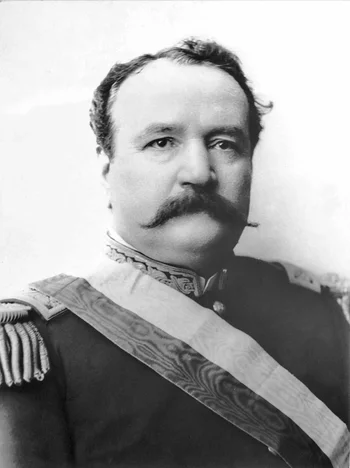
Jacques Necker
September 30, 1732 — April 9, 1804 — Geneva, Switzerland
Jacques Necker was a Genevan-born banker and statesman who rose to become finance minister of France under King Louis XVI. His attempts to reform France's chaotic finances made him one of the most influential—and controversial—figures on the eve of the French Revolution. A constitutional monarchist and political economist, Necker also wrote extensively on morality and the dangers he saw in radical egalitarianism.
Early Life and Path to Finance
Jacques Necker was born on September 30, 1732, in Geneva, Switzerland, into a family of modest means. His father was a legal scholar who taught public law, and young Jacques was expected to pursue a stable profession. Rather than following an academic path, however, he left Geneva as a teenager to seek his fortune in Paris, entering the world of banking. He joined the banking house of Isaac Vernet, a fellow Genevan, and quickly demonstrated a sharp aptitude for finance. Through discipline, shrewd investment, and careful cultivation of connections among France's elite, Necker rose swiftly within the firm, eventually becoming a partner. His banking activities, including lucrative dealings tied to the French East India Company and government loans, made him extraordinarily wealthy by his thirties. This financial success gave him both the independence and the credibility to move into public affairs, and he began writing on economic policy, positioning himself as a serious thinker on matters of state finance long before he held any official government post.
Finance Minister to Louis XVI
Necker's growing reputation as an economic writer led to his appointment as Director-General of Finances under Louis XVI in 1777, a remarkable achievement for a Protestant foreigner in Catholic France. Facing a kingdom burdened by debt from wars, including support for the American Revolution, Necker pursued reform rather than raising taxes outright. He tried to streamline tax collection, reduce wasteful court expenditures, and borrow extensively to fund the state without provoking public unrest. In 1781, he published the 'Compte rendu au roi,' a public accounting of royal finances that was unprecedented in its transparency—and which scandalized the aristocracy by exposing lavish spending. This controversy forced his resignation later that year. He was recalled to office in 1788 as France's fiscal crisis deepened, and he played a central role in convening the Estates-General in 1789, a decision that set the stage for revolutionary upheaval. His dismissal by the king in July 1789, days before the storming of the Bastille, triggered public outrage and briefly made him a popular hero, prompting a swift reinstatement.
Did You Know?
Necker's 1781 'Compte rendu au roi' was the first time the French crown's finances had ever been made public in a detailed printed report. The document sold out almost immediately, with an estimated 100,000 copies circulating—an extraordinary bestseller for its era that dramatically fueled public debate over royal spending.
Later Years and Legacy
Necker's second term as minister proved short-lived; as the Revolution radicalized, his moderate constitutional monarchism fell out of favor, and he resigned permanently in September 1790. He retired to his estate at Coppet, Switzerland, where he devoted himself to writing on political economy, morality, and the philosophical foundations of government. Increasingly troubled by the direction of revolutionary France, he penned critiques warning against the excesses of unchecked egalitarianism, arguing that equality before the law, while important, could not be divorced from social stability and human nature. His daughter, Germaine de Staël, became one of Europe's most celebrated writers and intellectuals, carrying forward and amplifying his ideas within her own influential salon culture. Necker died at Coppet on April 9, 1804, remembered as a well-intentioned reformer whose efforts to modernize France's finances ultimately could not stem the tide of revolution. Historians continue to debate whether his policies hastened or merely coincided with the collapse of the Ancien Régime, but his transparent public reporting remains a landmark in the history of fiscal accountability.