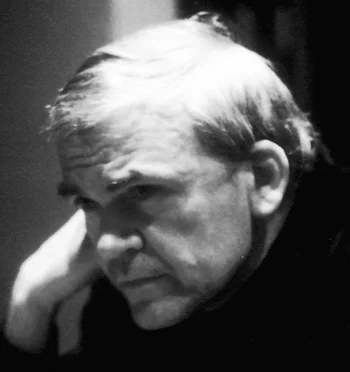
John Abizaid
April 1, 1951 — Coleville, California, United States
John Abizaid is a retired four-star general in the United States Army who commanded U.S. Central Command (CENTCOM) from 2003 to 2007, overseeing American military operations across the Middle East, including the wars in Iraq and Afghanistan. Of Lebanese descent and fluent in Arabic, he became the first Arab-American to lead CENTCOM. After retiring from the military, he later served as the United States Ambassador to Saudi Arabia from 2019 to 2021.
Early Life and Education
John Philip Abizaid was born on April 1, 1951, in Coleville, California, into a family of Lebanese Christian ancestry. Growing up in a small rural town, he developed an early interest in military service and history, eventually earning admission to the United States Military Academy at West Point, from which he graduated in 1973. Abizaid distinguished himself academically and went on to pursue further education, earning a master's degree in Middle Eastern studies from Harvard University. He also studied Arabic and regional politics at the University of Jordan in Amman, an experience that gave him fluency in the language and deep familiarity with Arab culture. This academic grounding in the Middle East would prove pivotal throughout his military career, distinguishing him from many of his peers and preparing him for the complex diplomatic and strategic challenges he would later face in the region.
Military Career
Abizaid's early military service included a combat jump with the 82nd Airborne Division during the 1983 invasion of Grenada, where he commanded a rifle company. In the early 1990s, he led a battalion of the 325th Airborne Infantry Regiment during Operation Provide Comfort, helping protect Kurdish refugees in northern Iraq following the Gulf War. He continued to rise through the ranks, commanding the 1st Brigade of the 82nd Airborne Division and later serving as Assistant Division Commander for the 1st Armored Division in Germany. In 2001, he took command of the 173rd Airborne Brigade before becoming Director of the Joint Staff at the Pentagon. Abizaid's expertise in Middle Eastern affairs led to his appointment as Deputy Commander of CENTCOM in 2002, and in 2003 he succeeded General Tommy Franks as CENTCOM Commander. In this role, he directed U.S. military strategy in Iraq, Afghanistan, and across a region spanning 27 countries, navigating the difficult transition from conventional warfare to a prolonged counterinsurgency campaign.
Did You Know?
John Abizaid was the first Arab-American to command U.S. Central Command, and his fluency in Arabic—honed through studies at the University of Jordan—gave him a level of cultural insight into the Middle East that was rare among senior American military leaders.
Later Career and Diplomatic Service
Abizaid retired from the Army in 2007 after more than three decades of service, having reached the rank of four-star general. Following his retirement, he transitioned into academia and the private sector, holding positions at institutions such as Stanford University and serving on various corporate and advisory boards focused on national security. His extensive regional knowledge and credibility kept him engaged in Middle East policy discussions for years afterward. In 2018, President Donald Trump nominated him to serve as U.S. Ambassador to Saudi Arabia, a post to which he was confirmed and which he held from 2019 to 2021. In this diplomatic role, he worked to strengthen U.S.-Saudi relations during a turbulent period marked by regional tensions and shifting American foreign policy priorities. Abizaid's career, spanning both military command and diplomacy, is widely regarded as a model of the kind of regional expertise the U.S. government has often lacked in its Middle East engagements, and he remains a respected voice on national security and Middle Eastern affairs.