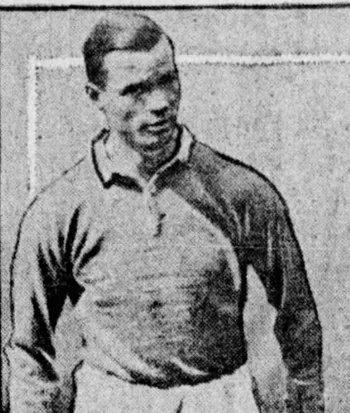
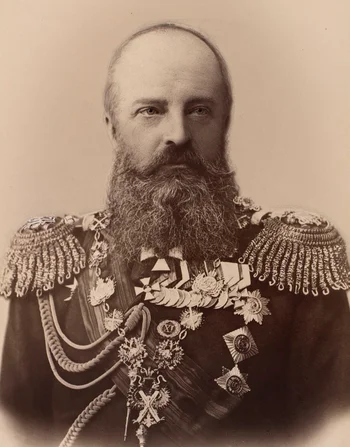
Karl Elmendorff
October 25, 1891 — October 21, 1962 — Düsseldorf, Germany
Karl Elmendorff was a German conductor whose career centered on the great German opera houses of the twentieth century, most notably as a trusted interpreter of Richard Wagner's works. He held leading positions in Mannheim, Dresden, and Munich, and became a fixture of the Bayreuth Festival during the 1920s and 1930s. His steady, disciplined conducting style earned him a reputation as one of the era's dependable Wagnerian specialists.
Early Life and Musical Training
Karl Eduard Maria Elmendorff was born on October 25, 1891, in Düsseldorf, Germany, into a country with a rich and rapidly professionalizing operatic tradition. He pursued formal musical education in Cologne, where he trained in conducting and absorbed the German Romantic repertoire that would define his career. Like many conductors of his generation, he began his professional life not on the podium of a major house but through smaller theatrical and operatic engagements, gradually building experience by working through the ranks of provincial and regional opera companies. This apprenticeship system, common in Germany at the time, allowed young conductors to master the practical demands of the pit—balancing singers, orchestra, and staging—long before they were entrusted with prestigious assignments. Elmendorff's early positions gave him exposure to a broad swath of the operatic canon, but it was his affinity for the dramatic and musical architecture of Wagner that would come to define his professional identity. By the 1920s, he had developed the reputation and technical assurance necessary to move into more significant conducting posts, setting the stage for the associations with major German opera houses that would mark the height of his career.
Rise to Prominence and Bayreuth
Elmendorff's career reached new heights when he became closely associated with the Bayreuth Festival, the institution founded by Richard Wagner himself and dedicated exclusively to his operas. Beginning in the late 1920s, Elmendorff conducted regularly at Bayreuth, taking on some of the most demanding works in the repertoire, including 'Der fliegende Holländer' and other Wagner masterpieces, and remaining a fixture there through the 1930s and into the early 1940s. Beyond Bayreuth, he held the position of General Music Director in Mannheim and later at the Dresden State Opera (Sächsische Staatsoper), two of Germany's most important operatic institutions. In these roles, he was responsible for shaping orchestral standards, leading premieres, and maintaining the high performance traditions expected of German state theaters. His conducting was noted for its structural clarity and unwavering fidelity to the score, qualities that suited the monumental scale of Wagnerian opera particularly well. He also worked in Munich, further cementing his standing among the leading conductors of German opera during a turbulent and transformative period for the nation's cultural institutions.
Did You Know?
Karl Elmendorff conducted at the Bayreuth Festival for over a decade, placing him among the select group of maestros entrusted with performing Wagner's operas at the very theater the composer built for his own works.
Later Career and Legacy
Elmendorff continued his conducting career after the end of the Second World War, though the postwar years brought a changed cultural landscape for many musicians who had worked prominently during the Nazi era. He remained active in German opera houses, continuing to champion the Wagnerian repertoire that had defined his professional life. He died on October 21, 1962, in Feldkirch, Austria, just days before what would have been his 71st birthday. Today, Elmendorff is remembered primarily through recordings and historical accounts of the Bayreuth Festival's interwar period, where he stood among a generation of conductors—including figures like Wilhelm Furtwängler and Karl Böhm—who shaped how Wagner's operas were performed and preserved for future audiences. While not as widely celebrated internationally as some of his contemporaries, his contributions to the institutional continuity of German opera houses during a critical era of musical history remain part of the historical record. His name endures in discussions of Bayreuth's conducting history and in the broader study of German operatic performance practice in the twentieth century.