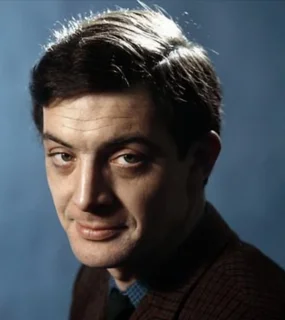
Kelly Johnson
February 27, 1910 — December 21, 1990 — Ishpeming, Michigan, United States
Kelly Johnson was an American aeronautical and systems engineer whose innovative designs shaped the course of aviation history. As the driving force behind Lockheed's secretive Skunk Works division, he created some of the most iconic aircraft ever built, including the U-2 spy plane and the SR-71 Blackbird. His work pushed the boundaries of speed, altitude, and stealth for decades.
Early Life and Education
Clarence Leonard "Kelly" Johnson was born on February 27, 1910, in Ishpeming, Michigan, to Swedish immigrant parents. Growing up in a large family of modest means, he displayed an early fascination with aviation and engineering, reportedly deciding at a young age to become an aircraft designer. He pursued his passion academically, studying aeronautical engineering at Flint Junior College before transferring to the University of Michigan, where he earned both a bachelor's and a master's degree in the field. During his studies, Johnson's talent for aerodynamic analysis became evident when he identified stability problems in a wind-tunnel model that would later become the Lockheed Electra, catching the attention of Lockheed engineers. He joined Lockheed Aircraft Corporation in 1933, initially working as a tool designer before quickly rising through the ranks due to his exceptional technical abilities. His early career at Lockheed coincided with the company's growth into a major aerospace manufacturer, giving Johnson the opportunity to work on a range of increasingly ambitious aircraft projects that would define his life's work and establish him as one of the most gifted engineers of his generation.
Career and Major Achievements
Johnson's career at Lockheed produced an extraordinary string of aviation breakthroughs. He contributed to the P-38 Lightning fighter and later designed the P-80 Shooting Star, the United States' first operational jet fighter. In 1943, he founded Lockheed's Advanced Development Programs division, nicknamed the "Skunk Works," which became renowned for rapid, innovative aircraft development under tight secrecy. There he designed the F-104 Starfighter, the first fighter capable of sustained Mach 2 flight, and the first fighter to exceed 400 mph. His most celebrated achievements came with the U-2 reconnaissance aircraft, developed in the 1950s to fly at extreme altitudes for Cold War intelligence gathering, and the SR-71 Blackbird, unveiled in the 1960s as the first production aircraft capable of sustained flight beyond Mach 3. The SR-71's revolutionary design incorporated titanium construction and stealth features decades ahead of its time. Johnson led the development of more than forty aircraft during his career, earning a reputation for delivering complex, high-performance designs on tight schedules and often under extraordinary secrecy, cementing his legacy as one of the twentieth century's greatest aerospace engineers.
Did You Know?
Kelly Johnson developed 14 famous 'Skunk Works Rules' for rapid, efficient engineering that are still studied and applied in aerospace and technology management today. He was also known for his uncanny ability to estimate an aircraft's performance characteristics almost instantly, a skill so impressive that colleagues nicknamed him for his seemingly supernatural engineering intuition.
Legacy and Later Life
Johnson retired from active Skunk Works leadership in 1975 but remained a consultant to Lockheed until shortly before his death, continuing to influence aerospace engineering practices. Throughout his career, he received numerous honors, including two Collier Trophies, the National Medal of Science, and the Presidential Medal of Freedom, reflecting the profound impact of his contributions to American aviation and national defense. He was also known for developing the management philosophy behind the Skunk Works, emphasizing small teams, minimal bureaucracy, and rapid prototyping—principles later adopted widely across the aerospace and technology industries as the "skunkworks" model of innovation. Johnson died on December 21, 1990, in Burbank, California, leaving behind a legacy defined by engineering excellence and visionary design. His aircraft, particularly the U-2 and SR-71, remain celebrated symbols of Cold War-era ingenuity, and many of his design principles continue to inform modern aerospace development. Lockheed's Skunk Works itself endures as a symbol of creative engineering freedom, a testament to Johnson's enduring influence on how advanced aircraft are conceived, designed, and built.