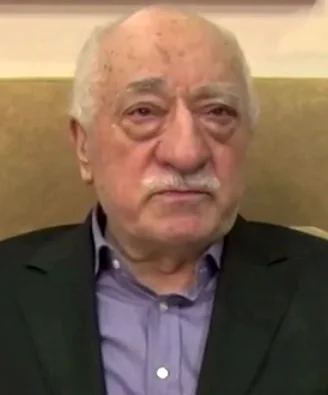
Lim Bo Seng
April 27, 1909 — June 29, 1944 — Nan'an, Fujian, China
Lim Bo Seng was a Chinese-born Singaporean businessman who became one of Southeast Asia's most celebrated anti-Japanese resistance leaders during World War II. Rising from a respected community figure to a key operative of the British-backed Force 136 network, he organized fundraising, boycotts, and guerrilla intelligence operations against Japan's occupation of Malaya. Captured and tortured by the Japanese military police in 1944, he died in captivity, becoming a lasting symbol of overseas Chinese patriotism and sacrifice.
Early Life and Education
Lim Bo Seng was born on April 27, 1909, in Nan'an, Fujian province, China. While still a child, he moved with his family to Singapore, where his father had established business interests, and grew up immersed in the city's thriving overseas Chinese community. Lim received his early education at Raffles Institution, one of Singapore's most prestigious schools, where he developed both academic discipline and a strong sense of civic identity. He went on to study engineering at the University of Hong Kong, gaining technical training that would later prove useful in his business career. After completing his studies, Lim returned to Singapore to take charge of his family's commercial ventures, including operations in brick manufacturing and other industries. His business acumen, combined with his fluency in navigating both Chinese and colonial British social circles, quickly earned him respect among Singapore's Chinese elite. By his late twenties, Lim had established himself as a prominent and trusted community leader, known for his generosity, organizational skill, and deep sense of loyalty to his Chinese homeland, qualities that would define the remainder of his life.
Wartime Resistance and Leadership
The outbreak of the Second Sino-Japanese War in 1937 transformed Lim Bo Seng from a businessman into a fervent patriot and organizer. He threw himself into supporting China's war effort, leading boycotts of Japanese goods across Malaya and Singapore and spearheading large-scale fundraising campaigns that channeled money and resources to resistance forces in China. His leadership during this period cemented his reputation as one of the most influential Chinese community organizers in the region. When Japan invaded and occupied Malaya and Singapore in 1942, Lim escaped to India, where he joined Force 136, a British Special Operations Executive unit dedicated to organizing resistance and intelligence networks behind Japanese lines. Trained in clandestine warfare, Lim returned covertly to Japanese-occupied Malaya to coordinate guerrilla operations, gather intelligence, and rebuild underground resistance networks among the local population. His work was dangerous and demanded constant secrecy, as capture by the Japanese military police, the feared Kempeitai, meant near-certain torture or death. Despite the risks, Lim persisted, believing deeply in the cause of liberating Malaya and Singapore from Japanese rule and supporting the broader Allied war effort in Southeast Asia.
Did You Know?
Despite being tortured for weeks by the Japanese Kempeitai, Lim Bo Seng never revealed the identities or operations of his fellow Force 136 resistance fighters. After the war, Singapore honored him with a state funeral and built a lasting memorial near the Esplanade that still stands today.
Capture, Death, and Legacy
In March 1944, Lim Bo Seng was captured by the Kempeitai in Malaya after his resistance network was compromised. He endured brutal interrogation and torture but refused to betray his fellow operatives or the details of Force 136's operations, displaying remarkable courage under extreme duress. Weakened by his treatment, Lim died in Japanese captivity on June 29, 1944, in Batu Gajah, Perak, without revealing information that could have endangered his comrades. After the war, his remains were exhumed and given a state funeral in Singapore, where he was honored as a national hero. A memorial dedicated to Lim was erected near Singapore's Esplanade, standing today as a public tribute to his sacrifice, and streets and institutions across Singapore bear his name. Lim Bo Seng's story became emblematic of the overseas Chinese community's contribution to the fight against Japanese imperialism, illustrating how civilian leaders could transform into wartime heroes. His legacy endures as a symbol of loyalty, resilience, and quiet courage, commemorated annually and remembered as one of the most significant figures in Singapore's wartime history.