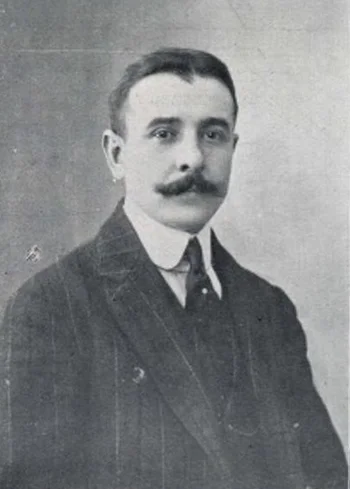
Marc Blitzstein
March 2, 1905 — January 22, 1964 — Philadelphia, Pennsylvania, United States
Marc Blitzstein was an American composer, lyricist, and librettist whose politically charged musical theater works reshaped mid-20th-century American stage music. He gained national notoriety in 1937 when his pro-union musical The Cradle Will Rock, directed by Orson Welles, was shut down by the Works Progress Administration, becoming a landmark moment in American theater history. His enduring legacy also rests on his celebrated English adaptation of Bertolt Brecht and Kurt Weill's The Threepenny Opera, which introduced the work to generations of American audiences.
Early Life and Training
Marcus Samuel Blitzstein was born in 1905 in Philadelphia to a well-to-do Jewish family with strong intellectual and musical interests. He showed prodigious musical talent as a child, performing publicly as a pianist while still young. He pursued formal composition studies at the Curtis Institute of Music and later at the University of Pennsylvania, before traveling to Europe to study with two towering figures of modernist music: Nadia Boulanger in Paris and Arnold Schoenberg in Berlin. This European training exposed him to both neoclassical rigor and atonal experimentation, influences that would later merge with his growing commitment to socially engaged art. Blitzstein's political consciousness deepened during the Depression era, as he became increasingly drawn to leftist politics and the labor movement. This combination of rigorous classical training and radical political conviction shaped the distinctive voice he would bring to American musical theater—one that fused agitprop directness with sophisticated compositional technique, setting him apart from his Broadway contemporaries and preparing him for the groundbreaking work that would define his career.
The Cradle Will Rock and Major Works
Blitzstein's defining moment came in 1937 with The Cradle Will Rock, a pro-union musical he wrote and composed, directed by a young Orson Welles for the Federal Theatre Project. When the WPA abruptly shut down the production over its incendiary labor politics, the cast and crew defiantly marched to another theater and performed it without sets, costumes, or an orchestra pit—Blitzstein himself playing piano onstage—creating one of the most famous acts of theatrical defiance in American history. He followed this with No for an Answer, another socially conscious work. In the 1950s, his off-Broadway English adaptation of Brecht and Weill's The Threepenny Opera became a sensation, introducing the German work—and its song 'Mack the Knife'—to American audiences and running for years. He also composed the opera Regina, based on Lillian Hellman's The Little Foxes, and the Broadway musical Juno, adapted from Seán O'Casey's Juno and the Paycock. His translation work extended to Brecht and Weill's Rise and Fall of the City of Mahagonny and Brecht's Mother Courage and Her Children.
Did You Know?
When the WPA shut down The Cradle Will Rock hours before its scheduled 1937 premiere, the cast defiantly walked twenty blocks to another theater and performed the show from their seats in the audience, with Blitzstein alone onstage narrating and playing the score on an upright piano—an act of improvised theatrical rebellion later dramatized in Tim Robbins's 1999 film Cradle Will Rock.
Later Career and Legacy
Beyond the stage, Blitzstein composed music for films, including the documentary short Surf and Seaweed (1931) and Joris Ivens's The Spanish Earth (1937), a documentary about the Spanish Civil War narrated by Ernest Hemingway. In 1960, he contributed two songs to the original Broadway production of Hellman's play Toys in the Attic. Throughout his career, Blitzstein remained committed to blending political conviction with musical craft, and his associations with leftist causes drew scrutiny during the McCarthy era, including a controversial appearance before the House Un-American Activities Committee. He died on January 22, 1964, at age 58, while in Martinique, under violent and tragic circumstances that cut short a period of continued creative activity, including unfinished work on an opera about Sacco and Vanzetti. Blitzstein's legacy endures through revivals of The Cradle Will Rock and Regina, his enduring Threepenny Opera translation, and his influence on later American composers of political and socially conscious musical theater, including Leonard Bernstein and Stephen Sondheim, both of whom admired and were shaped by his work.