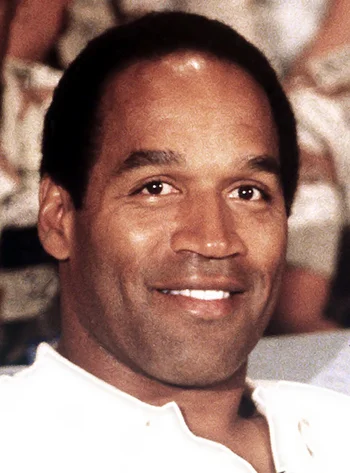
Minor White
July 9, 1908 — June 24, 1976 — Minneapolis, Minnesota, United States
Minor White was an American photographer, theoretician, critic, and educator whose deeply personal, spiritually infused black-and-white images reshaped how photography was understood as an art form. A co-founder of the influential journal Aperture, White spent much of his career teaching and writing about photography as a vehicle for inner experience rather than mere documentation. His legacy endures through his students, his writings, and his haunting photographs of landscapes, rock formations, and reflections.
Early Life and Formative Years
Minor Martin White was born on July 9, 1908, in Minneapolis, Minnesota. He studied botany and English at the University of Minnesota, developing an early fascination with nature and the written word that would later shape his photographic philosophy. During the Great Depression, White found work as a photographer for the Works Progress Administration in Portland, Oregon, documenting historic architecture for the Historic American Buildings Survey. This period sharpened his technical skills and gave him his first sustained experience behind the camera. His life was interrupted by World War II, during which he served in the U.S. Army in the Pacific theater, an experience that deepened his introspective, often mystical worldview. After the war, he moved to San Francisco, where he studied and later taught alongside Ansel Adams and Dorothea Lange at the California School of Fine Arts, immersing himself in a community of photographers who treated the medium as fine art rather than mere record-keeping.
Career and Major Achievements
White's career flourished through both his photography and his role as a connector and interpreter within the field. In 1952, he co-founded Aperture magazine alongside Ansel Adams, Dorothea Lange, Beaumont Newhall, and others, establishing it as a leading platform for serious photographic criticism and imagery. He served as its editor for many years, shaping discourse around photography's artistic and spiritual dimensions. White developed the concept of photographic "sequences," arranging images in carefully ordered groups to evoke emotional and even meditative responses, extending Alfred Stieglitz's notion of "equivalents." He moved to Rochester, New York, in 1955 to teach at the Rochester Institute of Technology and edit Image magazine at the George Eastman House. His photographs, often of natural textures, reflections, and abstracted landscapes, were less about literal subject matter and more about inviting viewers into contemplative, almost transcendent states, influenced by his interest in Zen Buddhism, Gurdjieff's teachings, and mysticism.
Did You Know?
Minor White believed photographs could function as "equivalents" for inner emotional states, meaning an image of a rock or reflection might symbolically represent a feeling entirely unrelated to its literal subject. He often arranged his photographs into carefully sequenced series, intending viewers to experience them almost like a meditative journey rather than a simple gallery display.
Later Life, Legacy, and Impact
In 1965, White joined the faculty of the Massachusetts Institute of Technology, where he taught until his death, mentoring a generation of photographers and pushing them to see photography as a path toward self-awareness. He authored influential texts, including ideas later compiled in works such as Mirrors, Messages, Manifestations, which explored his theories on image-making and perception. White died of a heart attack on June 24, 1976, in Boston, Massachusetts, at age 67. Though he kept his personal life, including his sexuality, largely private during his lifetime due to the era's prevailing attitudes, his influence on photographic education and criticism proved lasting. Today, Minor White is remembered as one of the twentieth century's most thoughtful photographic theorists, whose emphasis on emotional and spiritual resonance expanded the boundaries of what photography could express. His archives, housed at Princeton University, continue to inform scholarship on the medium's artistic and philosophical possibilities.