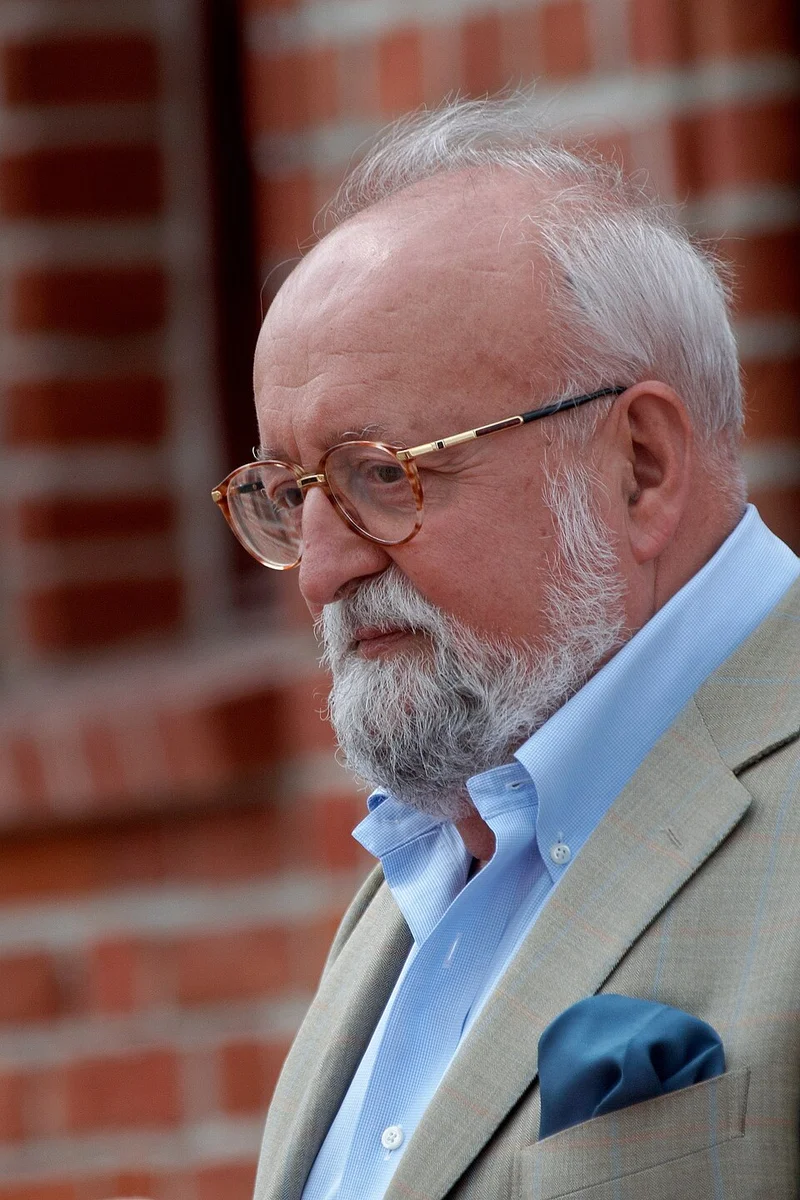
P. F. Strawson
November 23, 1919 — February 13, 2006 — London, England
Sir Peter Frederick Strawson was one of the most influential English philosophers of the twentieth century, celebrated for his work on logic, language, and metaphysics. Spending nearly his entire career at the University of Oxford, he challenged prevailing views in analytic philosophy and helped revive interest in descriptive metaphysics. His ideas continue to shape debates in philosophy of language, ethics, and Kant scholarship.
Early Life and Education
Peter Frederick Strawson was born on November 23, 1919, in London, England, into a family of teachers. He attended Christ's College, Finchley, before going up to St John's College, Oxford, where he studied Philosophy, Politics, and Economics. His studies were interrupted by the Second World War, during which he served in the Royal Artillery and later the Royal Electrical and Mechanical Engineers, rising to the rank of captain. After the war ended, Strawson returned to academic life, completing his degree and quickly distinguishing himself as a sharp and original thinker. In 1947, he was appointed a lecturer and later a tutorial fellow at University College, Oxford, beginning a lifelong association with the university that would define his career. These formative years placed him at the heart of Oxford's vibrant postwar philosophical community, where he engaged with contemporaries who were reshaping analytic philosophy through close attention to ordinary language and logical analysis.
Philosophical Career and Major Works
Strawson rose to international prominence in 1950 with his essay 'On Referring,' a landmark critique of Bertrand Russell's theory of descriptions that distinguished between sentences and their uses in context. This paper became a cornerstone of philosophy of language and cemented his reputation as a leading figure in the ordinary language philosophy movement. In 1959, he published 'Individuals: An Essay in Descriptive Metaphysics,' arguing that persons and material objects are basic particulars in our conceptual scheme, and introducing his influential distinction between 'descriptive' and 'revisionary' metaphysics. His 1962 essay 'Freedom and Resentment' offered a groundbreaking account of moral responsibility rooted in human reactive attitudes, reshaping debates on free will. In 'The Bounds of Sense' (1966), he offered an ambitious reconstruction of Kant's Critique of Pure Reason, blending historical interpretation with original argument. In 1968, Strawson was appointed Waynflete Professor of Metaphysical Philosophy at Magdalen College, Oxford, a position he held until 1987.
Did You Know?
Strawson's 1950 essay 'On Referring' was written as a direct challenge to Bertrand Russell, one of the most eminent philosophers alive at the time, yet the young Strawson's arguments proved so compelling that they permanently altered the course of philosophy of language.
Later Life, Honors, and Legacy
Strawson was knighted in 1977 in recognition of his contributions to philosophy, and he was a longtime Fellow of the British Academy. Upon his retirement from the Waynflete Chair in 1987, he returned to University College, Oxford, which continued to provide him rooms for the rest of his life. Throughout his career, he trained and influenced generations of philosophers, many of whom went on to shape the discipline internationally, including his son Galen Strawson, who also became a noted philosopher. P. F. Strawson died on February 13, 2006, in Oxford, at the age of 86. His work remains foundational in philosophy of language, metaphysics, and ethics, and 'On Referring' and 'Individuals' are still widely taught and debated. His careful, systematic approach to descriptive metaphysics offered an alternative to both strict logical positivism and pure linguistic analysis, securing his lasting legacy as one of Oxford's most important twentieth-century philosophers.