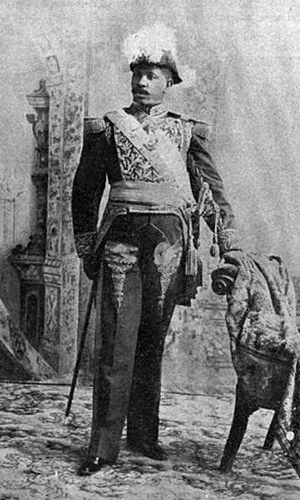
Shri Krishna Sinha
October 21, 1887 — January 31, 1961 — Bihar, India
Shri Krishna Sinha, popularly known as Shri Babu, was the first chief minister of the Indian state of Bihar, a post he held almost continuously from 1937 until his death in 1961. A towering figure in the Indian independence movement, he spent nearly eight years in British prisons for his political activism. He is remembered as a pioneering social reformer who became the first chief minister in India to abolish the zamindari land-tenure system.
Early Life and Entry into Politics
Shri Krishna Sinha was born on 21 October 1887 in Bihar, then part of British India. He grew up amid the ferment of the nationalist movement and, like many young men of his generation, was drawn early into the struggle against colonial rule. He joined the Indian National Congress and quickly distinguished himself as a powerful orator, earning the title 'Bihar Kesari,' or Lion of Bihar, for the thunderous, lionlike roars with which he addressed mass meetings. His commitment to the freedom struggle led to repeated arrests by British authorities, and over the course of his political career he was imprisoned for a total of about eight years. Rather than deterring him, these periods of incarceration only strengthened his resolve and his standing among Bihar's Congress workers. During this formative period, Sinha also became closely associated with social reform causes, particularly the movement to end caste-based discrimination, which would come to define much of his later public life. His blend of fiery rhetoric, organizational skill, and personal sacrifice marked him as one of the most influential leaders to emerge from Bihar in the early twentieth century.
Chief Ministership and Landmark Reforms
Sinha became the leader of Bihar's first Congress Ministry in 1937, effectively serving as the province's premier under British rule. Apart from an interruption during World War II, when Congress ministries resigned in protest, he continued to lead Bihar's government, and after India's independence in 1947 he was formally installed as the state's first chief minister, a position he held until his death in 1961. His tenure was marked by bold, transformative policy. Most notably, he became the first chief minister in independent India to abolish the zamindari system, the colonial-era arrangement that had concentrated land ownership in the hands of a few landlords while impoverishing millions of tenant farmers. This reform reshaped Bihar's rural economy and set a precedent that influenced land reform efforts across the country. Sinha also took a strong stand against caste discrimination, most famously leading the movement that secured Dalit entry into the Baidyanath Dham temple in Deoghar, a site from which lower-caste Hindus had long been barred. His willingness to challenge entrenched social and economic hierarchies made him a polarizing but respected figure, and his mass meetings drew huge crowds who came to hear his impassioned speeches.
Did You Know?
Shri Krishna Sinha earned the nickname 'Bihar Kesari,' or Lion of Bihar, because of the thunderous, lionlike roars with which he delivered his public speeches. He personally led the historic movement that allowed Dalits to enter the Baidyanath Dham temple in Deoghar, a site from which they had long been excluded.
Legacy
Shri Krishna Sinha died in office on 31 January 1961, having governed Bihar for nearly a quarter century in various capacities. His death marked the end of an era for the state, as he was the last of the original generation of Congress leaders who had guided Bihar from colonial subjugation to self-governance. He is remembered today as a founding architect of modern Bihar, whose zamindari abolition reshaped land ownership and whose temple-entry campaign struck a blow against institutionalized caste discrimination. The title 'Bihar Kesari' has endured as shorthand for his fearless, forceful style of leadership, and his name remains closely tied to Bihar's post-independence political identity. Numerous public institutions, roads, and memorials across Bihar bear his name in recognition of his contributions. His legacy is often invoked in discussions of land reform and social justice in India, and he is regarded as one of the most consequential chief ministers in the country's early history, a leader whose combination of nationalist fervor, administrative resolve, and social conscience left a lasting imprint on the state he helped build.