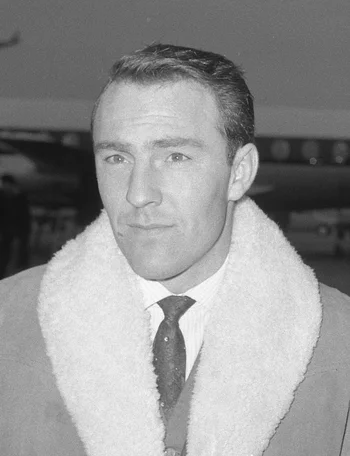
Tom Harris
February 20, 1964 — Scotland, United Kingdom
Tom Harris is a Scottish journalist and former Labour politician who represented Glasgow Cathcart, later Glasgow South, in the House of Commons from 2001 to 2015. During his fourteen years as an MP, he served as a junior minister in the governments of Tony Blair and Gordon Brown, with particular responsibility for transport and climate change communications. After losing his seat in the 2015 SNP landslide, he pursued a career in political journalism and eventually left the Labour Party in 2018.
Early Life and Career
Thomas Harris was born on February 20, 1964, in Scotland, where he grew up before entering the world of journalism. Before turning to politics, he worked as a local newspaper journalist, an experience that gave him a grounding in communication and public affairs that would later shape his political career. His background in the press distinguished him from many of his parliamentary colleagues and informed the direct, often outspoken style he became known for. Harris was active in Labour Party politics in Scotland during the 1990s, a period of significant change for the party as it moved toward devolution and prepared for government under Tony Blair. His journalism background and local activism eventually led him to seek elected office, and he was selected as the Labour candidate for the Glasgow Cathcart constituency ahead of the 2001 general election. This seat, based in the southern suburbs of Glasgow, had a long history of Labour representation, and Harris's selection reflected the party's dominance in Scottish urban politics at the time.
Parliamentary Career and Ministerial Roles
Harris won Glasgow Cathcart in the 2001 general election and held the seat, renamed Glasgow South after boundary changes in 2005, until 2015. During his time in Parliament, he became a loyal but independent-minded Labour backbencher, willing to criticize his own party when he disagreed with its direction. He was appointed to junior ministerial positions in government, taking on responsibilities in the Department for Transport, where he had oversight of rail policy, and later working on climate change communications, including public awareness campaigns encouraging citizens to reduce their carbon footprint. Harris was known in Westminster for his blogging and commentary, being one of the earlier British MPs to embrace blogging as a means of engaging directly with constituents and the public. He also became associated with the Blairite wing of the Labour Party, often expressing skepticism about the leftward turn of Labour under later leaders. His outspoken commentary made him a recognizable voice in British political media even before he left frontline politics.
Did You Know?
Tom Harris was one of the first British MPs to keep a regular political blog, using it to comment candidly on Westminster affairs at a time when most politicians were wary of social media. His blunt, often self-deprecating writing style made him a favorite among political journalists long before he became one himself.
Departure from Politics and Later Career
Harris lost his Glasgow South seat in the 2015 general election, swept away along with most Scottish Labour MPs by the surge in support for the Scottish National Party following the 2014 independence referendum. Rather than retreat from public life, he transitioned into a career as a political journalist and commentator, writing columns for national newspapers and offering analysis on British and Scottish politics. His post-parliamentary writing often reflected the same candor that had characterized his time as an MP, including sharp criticism of the Labour Party's leadership and direction. In August 2018, Harris formally left the Labour Party, a decision that reflected his growing disillusionment with its trajectory under Jeremy Corbyn. His departure was widely covered in the British press as emblematic of a broader split among moderate, pro-devolution Labour figures in Scotland. Today, Harris remains active as a commentator on British and Scottish political affairs, drawing on his unusual combination of journalistic and ministerial experience to offer perspective on the issues facing Scotland and the UK.