On This Day — 26 July
2000s

2016
The Sagamihara stabbings occur in Kanagawa Prefecture in Japan. Nineteen people are killed.
Sagamihara stabbings

2016
Hillary Clinton becomes the first female nominee for president of the United States by a major political party at the Democratic National Convention in Philadelphia.
Hillary Clinton

2016
Solar Impulse 2 becomes the first solar-powered aircraft to circumnavigate the Earth.
Solar Impulse

2011
A Royal Moroccan Air Force Lockheed C-130 Hercules crashes near Guelmim Airport in Guelmim, Morocco. All 80 people on board are killed.
Royal Moroccan Air Force

2009
The militant Nigerian Islamist group Boko Haram attacks a police station in Bauchi, leading to reprisals by the Nigeria Police Force and four days of violence across multiple cities.
Nigeria
2008
Fifty-six people are killed and over 200 people are injured, in the Ahmedabad bombings in India.
2008 Ahmedabad bombings

2005
Space Shuttle program: STS-114 Mission: Launch of Discovery, NASA's first scheduled flight mission after the Columbia Disaster in 2003.
Space Shuttle program

2005
Mumbai, India receives 99.5cm of rain (39.17 inches) within 24 hours, resulting in floods killing over 5,000 people.
Mumbai
1900s

1999
Kargil conflict officially comes to an end. The Indian Army announces the complete eviction of Pakistani intruders.
Kargil War

1993
Asiana Airlines Flight 733 crashes into a ridge on Mt. Ungeo on its third attempt to land at Mokpo Airport, South Korea. Sixty-eight of the 116 people on board are killed.
Asiana Airlines Flight 733

1990
The Americans with Disabilities Act of 1990 is signed into law by President George H. W. Bush.
Americans with Disabilities Act of 1990
1989
A federal grand jury indicts Cornell University student Robert T. Morris, Jr. for releasing the Morris worm, thus becoming the first person to be prosecuted under the 1986 Computer Fraud and Abuse Act.
Grand jury

1977
The National Assembly of Quebec imposes the use of French as the official language of the provincial government.
Quebec

1974
Greek Prime Minister Konstantinos Karamanlis forms the country's first civil government after seven years of military rule.
Prime Minister of Greece

1971
Apollo program: Launch of Apollo 15 on the first Apollo "J-Mission", and first use of a Lunar Roving Vehicle.
Apollo program

1968
Vietnam War: South Vietnamese opposition leader Trương Đình Dzu is sentenced to five years hard labor for advocating the formation of a coalition government as a way to move toward an end to the war.
Vietnam War

1963
Syncom 2, the world's first geosynchronous satellite, is launched from Cape Canaveral on a Delta B booster.
Syncom

1963
An earthquake in Skopje, Yugoslavia (present-day North Macedonia) leaves 1,100 dead.
1963 Skopje earthquake

1963
The Organisation for Economic Co-operation and Development votes to admit Japan.
OECD

1958
Explorer program: Explorer 4 is launched.
Explorers Program

1957
Carlos Castillo Armas, dictator of Guatemala, is assassinated.
Carlos Castillo Armas

1956
Following the World Bank's refusal to fund building the Aswan Dam, Egyptian leader Gamal Abdel Nasser nationalizes the Suez Canal, sparking international condemnation.
World Bank Group

1953
Cold War: Fidel Castro leads an unsuccessful attack on the Moncada Barracks, thus beginning the Cuban Revolution. The movement took the name of the date: 26th of July Movement
Fidel Castro

1953
Arizona Governor John Howard Pyle orders an anti-polygamy law enforcement crackdown on residents of Short Creek, Arizona, which becomes known as the Short Creek raid.
Arizona

1953
Soldiers from the 2nd Battalion, Royal Australian Regiment repel a number of Chinese assaults against a key position known as The Hook during the Battle of the Samichon River, just hours before the Armistice Agreement is signed, ending the Korean War.
2nd Battalion, Royal Australian Regiment

1952
King Farouk of Egypt abdicates in favor of his son Fuad.
Farouk of Egypt

1951
Walt Disney's 13th animated film, Alice in Wonderland, premieres in London, England, United Kingdom.
Walt Disney

1948
U.S. president Harry S. Truman signs Executive Order 9981, desegregating the military of the United States.
Harry S. Truman

1947
Cold War: U.S. president Harry S. Truman signs the National Security Act of 1947 into United States law creating the Central Intelligence Agency, United States Department of Defense, United States Air Force, Joint Chiefs of Staff, and the United States National Security Council.
Cold War

1946
Aloha Airlines begins service from Honolulu International Airport.
Aloha Airlines
1945
The Labour Party wins the United Kingdom general election of July 5 by a landslide, removing Winston Churchill from power.
Labour Party (UK)

1945
World War II: The Potsdam Declaration is signed in Potsdam, Germany.
Potsdam Declaration

1945
World War II: HMS Vestal is the last British Royal Navy ship to be sunk in the war.
HMS Vestal (J215)

1945
World War II: The USS Indianapolis arrives at Tinian with components and enriched uranium for the Little Boy nuclear bomb.
USS Indianapolis (CA-35)

1944
World War II: The Red Army enters Lviv, a major city in western Ukraine, capturing it from the Nazis. Only 300 Jews survive out of 160,000 living in Lviv prior to occupation.
Red Army

1941
World War II: Battle of Grand Harbour, British forces on Malta destroy an attack by the Italian Decima Flottiglia MAS. Fort St Elmo Bridge covering the harbour is demolished in the process.
World War II

1941
World War II: In response to the Japanese occupation of French Indochina, the United States, Britain and the Netherlands freeze all Japanese assets and cut off oil shipments.
French Indochina

1937
Spanish Civil War: End of the Battle of Brunete with the Nationalist victory.
Battle of Brunete

1936
Spanish Civil War: Germany and Italy decide to intervene in the war in support for Francisco Franco and the Nationalist faction.
Spanish Civil War

1936
King Edward VIII, in one of his few official duties before he abdicates the throne, officially unveils the Canadian National Vimy Memorial.
Edward VIII

1918
Emmy Noether's paper, which became known as Noether's theorem was presented at Göttingen, Germany, from which conservation laws are deduced for symmetries of angular momentum, linear momentum, and energy.
Emmy Noether

1908
United States Attorney General Charles Joseph Bonaparte issues an order to immediately staff the Office of the Chief Examiner (later renamed the Federal Bureau of Investigation).
United States Attorney General
1800s
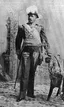
1899
Ulises Heureaux, the 27th President of the Dominican Republic, is assassinated.
Ulises Heureaux
1897
Anglo-Afghan War: The Pashtun fakir Saidullah leads an army of more than 10,000 to begin a siege of the British garrison in the Malakand Agency of the North West Frontier Province of India.
Anglo-Afghan War

1892
Dadabhai Naoroji is elected as the first Indian Member of Parliament in Britain.
Dadabhai Naoroji

1891
France annexes Tahiti.
Tahiti

1890
In Buenos Aires, Argentina the Revolución del Parque takes place, forcing President Miguel Ángel Juárez Celman's resignation.
Buenos Aires

1887
Publication of the Unua Libro, founding the Esperanto movement.
Unua Libro

1882
Premiere of Richard Wagner's opera Parsifal at Bayreuth.
Richard Wagner

1882
The Republic of Stellaland is founded in Southern Africa.
Stellaland
1863
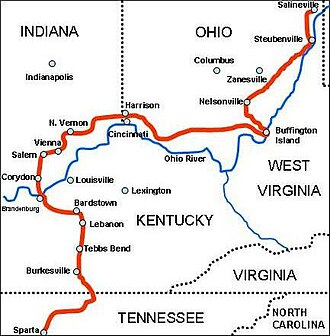
American Civil War: Morgan's Raid ends; At Salineville, Ohio, Confederate cavalry leader John Hunt Morgan and 360 of his volunteers are captured by Union forces.
Morgan's Raid

1861
American Civil War: George B. McClellan assumes command of the Army of the Potomac following a disastrous Union defeat at the First Battle of Bull Run.
American Civil War

1848
The University of Wisconsin–Madison is established by Nelson Dewey, first Governor of Wisconsin.
University of Wisconsin–Madison

1847
Liberia declares its independence from the United States. France and the United Kingdom are the first to recognize the new nation.
Liberia

1822
José de San Martín arrives in Guayaquil, Ecuador, to meet with Simón Bolívar.
José de San Martín

1822
First day of the three-day Battle of Dervenakia, between the Ottoman Empire force led by Mahmud Dramali Pasha and the Greek Revolutionary force led by Theodoros Kolokotronis.
Battle of Dervenakia

1814
The Swedish–Norwegian War begins.
Swedish–Norwegian War

1803
The Surrey Iron Railway, arguably the world's first public railway, opens in south London, United Kingdom.
Surrey Iron Railway
Before 1800

1788
New York ratifies the United States Constitution and becomes the 11th state of the United States.
Constitution of the United States
1778
The Emigration of Christians from the Crimea in 1778 begins.
Eviction of Christians from the Crimea (1778)

1775
The office that would later become the United States Post Office Department is established by the Second Continental Congress. Benjamin Franklin of Pennsylvania takes office as Postmaster General.
United States Post Office Department

1758
French and Indian War: The Siege of Louisbourg ends with British forces defeating the French and taking control of the Gulf of Saint Lawrence.
French and Indian War

1745
The first recorded women's cricket match takes place near Guildford, England.
History of women's cricket
1703
During the Bavarian Rummel the rural population of Tyrol drove the Bavarian Prince-Elector Maximilian II Emanuel out of North Tyrol with a victory at the Pontlatzer Bridge and thus prevented the Bavarian Army, which was allied with France, from marching as planned on Vienna during the War of the Spanish Succession.
Bavarian Rummel

1581
Plakkaat van Verlatinghe (Act of Abjuration): The northern Low Countries declare their independence from the Spanish king, Philip II.
Act of Abjuration

1579
Francis Drake, the English explorer, discovers a "fair and good" bay on the coast of the Pacific Northwest (probably Oregon or Washington).
Francis Drake

1529
Francisco Pizarro González, Spanish conquistador, is appointed governor of Peru.
Francisco Pizarro

1509
Krishnadevaraya ascends to the throne as Emperor of Vijayanagara, marking the beginning of the regeneration of the Vijayanagara Empire.
Krishnadevaraya

1309
Henry VII is recognized King of the Romans (Holy Roman Emperor) by Pope Clement V.
Henry VII, Holy Roman Emperor

1184
Erfurt latrine disaster: At a Hoftag, a meeting with local notables, organized by Henry VI, the building collapses and many of the nobles in attendance drown in the sewage pits below.
Erfurt latrine disaster

920
Rout of an alliance of Christian troops from Navarre and Léon against the Muslims at the Battle of Valdejunquera.
Navarre

811
Battle of Pliska: Byzantine Emperor Nikephoros I is killed and his heir Staurakios is seriously wounded.
Battle of Pliska

657
First Fitna: In the Battle of Siffin, troops led by Ali ibn Abu Talib clash with those led by Muawiyah I.
First Fitna