On This Day — 20 June
2000s

2025
The first EF5 tornado in 12 years occurs in Enderlin, North Dakota.
2025 Enderlin tornado

2019
Iran's Air Defense Forces shoot down an American surveillance drone over the Strait of Hormuz amid rising tensions between the two countries.
Islamic Republic of Iran Air Defense Force

2011
RusAir Flight 9605 crashes in Besovets during approach to Petrozavodsk Airport, killing 47.
RusAir Flight 9605

2003
The Wikimedia Foundation is founded in St. Petersburg, Florida.
Wikimedia Foundation
1900s

1996
Space Shuttle Columbia launches on STS-78 to conduct life science and microgravity research aboard the Spacelab module.
Space Shuttle Columbia

1994
The 1994 Imam Reza shrine bomb explosion in Iran leaves at least 25 dead and 70 to 300 injured.
Imam Reza shrine bombing

1991
The German Bundestag votes to move seat of government from the former West German capital of Bonn to the present capital of Berlin.
Bundestag

1990
Asteroid Eureka is discovered.
Asteroid

1990
The 7.4 Mw Manjil–Rudbar earthquake affects northern Iran with a maximum Mercalli intensity of X (Extreme), killing 35,000–50,000, and injuring 60,000–105,000.
1990 Manjil–Rudbar earthquake

1988
Haitian president Leslie Manigat is ousted from power in a coup d'état led by Lieutenant General Henri Namphy.
Leslie Manigat
1982
The International Conference on the Holocaust and Genocide opens in Tel Aviv, despite attempts by the Turkish government to cancel it, as it included presentations on the Armenian genocide.
International Conference on the Holocaust and Genocide

1982
The Argentine Corbeta Uruguay base on Southern Thule surrenders to Royal Marine commandos in the final action of the Falklands War.
Corbeta Uruguay base

1979
ABC News correspondent Bill Stewart is shot dead by a Nicaraguan National Guard soldier under the regime of Anastasio Somoza Debayle during the Nicaraguan Revolution. The murder is caught on tape and sparks an international outcry against the regime.
ABC News (United States)

1975
The film Jaws is released in the United States, becoming the highest-grossing film of that time and starting the trend of films known as "summer blockbusters".
Jaws (film)

1973
Snipers fire upon left-wing Peronists in Buenos Aires, Argentina, in what is known as the Ezeiza massacre. At least 13 are killed and more than 300 are injured.
Sniper

1973
Aeroméxico Flight 229 crashes on approach to Licenciado Gustavo Díaz Ordaz International Airport, killing all 27 people on board.
Aeroméxico Flight 229

1972
Watergate scandal: An 18+1⁄2-minute gap appears in the tape recording of the conversations between U.S. President Richard Nixon and his advisers regarding the recent arrests of his operatives while breaking into the Watergate complex.
Watergate scandal

1964
A Curtiss C-46 Commando crashes in the Shengang District of Taiwan, killing 57 people.
Curtiss C-46 Commando

1963
Following the Cuban Missile Crisis, the Soviet Union and the United States sign an agreement to establish the so-called "red telephone" link between Washington, D.C., and Moscow.
Cuban Missile Crisis

1960
The Mali Federation gains independence from France (it later splits into Mali and Senegal).
Mali Federation

1959
A rare June hurricane strikes Canada's Gulf of St. Lawrence killing 35.
1959 Escuminac disaster

1956
A Venezuelan Super-Constellation crashes in the Atlantic Ocean off Asbury Park, New Jersey, killing 74 people.
Venezuela

1948
The Deutsche Mark is introduced in Western Allied-occupied Germany. The Soviet Military Administration in Germany responded by imposing the Berlin Blockade four days later.
Deutsche Mark

1945
The United States Secretary of State approves the transfer of Wernher von Braun and his team of Nazi rocket scientists to the U.S. under Operation Paperclip.
United States Secretary of State
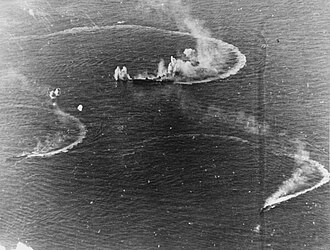
1944
World War II: The Battle of the Philippine Sea concludes with a decisive U.S. naval victory. The lopsided naval air battle is also known as the "Great Marianas Turkey Shoot".
Battle of the Philippine Sea

1944
World War II: During the Continuation War, the Soviet Union demands unconditional surrender from Finland during the beginning of partially successful Vyborg–Petrozavodsk Offensive. The Finnish government refuses.
Continuation War
1944
The experimental MW 18014 V-2 rocket reaches an altitude of 176 km, becoming the first man-made object to reach outer space.
MW 18014

1943
The Detroit race riot breaks out and continues for three more days.
1943 Detroit race riot

1943
World War II: The Royal Air Force launches Operation Bellicose, the first shuttle bombing raid of the war. Avro Lancaster bombers damage the V-2 rocket production facilities at the Zeppelin Works while en route to an air base in Algeria.
World War II

1942
The Holocaust: Kazimierz Piechowski and three others, dressed as members of the SS-Totenkopfverbände, steal an SS staff car and escape from the Auschwitz concentration camp.
The Holocaust

1926
The 28th International Eucharistic Congress begins in Chicago, with over 250,000 spectators attending the opening procession.
28th International Eucharistic Congress
1921
Workers of Buckingham and Carnatic Mills in the city of Chennai, India, begin a four-month strike.
Buckingham and Carnatic Mills

1900
Boxer Rebellion: The Imperial Chinese Army begins a 55-day siege of the Legation Quarter in Beijing, China.
Boxer Rebellion

1900
Baron Eduard Toll, leader of the Russian Polar Expedition of 1900, departs Saint Petersburg in Russia on the explorer ship Zarya, never to return.
Eduard von Toll
1800s

1895
The Kiel Canal, crossing the base of the Jutland peninsula and the busiest artificial waterway in the world, is officially opened.
Kiel Canal

1893
Lizzie Borden is acquitted of the murders of her father and stepmother.
Lizzie Borden

1877
Alexander Graham Bell installs the world's first commercial telephone service in Hamilton, Ontario, Canada.
Alexander Graham Bell

1863
American Civil War: West Virginia is admitted as the 35th U.S. state.
American Civil War

1862
Barbu Catargiu, the Prime Minister of Romania, is assassinated.
Barbu Catargiu

1840
Samuel Morse receives the patent for the telegraph.
Samuel Morse

1837
King William IV dies, and is succeeded by his niece, Victoria.
William IV

1819
The U.S. vessel SS Savannah arrives at Liverpool, United Kingdom. It is the first steam-propelled vessel to cross the Atlantic, although most of the journey is made under sail.
SS Savannah
Before 1800

1791
King Louis XVI, disguised as a valet, and the French royal family attempt to flee Paris during the French Revolution.
Louis XVI
1789
Deputies of the French Third Estate take the Tennis Court Oath.
Legislator

1787
Oliver Ellsworth moves at the Federal Convention to call the government the 'United States'.
Oliver Ellsworth

1782
The U.S. Congress adopts the Great Seal of the United States.
Congress of the Confederation

1756
A British garrison is imprisoned in the Black Hole of Calcutta.
British Empire

1685
Monmouth Rebellion: James Scott, 1st Duke of Monmouth declares himself King of England at Bridgwater.
Monmouth Rebellion
1652
Tarhoncu Ahmed Pasha is appointed Grand Vizier of the Ottoman Empire.
Tarhoncu Ahmed Pasha

1631
The Sack of Baltimore: The Irish village of Baltimore is attacked by Barbary slave traders.
Sack of Baltimore

1622
The Battle of Höchst takes place during the Thirty Years' War.
Battle of Höchst

1295
The Treaty of Anagni, an attempt mediated by the papacy to end the War of the Sicilian Vespers, is signed by the crown of Aragon, the kingdom of France and kingdom of Naples.
Treaty of Anagni

1180
First Battle of Uji, starting the Genpei War in Japan.
Battle of Uji (1180)

451
Battle of Chalons: Flavius Aetius battles Attila the Hun. After the battle, which was inconclusive, Attila retreats, causing the Romans to interpret it as a victory.
Battle of the Catalaunian Plains