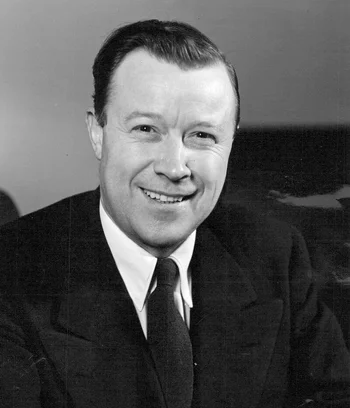
Alan Dershowitz
September 1, 1938 — Brooklyn, New York, United States
Alan Dershowitz is an American lawyer, legal scholar, and author who became one of the most recognizable legal minds in the United States. A longtime Harvard Law School professor, he built a reputation for taking on controversial and high-profile criminal defense cases while also serving as a prolific commentator on legal and political affairs.
Early Life and Education
Alan Morton Dershowitz was born on September 1, 1938, in Brooklyn, New York, to a Jewish family. He attended Yeshiva University High School before enrolling at Brooklyn College, where he graduated in 1959. He then pursued legal studies at Yale Law School, earning his law degree in 1962 and graduating first in his class, an early sign of the sharp analytical mind that would define his career. His academic excellence at Yale led to prestigious clerkships, including one for Judge David Bazelon of the U.S. Court of Appeals for the D.C. Circuit and another for U.S. Supreme Court Justice Arthur Goldberg. These formative experiences immersed him in the highest levels of American jurisprudence at a remarkably young age and set the stage for his rapid ascent into academia. By his mid-twenties, Dershowitz had already demonstrated the combination of intellectual rigor and ambition that would characterize his decades-long career at the intersection of law, teaching, and public commentary.
Harvard Law Career and Landmark Cases
In 1964, at just 25 years old, Dershowitz joined the faculty of Harvard Law School, where he would teach for nearly five decades until his retirement in 2013. In 1993, he was appointed the Felix Frankfurter Professor of Law, one of the school's most distinguished chairs, honoring his contributions to constitutional and criminal law scholarship. Throughout his career, Dershowitz became known for defending controversial and often unpopular clients, arguing that even the most reviled defendants deserve a vigorous legal defense. His client list included Claus von Bülow, whose overturned conviction inspired the book and film "Reversal of Fortune," as well as O. J. Simpson, whom he assisted as part of the defense's "Dream Team." He also represented Jeffrey Epstein and later Harvey Weinstein in various legal capacities. Beyond the courtroom, Dershowitz authored numerous books on law, civil liberties, and constitutional issues, cementing his reputation as both a practicing attorney and a public intellectual willing to take unpopular legal positions.
Did You Know?
Dershowitz's successful appeal of Claus von Bülow's attempted murder conviction became the basis for the 1990 film "Reversal of Fortune," in which actor Ron Silver portrayed Dershowitz himself alongside Jeremy Irons, who won an Academy Award for his role as von Bülow.
Public Commentary and Later Career
Following his retirement from Harvard in 2013, Dershowitz remained a fixture in American public life as a media commentator, political analyst, and outspoken defender of civil liberties and free speech. He gained further national attention in 2020 when he served as part of President Donald Trump's legal defense team during the first Senate impeachment trial, arguing constitutional points about the standards for impeachment. His willingness to take positions across the political spectrum, defending clients and causes regardless of popularity, made him a frequently debated and polarizing figure in American media. Dershowitz's legacy is defined by his fierce advocacy for due process and the principle that legal representation is a fundamental right, even for society's most controversial figures. His decades of scholarship, prolific writing, and headline-making casework have left a lasting imprint on American legal culture, ensuring his name remains closely tied to debates over civil liberties, criminal defense, and the boundaries of constitutional law well into the 21st century.