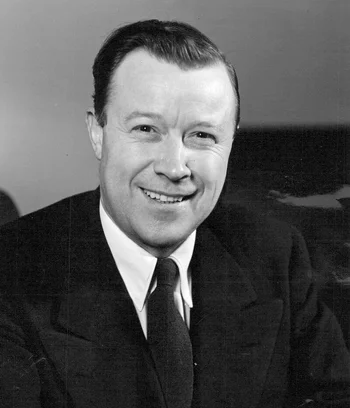
Russell Jones
September 1, 1926 — Australia
Russell Anderson Jones was an Australian ice hockey player who represented his country on the international stage during a formative era for the sport Down Under. He is best remembered for competing at the 1960 Winter Olympics in Squaw Valley, California, and for playing at the 1962 World Ice Hockey Championships. Jones's participation helped put Australian ice hockey on the global map at a time when the sport had only a small foothold in the country.
Early Life and Introduction to Hockey
Russell Jones was born on September 1, 1926, in Australia, a country where ice hockey was very much a niche pursuit compared to traditional summer sports like cricket and Australian rules football. Artificial ice rinks were scarce across the continent in the early twentieth century, and those who took up the sport typically did so through small, dedicated local clubs in cities such as Melbourne, Sydney, or Adelaide, where rinks had been established for recreational skating and hockey. Details of Jones's earliest years and how he first encountered the sport are not well documented, but like most Australian players of his generation, he would have developed his skills in a tight-knit hockey community far removed from the sport's traditional strongholds in Canada, the United States, and Europe. Growing up in the interwar and wartime years, Jones came of age in a period when organized Australian ice hockey competitions were still developing their structure. By the time he reached adulthood, he had established himself as a skilled enough player to be considered for national representative honors, an achievement that reflected both his personal dedication and the gradual growth of the sport's competitive scene in Australia during the mid-twentieth century.
Olympic and International Competition
The defining achievement of Russell Jones's career came in 1960, when he was selected as a member of the Australian national ice hockey team for the Winter Olympics held in Squaw Valley, California. Representing Australia at an Olympic Winter Games was a significant honor, as it meant competing against established hockey nations on one of the sport's biggest stages. The Squaw Valley Games marked a notable moment for Australian winter sports more broadly, and Jones's inclusion on the roster placed him among a small cohort of Australians who had reached this level of international competition in ice hockey. Two years later, in 1962, Jones again represented Australia at the World Ice Hockey Championships, further cementing his standing as one of the country's leading players of the era. Competing at the World Championships alongside established hockey powers gave Jones and his teammates valuable international experience, even as Australia remained a developing nation in the sport. His appearances in these two major tournaments represent the pinnacle of organized international ice hockey competition available to Australian players during this period, when opportunities to face top-tier opposition were rare and highly prized.
Did You Know?
Russell Jones was among the small group of Australians who competed in ice hockey at both the Winter Olympics and the World Ice Hockey Championships, representing his country at Squaw Valley in 1960 and again at the World Championships in 1962, despite Australia's limited ice hockey infrastructure at the time.
Legacy and Impact on Australian Hockey
Russell Jones's participation in the 1960 Winter Olympics and 1962 World Championships helped establish a foundation for Australian ice hockey's presence on the international scene during a period when the sport had minimal visibility outside traditional hockey nations. Players like Jones, who committed themselves to representing Australia despite the country's limited ice infrastructure and small competitive base, played an important role in demonstrating that Australian athletes could compete at recognized international hockey events. His efforts, alongside those of his teammates, contributed to a lineage of Australian involvement in world and Olympic hockey competition that has continued in the decades since, even as the national program has remained modest in scale compared to global powerhouses. While detailed records of Jones's later life and career after his playing days are limited, his place in Australian sporting history is preserved through his Olympic and World Championship appearances. He remains one of the relatively small number of Australians to have represented the country in ice hockey at both the Olympic and World Championship levels, a distinction that continues to be noted by hockey historians and Olympic record-keepers.