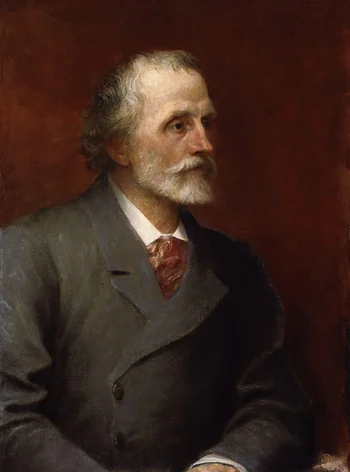
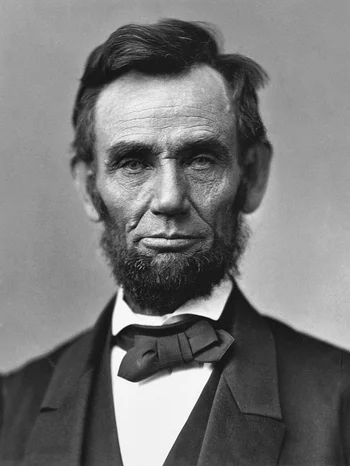
Alan Dugan
February 12, 1923 — September 3, 2003 — Brooklyn, New York, United States
Alan Dugan was an American poet celebrated for his terse, unsentimental verse that captured the disillusionment and grit of ordinary American life. His debut collection won both the Pulitzer Prize and the National Book Award in the same year, an extraordinary achievement that established him as one of the most distinctive voices in postwar American poetry. Over a career spanning four decades, Dugan continued to refine a style marked by dark wit, formal precision, and unromantic honesty.
Early Life and Education
Alan Dugan was born on February 12, 1923, in Brooklyn, New York, and grew up during the hardships of the Great Depression, an experience that shaped the skeptical, working-class sensibility present throughout his poetry. He attended Queens College before his studies were interrupted by World War II, during which he served in the United States Army Air Forces. After the war, Dugan continued his education at Mexico City College, an institution that attracted a number of American writers and veterans in the postwar years. Rather than pursuing an academic career immediately, he spent years working ordinary jobs, including stints as a manufacturer of surgical instruments and a commercial copywriter, experiences that gave his later poetry its unglamorous, clear-eyed view of labor and daily survival. This long delay before literary recognition meant Dugan did not publish his first book until his late thirties, a fact that makes his sudden and sweeping success all the more remarkable.
Literary Career and Major Works
Dugan's career changed dramatically in 1961 with the publication of his debut collection, simply titled 'Poems.' The book was a sensation, winning the Pulitzer Prize for Poetry, the National Book Award for Poetry, and a Prix de Rome, an almost unprecedented sweep for a first collection. Its terse, plainspoken lines and dark humor stood apart from the more ornate academic verse fashionable at the time, offering instead a voice of blunt honesty about work, war, marriage, and mortality. Dugan followed this success with a series of subsequent volumes, each titled 'Poems 2' through 'Poems 6,' maintaining a consistent poetic identity while continuing to sharpen his craft. He spent significant time at the Fine Arts Work Center in Provincetown, Massachusetts, where he mentored younger poets for decades, and he also taught at Sarah Lawrence College. His poetry consistently avoided sentimentality, favoring compressed, ironic observations over elaborate metaphor, a style that influenced generations of poets seeking an alternative to academic formalism.
Did You Know?
Alan Dugan's first published book, 'Poems' (1961), swept both the Pulitzer Prize and the National Book Award in the same year—an almost unheard-of feat for a debut collection. Four decades later, he won the National Book Award a second time for his complete collected works, making him one of very few poets honored twice by that prize.
Later Years and Legacy
Late in his career, Dugan achieved a second major triumph when 'Poems Seven: New and Complete Poetry,' a comprehensive collection gathering his life's work, won the National Book Award in 2001, making him one of the few poets to win the award twice. This late-career recognition affirmed that his voice had lost none of its power or relevance over four decades. Dugan died on September 3, 2003, in Warwick, Rhode Island, at the age of 80. His legacy endures through his influence on plainspoken, formally rigorous American poetry and through his decades of mentorship at the Fine Arts Work Center, where he helped shape the careers of numerous younger writers. Critics continue to praise his work for its refusal to flinch from life's disappointments, delivered with a compression and dark humor that remain distinctly his own.