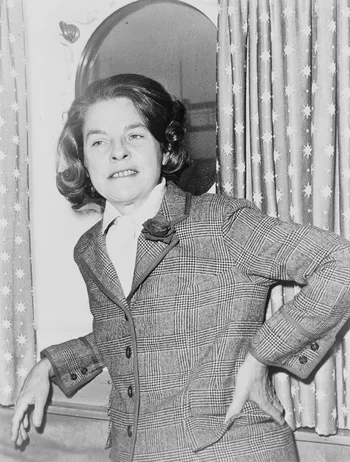
Arnold Gesell
June 21, 1880 — May 29, 1961 — Alma, Wisconsin, United States
Arnold Gesell was an American psychologist and pediatrician whose decades of research at Yale University established many of the foundational ideas in child development science. He is best remembered for creating detailed developmental schedules that mapped the typical stages of infant and child growth, work that transformed how parents, doctors, and educators understand childhood. His influence extended from pediatric medicine into early education and popular child-rearing advice.
Early Life and Education
Arnold Lucius Gesell was born on June 21, 1880, in Alma, Wisconsin, the eldest of five children in a family that valued education and observation of the natural world. He attended local schools before enrolling at Wisconsin State Normal School and later the University of Wisconsin, where he earned his undergraduate degree. Drawn to the emerging science of psychology, Gesell pursued graduate study at Clark University in Massachusetts, a leading center for developmental psychology at the time, and earned his Ph.D. in 1906 under the mentorship of G. Stanley Hall, a pioneer in child study. Recognizing that a deeper understanding of children required medical training as well, Gesell later returned to school in his thirties and earned a medical degree from Yale University in 1915. This unusual combination of psychological and medical training shaped his lifelong approach: he insisted that child development be studied through careful, systematic observation rather than speculation, laying the groundwork for the empirical, clinical methods that would define his career.
Career and Major Contributions
In 1911, Gesell founded the Yale Clinic of Child Development (later the Gesell Institute of Child Development), where he spent the bulk of his career meticulously observing infants and young children. Using innovative tools such as one-way observation domes and early motion-picture cameras, he documented behavioral milestones with unprecedented precision, from motor skills to language and social development. This research culminated in the Gesell Developmental Schedules, standardized benchmarks describing what children typically achieve at specific ages, which became widely used by pediatricians and psychologists to assess normal versus delayed development. Gesell argued that development followed a predictable, maturational sequence largely driven by biology rather than purely environmental shaping, a perspective that shaped debates in developmental psychology for decades. He authored influential books, including "The Mental Growth of the Pre-School Child" and "Infant and Child in the Culture of Today," which reached both scientific audiences and everyday parents. His work also informed practical concerns such as school-readiness testing, helping educators determine appropriate ages for children to begin kindergarten based on developmental maturity rather than chronological age alone.
Did You Know?
Arnold Gesell pioneered the use of a specially designed one-way observation dome, sometimes called the 'Gesell dome,' which allowed researchers to watch and film infants' natural behavior without the children being aware they were being observed. This innovative setup was one of the earliest uses of unobtrusive video documentation in developmental psychology research.
Later Life and Legacy
Gesell continued his research and writing at Yale until his retirement in 1948, after which he remained active in child development studies and public engagement. He died on May 29, 1961, in New Haven, Connecticut, leaving behind a body of work that fundamentally reshaped pediatrics, developmental psychology, and early childhood education. The Gesell Institute of Child Development, which he founded, continued to operate long after his death, carrying forward his emphasis on observing children's natural growth patterns. His developmental schedules, while later refined and critiqued by subsequent researchers, remain historically significant as some of the first rigorous attempts to chart normal child development scientifically. Gesell's insistence on careful observation over guesswork helped elevate child study from informal parenting advice into a legitimate scientific discipline, influencing generations of pediatricians, psychologists, and educators who continue to rely on developmental milestones in assessing children's growth today.