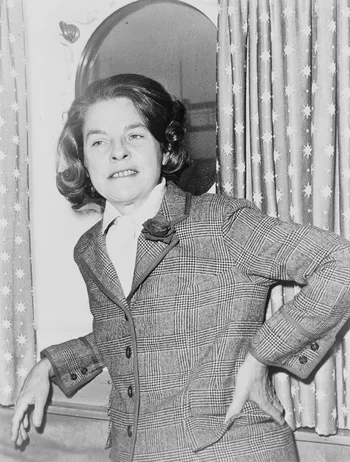
Françoise Sagan
June 21, 1935 — September 24, 2004 — Cajarc, France
Françoise Sagan was a French novelist, playwright, and screenwriter whose sharp, spare prose captured the ennui and desire of France's postwar bourgeoisie. She became a literary sensation at just eighteen with her debut novel, Bonjour Tristesse, and went on to publish dozens of works over a five-decade career marked by both critical acclaim and personal scandal.
Early Life
Françoise Sagan was born Françoise Quoirez in 1935 into a comfortable, upper-middle-class French family. She adopted the pen name "Sagan" from a character in Marcel Proust's In Search of Lost Time, choosing to shield her family name as she pursued a literary career while still a student. Raised amid the social conventions and quiet complacency of the French bourgeoisie, she developed an early fascination with the emotional undercurrents—boredom, vanity, longing—that simmered beneath polished surfaces. She was an indifferent student, more drawn to reading and observing the adult world around her than to formal study, and she began writing fiction as a teenager. This restless curiosity about privilege, freedom, and moral drift would become the defining subject matter of her entire body of work, first crystallized in the novel that would make her famous before she had even reached adulthood.
Literary Career
In 1954, at just eighteen, Sagan published Bonjour Tristesse, a slim, coolly elegant novel about a teenage girl who manipulates her father's romantic life on the French Riviera. The book was an international sensation, praised for its psychological precision and unsentimental tone, and it won the Prix des Critiques while making Sagan one of the youngest and most famous authors in the world. She followed it with A Certain Smile (1956) and numerous other novels, plays, and screenplays over the following decades, consistently returning to themes of wealthy, disillusioned characters adrift in romance, betrayal, and existential boredom. Her prose style—economical, ironic, emotionally exacting—became instantly recognizable, and she was often compared to earlier French moralists for her unflinching depiction of desire and self-deception. Beyond fiction, she wrote for the stage and screen, and cultivated a public persona as a fast-living literary celebrity, known for her love of sports cars, gambling, and glamorous company. Her early success afforded her financial independence and creative freedom rarely granted to a writer so young, and it shaped the trajectory of a prolific, if uneven, career.
Did You Know?
Françoise Sagan wrote Bonjour Tristesse when she was just eighteen years old, and the novel became an international bestseller almost overnight. Its success reportedly earned her enough money to buy a Jaguar sports car, fueling her lifelong reputation for fast living.
Later Life and Legacy
In her later decades, Sagan continued writing steadily, though she never fully escaped the shadow of her explosive debut. Her personal life was often turbulent, marked by financial troubles, health issues stemming from a serious car accident in 1957, and struggles with substance dependence, all of which occasionally overshadowed her literary output in the press. Despite this, she remained a respected figure in French letters, admired for her stylistic discipline and psychological insight even by critics who found her later work less groundbreaking than her first. Françoise Sagan died on September 24, 2004, at the age of 69. Her legacy endures through Bonjour Tristesse, which remains a landmark of twentieth-century French literature and a touchstone for depictions of youthful disillusionment and moral ambiguity. She is remembered not only for the precocious brilliance of her debut but for embodying a particular mid-century archetype: the glamorous, rebellious literary star whose life often seemed to mirror the restless, pleasure-seeking characters she created on the page.