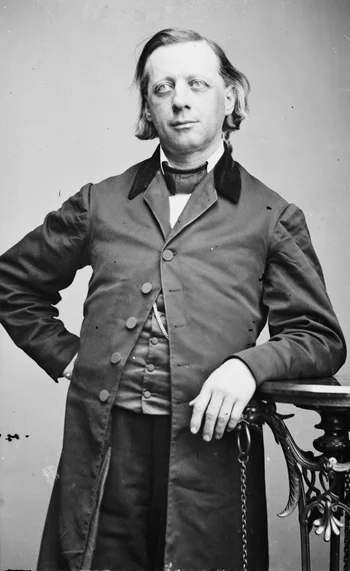
Bernard D. H. Tellegen
June 24, 1900 — August 30, 1990 — Winschoten, Netherlands
Bernard D. H. Tellegen was a Dutch electrical engineer whose innovations shaped the foundations of modern electronics. He is best remembered as the inventor of the pentode vacuum tube and the gyrator, and for formulating Tellegen's theorem, a fundamental principle in network theory. His career at Philips Research Laboratories placed him at the heart of the Netherlands' rise as a center of electronics research in the twentieth century.
Early Life and Education
Bernard D. H. Tellegen was born in 1900 in the Netherlands, at a time when the electrical engineering field was rapidly expanding alongside advances in radio and telecommunications technology. He pursued studies in electrical engineering, developing a strong grounding in the theoretical and mathematical principles that would later underpin his most celebrated contributions. His academic training combined rigorous physics with an emerging interest in the practical challenges of vacuum tube design, an area still in its infancy during his student years. This dual foundation in theory and application would define his entire professional life. Tellegen's early exposure to the growing Dutch electronics industry, particularly through connections to Philips, set the stage for a career that would blend industrial research with pure scientific inquiry. Even before he made his name as an inventor, colleagues recognized his talent for identifying elegant solutions to complex circuit problems, a skill that would soon lead to one of the most important advances in electronic amplification technology.
Career and Major Innovations
Tellegen spent the bulk of his career at Philips Research Laboratories in Eindhoven, one of Europe's leading centers for electronics research. In 1926, working alongside colleague Gilles Holst, he invented the pentode, a five-electrode vacuum tube that solved critical performance limitations of earlier triode and tetrode designs by suppressing unwanted secondary emission effects. The pentode dramatically improved amplification efficiency and became a cornerstone component in radios, televisions, and countless electronic devices for decades, cementing Philips' reputation in the vacuum tube industry. Beyond this practical triumph, Tellegen made lasting theoretical contributions. In 1948, he introduced the concept of the gyrator, a hypothetical two-port network element that inspired new approaches to circuit design and later proved influential in the development of active filters and modern circuit theory. In 1952, he formulated Tellegen's theorem, a general and remarkably powerful principle in electrical network theory that established relationships between voltages and currents in any lumped-element network, regardless of the specific components involved. This theorem became a foundational tool for engineers analyzing complex circuits.
Did You Know?
Tellegen's theorem, which he formulated in 1952, is so general that it applies to any lumped electrical network regardless of the specific type of components used, making it one of the most universally applicable results in circuit theory. Remarkably, the gyrator he proposed in 1948 was purely theoretical at the time, a hypothetical circuit element that engineers only later learned to approximate using real components.
Legacy and Impact
Bernard Tellegen's contributions left a permanent mark on both practical electronics and theoretical circuit analysis. The pentode remained an essential component in electronic devices worldwide well into the era before solid-state transistors took over, and it played a crucial role in the growth of radio broadcasting and consumer electronics throughout the mid-twentieth century. His gyrator concept, initially theoretical, eventually found real-world applications in telecommunications and signal processing, particularly as engineers developed technologies to physically realize gyrator-like behavior using active components. Tellegen's theorem remains a staple of electrical engineering education, valued for its generality and its usefulness in verifying circuit simulations and understanding power relationships in networks. Tellegen died on August 30, 1990, at the age of 90, leaving behind a legacy recognized by engineers and physicists across generations. His work exemplifies the fruitful interplay between industrial innovation and academic theory that characterized much of twentieth-century electrical engineering, and his name continues to be invoked whenever students and professionals study circuit theorems or the history of vacuum tube technology.