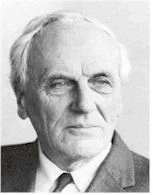
Henry Ward Beecher
June 24, 1813 — March 8, 1887 — Litchfield, Connecticut, United States
Henry Ward Beecher was one of the most influential American clergymen of the 19th century, celebrated for his passionate preaching against slavery and his emphasis on God's boundless love rather than fire-and-brimstone doctrine. As pastor of Brooklyn's Plymouth Church, he drew massive crowds and shaped public opinion on the great moral issues of his day. His legacy, however, was permanently complicated by a sensational 1875 adultery trial that captivated the nation.
Early Life and Education
Henry Ward Beecher was born on June 24, 1813, in Litchfield, Connecticut, into one of America's most prominent religious families. His father, Lyman Beecher, was a renowned Calvinist minister, and his siblings included Harriet Beecher Stowe, author of Uncle Tom's Cabin, and Catharine Beecher, an influential educator. Raised in a household steeped in theological debate and moral seriousness, Henry initially struggled academically and felt overshadowed by his more scholarly brothers. He attended Amherst College, graduating in 1834, and went on to study theology at Lane Theological Seminary in Cincinnati, where his father served as president. There he began to diverge from the strict Calvinism of his upbringing, developing instead a theology centered on divine love and human redemption. After completing his studies, he took his first pastoral position in Lawrenceburg, Indiana, before moving to a larger congregation in Indianapolis. These early pastorates gave him the opportunity to refine the emotionally resonant, plainspoken preaching style that would later make him famous, and to test the reform-minded ideas that would define his public career.
Plymouth Church and Abolitionist Crusade
In 1847, Beecher became the founding pastor of Plymouth Church in Brooklyn, New York, a position he held for the rest of his life. His sermons drew thousands of listeners and made Plymouth Church one of the most famous congregations in the country. Beecher used his pulpit and his considerable oratorical gifts to campaign fiercely against slavery, staging mock slave auctions to raise funds for freedom and famously encouraging supporters to send rifles—soon nicknamed 'Beecher's Bibles'—to anti-slavery settlers in Kansas. He was also an early and vocal supporter of women's suffrage and other social reforms, editing influential religious publications and touring extensively as a public lecturer. During the Civil War, he traveled to England to build support for the Union cause among a skeptical British public, delivering speeches credited with helping shift public opinion. His theological writings and sermons, emphasizing God's love over judgment, reached a national audience through print and helped move American Protestantism toward a gentler, more humanistic vision of faith.
Did You Know?
Rifles shipped to anti-slavery settlers in Kansas during the 1850s were nicknamed 'Beecher's Bibles' after Henry Ward Beecher urged supporters to fund and send them, joking that a rifle was worth more than a Bible in persuading pro-slavery forces to leave settlers alone.
Scandal, Later Years, and Legacy
Beecher's reputation was upended in the mid-1870s when Theodore Tilton, a former friend and colleague, publicly accused him of committing adultery with his wife, Elizabeth Tilton. The resulting 1875 civil trial became a national sensation, filling newspapers for months with lurid testimony. The jury deadlocked, and Beecher was never convicted, but the scandal permanently divided public opinion about his character. Despite the controversy, he continued preaching at Plymouth Church and remained a popular lecturer and writer until his death on March 8, 1887, in Brooklyn. Beecher's legacy is twofold: he is remembered as a towering moral voice against slavery and a pioneer of a warmer, love-centered Christian theology that influenced generations of American preachers, while also serving as a cautionary example of the perils of celebrity and scandal in public religious life. His sermons and speeches remain studied as landmark examples of 19th-century American oratory.