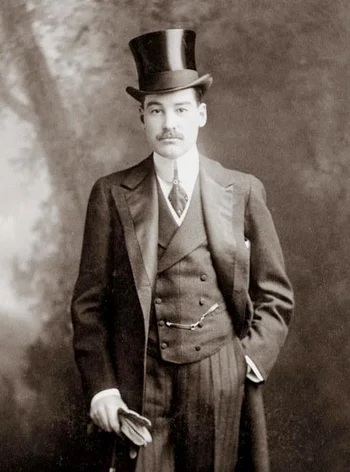
Cecil Harmsworth King
October 20, 1901 — April 17, 1987 — Totteridge, England
Cecil Harmsworth King was a towering figure in twentieth-century British journalism, building the Daily Mirror and Sunday Pictorial into the cornerstones of a vast publishing empire. As Chairman of Daily Mirror Newspapers, Sunday Pictorial Newspapers, and the International Publishing Corporation from 1963 to 1968, he wielded enormous influence over British media, culminating in a controversial attempt to reshape national politics that led to his own downfall.
Early Life and Family Ties
Cecil Harmsworth King was born on October 20, 1901, into a family already synonymous with British newspaper power. His mother, Geraldine Mary Harmsworth, was the sister of two of the most influential press barons of the age, Alfred Harmsworth, Lord Northcliffe, and Harold Harmsworth, Lord Rothermere, founders of the Daily Mail and Daily Mirror respectively. Growing up in the shadow of this formidable publishing dynasty, King was educated at Winchester College before going on to Christ Church, Oxford. This upbringing steeped him early in the world of newspapers, circulation battles, and the commercial realities of mass media, setting the stage for his eventual entry into the family business. Unlike some heirs to press fortunes, King proved himself an astute and ambitious operator in his own right, determined to expand upon the foundations laid by his uncles rather than simply inherit their legacy passively.
Building a Publishing Empire
King joined the Daily Mirror in 1926 and steadily rose through its ranks, becoming a director and eventually its driving commercial force. Under his leadership, the Mirror was transformed into one of the best-selling tabloid newspapers in the world, embracing bold headlines, populist appeal, and aggressive marketing. He extended this success to the Sunday Pictorial, and by the early 1960s had consolidated his holdings into the International Publishing Corporation (IPC), one of the largest publishing conglomerates on the planet, encompassing newspapers, magazines, and other media interests. King became Chairman of Daily Mirror Newspapers, Sunday Pictorial Newspapers, and IPC in 1963, a position he held until 1968. His stature in British public life was further underscored by his appointment as a director of the Bank of England from 1965 to 1968, placing him at the intersection of media power and national economic policy during a pivotal era.
Did You Know?
In 1968, Cecil King published a front-page Daily Mirror editorial titled "Enough is Enough," openly calling for Prime Minister Harold Wilson's government to be replaced. The episode, seen by many as an attempted political coup orchestrated by a newspaper chairman, led directly to King's own removal from power just weeks later.
Downfall and Legacy
King's career reached a dramatic turning point in 1968 when, deeply critical of Harold Wilson's Labour government amid economic turmoil, he published a front-page article in the Mirror titled "Enough is Enough," calling for a change in national leadership. He reportedly sought to enlist establishment figures in schemes to replace the elected government, actions widely seen as reckless overreach for a newspaper chairman. The IPC board, alarmed by his conduct, removed him from the chairmanship in May 1968, ending his direct control over the empire he had built. King spent his later years in Dublin, Ireland, writing memoirs and diaries that offered a candid, often unflattering account of British political and media life. He died on April 17, 1987. His legacy endures as a cautionary tale of press power overreaching into politics, alongside his genuine achievement of transforming the Mirror Group into a global publishing force.