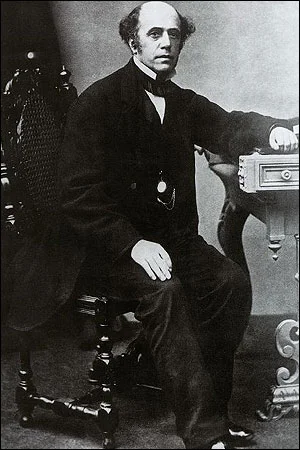
Charles Frederick, Grand Duke of Baden
November 22, 1728 — June 10, 1811 — Karlsruhe, Margraviate of Baden-Durlach
Charles Frederick was Margrave, Elector, and finally Grand Duke of Baden, ruling the small German state for an extraordinary seventy-three years from 1738 until his death in 1811. A committed disciple of Enlightenment thought, he transformed Baden into one of the most progressively governed territories in the Holy Roman Empire, abolishing serfdom decades before most of his neighbors. His long reign spanned the collapse of the old imperial order and the rise of Napoleonic Europe, through which he skillfully elevated his modest realm to grand ducal status.
Early Life and Accession
Charles Frederick was born on November 22, 1728, into the House of Zähringen, the ruling dynasty of the Margraviate of Baden-Durlach. He was the son of Margrave Frederick of Baden-Durlach and Princess Amalie of Nassau-Dietz, but his father died before he was born, leaving the infant heir under the guardianship of his grandfather, Margrave Charles III William, the founder of Karlsruhe. When his grandfather died in 1738, the ten-year-old Charles Frederick inherited the margraviate, though a regency council governed on his behalf until he came of age in 1746. His youth coincided with the tail end of the Baroque era in German court life, and he was educated in the administrative and cultural traditions established by his grandfather. Once he assumed personal rule, Charles Frederick quickly distinguished himself from many contemporary princes by his genuine interest in the welfare of his subjects, agricultural science, and the emerging economic theories of physiocracy, which held that land and agriculture were the true source of a nation's wealth. This intellectual orientation would define the character of his governance for decades to come.
Enlightened Rule and Reform
As ruler, Charles Frederick became one of the foremost practitioners of enlightened absolutism in the German-speaking world. In 1783, he abolished serfdom throughout his territories, making Baden one of the first states in Europe to take this step, well ahead of most of the Holy Roman Empire. He pursued physiocratic economic policies, experimenting with tax reform, promoting agricultural innovation, and encouraging free trade in grain to improve the lives of his peasantry. He also reformed the judicial system, supported education, and cultivated Karlsruhe as a center of Enlightenment culture, corresponding with philosophers and economists of his era. Politically, he proved highly adept at navigating the turbulent upheavals following the French Revolution and the Napoleonic Wars. In 1803, through territorial reorganization tied to the Napoleonic reshaping of Germany, Baden's holdings were enlarged and Charles Frederick was elevated to the rank of Elector. Just three years later, in 1806, as the Holy Roman Empire dissolved and the Confederation of the Rhine formed under French influence, he was raised further to Grand Duke, securing Baden's territorial gains and its status as a sovereign state allied with Napoleon's France.
Did You Know?
Charles Frederick's reign of 73 years, from 1738 to 1811, makes him one of the longest-reigning monarchs in European history. He became ruler at just ten years old and lived to see his small margraviate transformed into a grand duchy under Napoleon's reorganization of Germany.
Legacy and Dynastic Impact
Charles Frederick died on June 10, 1811, having ruled Baden longer than almost any other monarch in European history. His reign left a lasting institutional legacy: the abolition of serfdom, administrative modernization, and the elevation of Baden from a modest margraviate to a grand duchy that endured until the end of the German monarchies in 1918. His dynastic legacy proved equally significant. Through the marriages of his children and grandchildren, his House of Baden became intertwined with the ruling families of Russia, Sweden, and Bavaria, spreading his bloodline across European royalty. His first marriage to Caroline Louise of Hesse-Darmstadt produced heirs who continued the Baden line, while his morganatic second marriage to Louise Caroline Geyer von Geyersberg later gave rise to the Grand Ducal House's continuation after the extinction of his direct line. Remembered as a benevolent and forward-thinking ruler, Charles Frederick is often cited alongside figures like Frederick the Great and Joseph II as an exemplar of Enlightenment-era governance, though his comparatively small state allowed him to implement reforms with a thoroughness larger empires could rarely match.