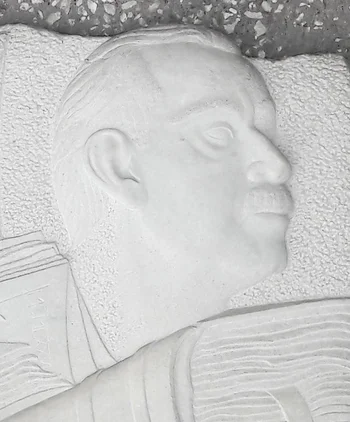
Christopher Andrew
Christopher Andrew is a British historian and Emeritus Professor of Modern and Contemporary History at the University of Cambridge. He is widely regarded as one of the founding figures of intelligence studies as an academic discipline, having spent decades uncovering the hidden history of espionage agencies such as MI5, MI6, and the KGB. His scholarship has reshaped how historians and the public understand the role secret intelligence has played in shaping twentieth-century world events.
Early Life and Education
Christopher Maurice Andrew was born on July 23, 1941, in Britain. He pursued his education at Corpus Christi College, Cambridge, where he developed a deep interest in modern European history and international relations. His academic training grounded him firmly in the traditions of British historical scholarship, and he went on to build his career at Cambridge, the institution with which he would become permanently associated. Even in his early academic work, Andrew showed a fascination with the parts of history that were often deliberately hidden from public view—the world of diplomacy, secret negotiations, and intelligence gathering. This interest would come to define his entire scholarly career, setting him apart from historians who focused solely on more conventional political and military narratives. His early studies in diplomatic history laid the foundation for what would eventually become a groundbreaking specialization in the study of intelligence services, a field that was, at the time, largely neglected by serious academic historians due to the secrecy surrounding government records and the reluctance of intelligence agencies to open their archives to outside scrutiny.
Academic Career and Landmark Works
Andrew spent the bulk of his academic career at the University of Cambridge, where he became a professor of Modern and Contemporary History. He is credited with helping to establish intelligence history as a legitimate and rigorous field of academic study, a discipline that had previously been dismissed by many historians as too speculative or unreliable due to the secretive nature of the source material. Andrew's meticulous research and use of newly declassified documents, as well as unprecedented access to defector testimony, allowed him to produce authoritative accounts of Cold War espionage. Notably, he collaborated with former KGB archivist Vasili Mitrokhin, co-authoring works based on the so-called Mitrokhin Archive, a vast trove of smuggled Soviet intelligence files that exposed decades of KGB operations across the globe. Andrew also wrote the officially authorized history of Britain's domestic security service, MI5, a landmark project that granted him rare access to classified internal records. His writing combined narrative flair with scholarly rigor, making complex intelligence history accessible to general readers while maintaining academic credibility among his peers in the historical profession.
Did You Know?
Christopher Andrew co-authored a series of influential books using the Mitrokhin Archive, a collection of KGB files secretly copied by hand over more than a decade by Soviet archivist Vasili Mitrokhin before being smuggled out of Russia. The archive proved so extensive that British intelligence reportedly described it as one of the most valuable troves of counterintelligence material ever obtained.
Legacy and Influence
As an emeritus professor, Christopher Andrew's influence extends well beyond his own published works. He helped train a generation of scholars in the study of intelligence history, encouraging the field to be taken seriously within mainstream academic history departments rather than being relegated to popular nonfiction or sensationalized accounts. His work has informed public understanding of how secret intelligence agencies have shaped major historical events, from World War II to the Cold War and beyond. Andrew's collaborations with former intelligence insiders and his access to classified archives produced some of the most detailed and credible accounts of espionage operations available to historians. His authorized history of MI5 remains a significant reference point for understanding the evolution of British domestic security policy. Through his prolific writing, teaching, and public commentary, Andrew has cemented his reputation as one of the preeminent authorities on the history of espionage, ensuring that the secret world of intelligence gathering is studied with the same rigor as more traditional areas of historical inquiry.