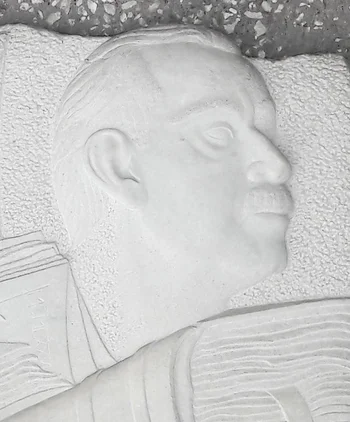
Maurice Greene
July 23, 1974 — Kansas City, Kansas, United States
Maurice Greene is an American former track and field sprinter widely regarded as one of the greatest sprinters in history. He once held the 100 meters world record at 9.79 seconds and dominated the sport from 1997 to 2004, amassing four Olympic medals and five World Championship titles. His explosive starts and fierce competitiveness made him a defining figure of sprinting's golden era at the turn of the millennium.
Early Life
Maurice Greene was born on July 23, 1974, in Kansas City, Kansas. He discovered his talent for speed at a young age, competing in track and field throughout his school years and quickly distinguishing himself as an exceptional sprinter. Rather than following a conventional collegiate path to elite competition, Greene relocated to Los Angeles in 1996 to train under renowned coach John Smith at the famed HSI (Handling Speed, Inc.) training group. This move proved pivotal, as Smith's rigorous, technically focused coaching philosophy helped refine Greene's biomechanics and starting technique. The transition was demanding, requiring Greene to rebuild his approach to sprinting almost entirely, but it laid the foundation for the historic success that would follow. Within a year of joining Smith's program, Greene began climbing the ranks of world-class sprinters, signaling the arrival of a new dominant force in the 100 and 200 meters. His early willingness to uproot his life and embrace a demanding new training regimen reflected the discipline and determination that would define his career.
Career Achievements
Greene's career reached its peak between 1997 and 2004, a period during which he became one of the most decorated sprinters in history. At the 1999 World Championships in Seville, he achieved a remarkable feat by winning three gold medals—in the 100m, 200m, and 4x100m relay—an accomplishment previously achieved only by Carl Lewis and Michael Johnson. That same year, he set the world record in the 100 meters with a time of 9.79 seconds, a mark that stood for years as the benchmark of human speed. Greene captured Olympic gold in the 100 meters at the 2000 Sydney Olympics and added three more Olympic medals across his career, including relay medals. In total, he became a five-time World Champion, cementing his status as the premier sprinter of his generation. His starts were legendary, often propelling him to insurmountable leads within the race's opening meters. Greene's rivalry with fellow sprinters of the era, combined with his showmanship and confidence, helped elevate the profile of sprinting worldwide during this golden age of track and field.
Did You Know?
Maurice Greene's 1999 World Championship triple-gold performance in the 100m, 200m, and 4x100m relay had, at the time, only ever been matched by two other legends of the sport: Carl Lewis and Michael Johnson.
Legacy and Later Life
After retiring from competition, Maurice Greene remained deeply involved in track and field, transitioning into coaching and mentoring younger sprinters. He has worked to pass on the technical knowledge and competitive mindset that fueled his own success to the next generation of athletes. Greene's world record in the 100 meters, though eventually surpassed by sprinters like Asafa Powell and Usain Bolt, remains a benchmark achievement in sprinting history, and his 1999 triple-gold performance in Seville remains one of the rare feats in the sport. Beyond his records, Greene is remembered for his charisma, confidence, and role in popularizing sprinting during a highly competitive era. His achievements helped inspire a new wave of American and international sprinters, and he continues to be celebrated as one of the sport's all-time greats. Greene's legacy endures not only through his statistics but through his influence on training methods and the culture of elite sprinting, having demonstrated how disciplined technical coaching could transform raw talent into world-record-breaking performance.